The 10 Most Famous Teas of China
Tea is undoubtedly one of the beverages that has built China's reputation to this day. Originally, tea came from South China, derived from the Camellia sinensis shrub.
Tea is undoubtedly one of the beverages that has built China's reputation to this day. Originally, tea came from South China, derived from the Camellia sinensis shrub. Indeed, several mountainous regions of China are renowned for producing tea. The thousands of tea varieties in China each have their own unique characteristics and virtues. Participating in a tea ceremony during a journey to China could be the perfect opportunity to immerse yourself in this incomparable culture.
Discover the 10 most famous Chinese teas:
Longjing Tea from Hangzhou 西湖龙井
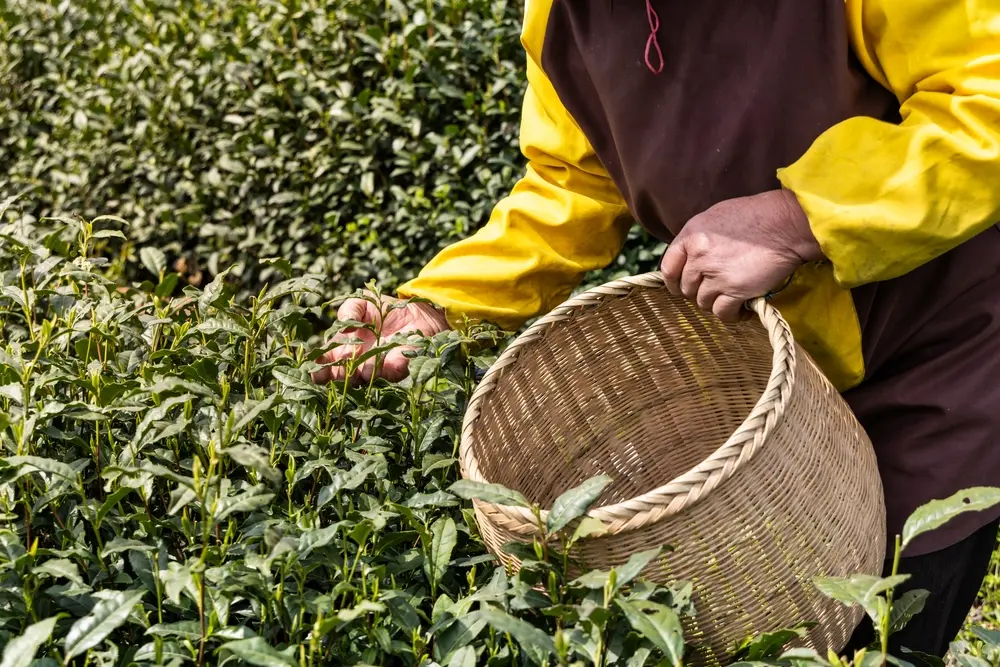
Longjing, translated as "Dragon's Well", names a spring but also a very famous tea variety in China. Cultivated in the village of Meijiawu (or Longjing village) in the mountainous region of Zhejiang west of Hangzhou, Longjing tea plantations stretch for kilometers along the hillsides.
The climatic conditions at Longjing favor the cultivation of this tea variety, which displays very green tea leaves throughout the year. This green tea has a distinctive characteristic that lies mainly in its roasting level. During infusion, it produces a very strong fragrance and a pleasant taste. Longjing tea is today renowned worldwide for its medicinal properties and its richness in antioxidants.
Biluochun Tea from Suzhou 洞庭山碧螺春
The production of Biluochun tea takes place on Dongting Hill, a region situated on the shore of Lake Taihu, in Wuxian district in Jiangsu. Its history dates back to the reign of Emperor Kang under the Qing dynasty. A legend tells that when the emperor tasted this tea for the first time, he found it so delicious that he named it "Bi Luo Chun", highlighting its tender taste and its formation from buds and a few young leaves.
The particularity of this tea lies in its production. Indeed, it takes over 600,000 young buds to produce 500 grams of Biluochun tea. This green tea also reveals itself through fruity flavors that come from these bushes planted among fruit trees such as peach, pear, and apricot. After infusion, it produces a luminous and brilliant beverage, with pale yellow hues. It offers a very delicate taste in the mouth and its subtle aroma reminds one of spring flowers.
Maofeng Tea from Huangshan 黄山毛峰
Maofeng tea is a green tea cultivated on the Huangshan mountains, more precisely around Yungu Temple, in Anhui province. The soil is fertile and the climate very mild, which makes Maofeng tea shoots both abundant and supple. Harvested once a year in spring, its picking and processing require very careful work.
Maofeng tea can be infused multiple times. Its fragrance and taste rank it among China's superior quality teas. It reveals itself through fresh, mineral vegetable flavors accompanied by notes of iodine and chestnut.
Yunwu Tea from Mount Lushan 庐山云雾
Yun Wu tea is produced on Mount Lu Shan between the Changjiang to the north and Poyang Lake to the south. Its name, which means "Cloud and Mist", comes from its plantations cultivated between 500 and 1,500 meters in altitude, regularly shrouded in mist. The meteorological conditions and soil fertility in this part of the region make cultivation even more favorable.
This green tea is characterized by its curved shape since it is hand-rolled. It reveals itself on the palate through a very smooth and velvety taste that ranks it among premium teas.
Guapian Tea from Lu'an 六安瓜片
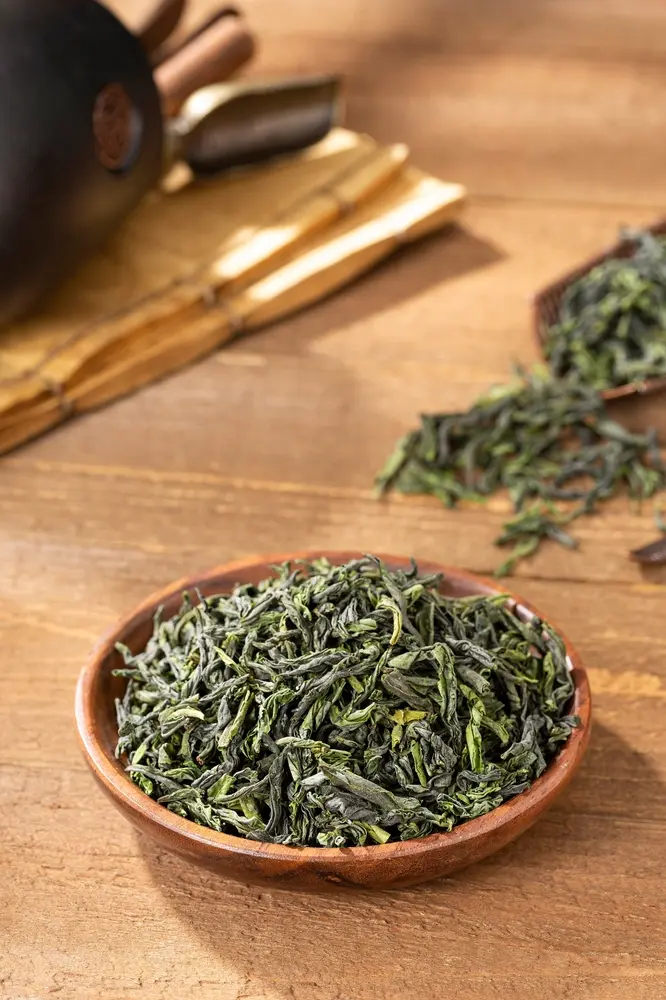
Guapian tea from Lu'an, which translates to "watermelon seed", is cultivated in the Dabie mountains, in the western part of Anhui province. This green tea is considered one of the oldest and most famous teas in China.
The preparation of this tea's leaves is very particular. Indeed, the drying of these leaves is done in heated vats and rolling is carried out using bamboo brushes. After infusion, its liquor releases a sweet, vegetal, and fruity taste. Both invigorating and light, this tea ranks among the country's finest growths.
Yulu Tea from Enshi 恩施玉露
Yulu tea, also named "jade dew", is a green tea produced in Enshi, in Hubei province. It is counted among China's exceptional green teas. Its preparation process gives it great authenticity since its leaves are still processed in a traditional manner, steam-dried with a very strict selection technique.
Its origin dates back to the Tang dynasty, an era when tea cultivated in Hubei was already renowned among the highest ranks.
The leaves of this tea resemble pine needles, with a jade-green color. Its brew is very flavorful with some appreciable floral aromas.
Baihao Yinzhen Tea 白毫银针
Baihao yinzhen, also translated as "silver needle with white down", is a variety of white tea cultivated in Jianyang, Yongji, and Songzheng in northern Fujian, and in Fuding.
Its name comes from the delicate white down that covers the buds and its leaves, which appear as silver needles after roasting. The leaves are picked by hand each spring.
Its infusion reveals a pale mandarin-colored tea with a sweet taste that produces a delicious flower aroma. This very refreshing tea is said to be best appreciated during unique moments.
Yancha Tea from Wuyi 武夷岩茶
This rock tea is cultivated on the Wuyi mountains, in Chong'an district in Fujian. It is said that this tea has been produced since the Qing dynasty.
Yancha tea is nicknamed rock tea because it is produced on mineral and rocky soil. From its first appearance in Europe in the 18th century, it was immediately appreciated and adopted. It ranks among semi-fermented tea types, meaning its preparation methods fall between those of green tea and black tea. Its rolling is also done very gently by hand.
For tasting, it is important to infuse it only briefly in water heated to 90-100°C so that the taste remains neutral.
Tieguanyin Tea from Anxi 安溪铁观音
Tieguanyin tea is produced in Anxi in the Fujian region. The plantations enjoy a perfect subtropical climate to obtain leaves of a beautiful brilliant green color.
A legend tells that Tieguanyin tea is a gift offered by GuanYin, the goddess of iron and mercy. The farmers thus placed a statue of the goddess at the foot of the first plantation shrub in order to obtain a flavorful tea of great quality.
During its so-called pure infusion, a suave orchid fragrance emerges. Its dark green color offers a strong and velvety taste.
Pu'er Tea from Yunnan 云南普洱
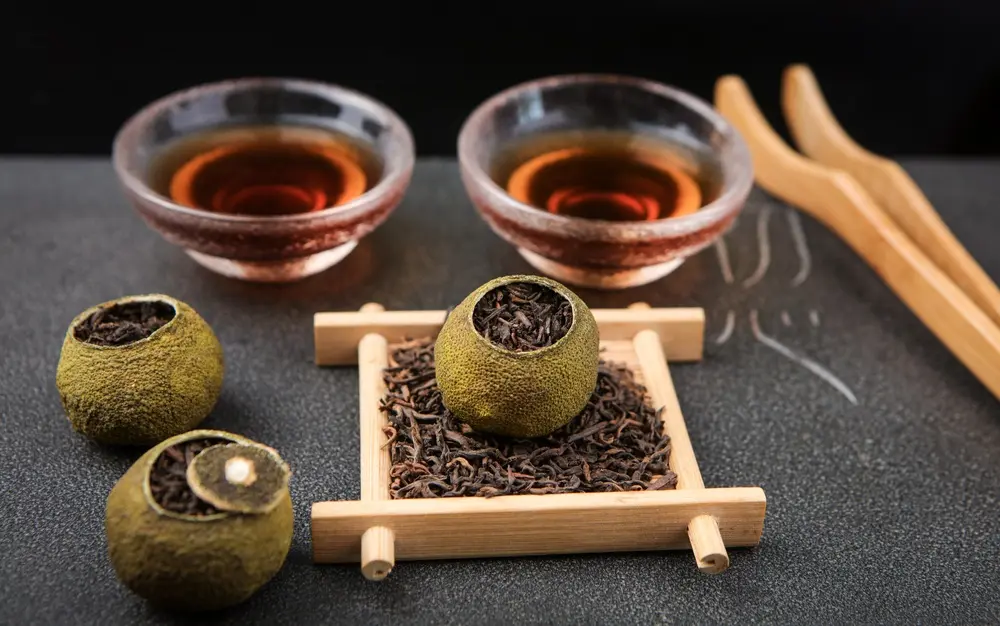
Pu'er tea comes from the great Xishuangbanna wild tea garden in the southern province of Yunnan. The tea takes its name from the city of Pu'er in which it is cultivated.
It stands out from other teas by the fact that it is steamed and then compressed for easier transportation. It has the particularity of improving with time and its price increases over the years. Pu'er tea is also recognized for its many natural virtues. It reveals itself with an earthy flavor and a dark color.
It is more known for its natural benefits. This variety of tea has a green color in its raw state. But after cooking it becomes black and has an earthy flavor.
Frequently asked questions
Longjing tea (龙井), also called 'Dragon's Well', is considered one of the most famous and appreciated teas in China. Cultivated in Hangzhou in Zhejiang province, it is renowned for its medicinal properties, its richness in antioxidants, and its intense fragrance.
Pu'er tea, originating from Yunnan, distinguishes itself from other Chinese teas through its fermentation process: it is steamed and then compressed, allowing it to improve with time, like a fine wine. Its flavor is earthy and its color is dark. It is also recognized for its many natural virtues, particularly for digestion.
Many Chinese regions offer authentic tea ceremonies. Hangzhou (Longjing tea), Anxi in Fujian (Tieguanyin tea), and the Wuyi mountains are among the most emblematic destinations to experience this unique cultural experience during a journey to China.
Biluochun tea is relatively simple to prepare. It infuses in water at approximately 80°C for 2 to 3 minutes. Its particularity lies in its production: it takes over 600,000 young buds to produce only 500 grams of this tea, making it one of China's most precious teas.
Several teas among the 10 most famous are recognized for their benefits: Longjing tea is rich in antioxidants, Pu'er tea promotes digestion, Enshi Yulu tea is appreciated for its revitalizing properties, and white Baihao yinzhen tea is reputed for its refreshing and antioxidant effects.