Confucius Temple of Wuwei (Wuwei Wenmiao)
Confucius Temple of Wuwei (Wuwei Wenmiao)
At the heart of Wuwei, the Wenmiao is among the finest preserved Confucian temples of northwest Chine. Carved wooden pavilions, calligraphed stelae, and tranquil courtyards reveal the cultural significance of this Silk Road waypoint.
At the heart of Wuwei, a historic waypoint on the Silk Road in Gansu, the Confucius Temple — Wenmiao in Chinese — stands as one of the best-preserved Confucian complexes in northwest Chine. Built to honour the sage and educate local scholars, it bears witness to Wuwei's cultural significance far beyond its role as a commercial hub. The painted wooden architecture, calligraphed stelae, and quiet courtyard offer a striking counterpoint to the bustle of the modern city.
Practical information at a glance
- Admission: paid entrance (check rates on-site or with your local English-speaking agency)
- Recommended duration: 1 to 1.5 hours
- Dress code: no strict requirement, but respectful attire is appropriate in this Confucian site of remembrance
- Access: Wuwei city centre, walkable from the main bus station or by taxi
What you'll see
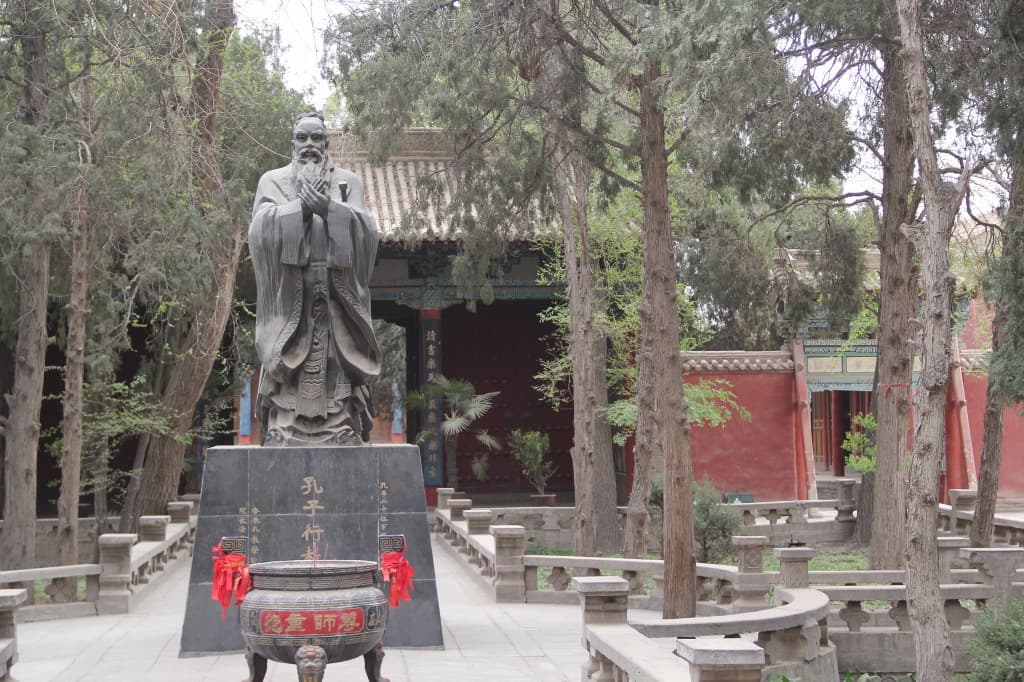
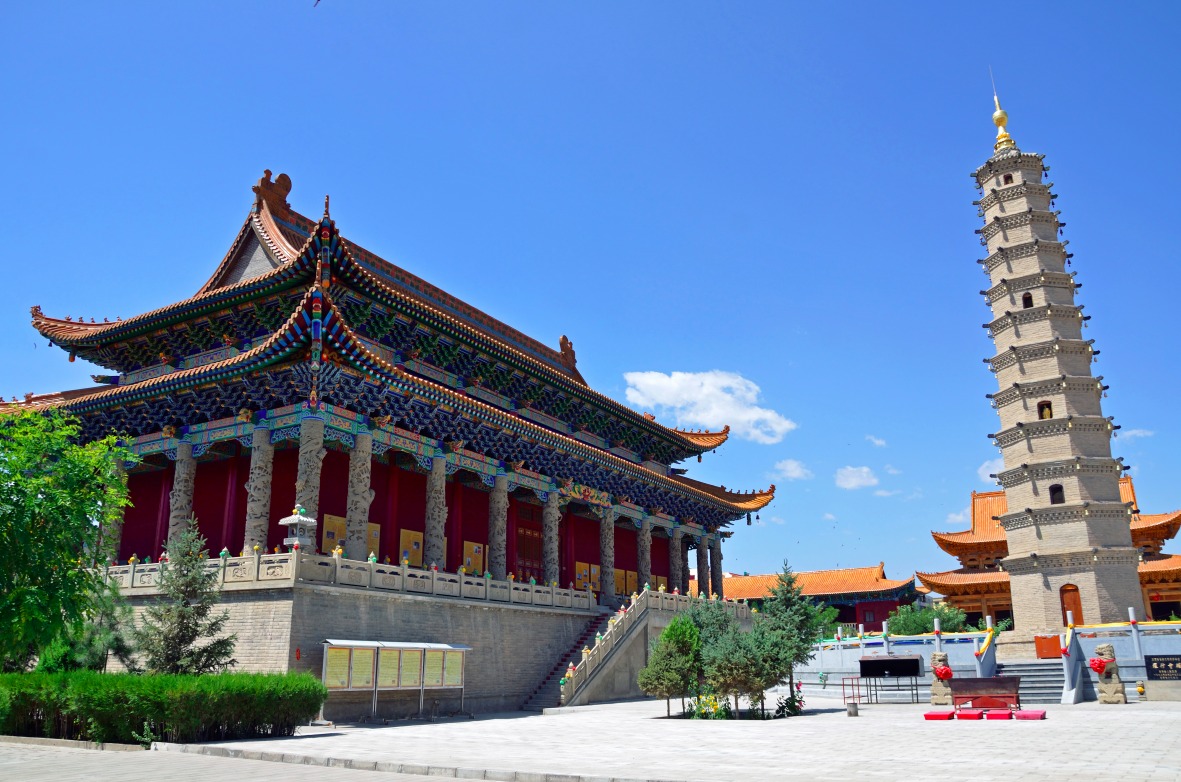
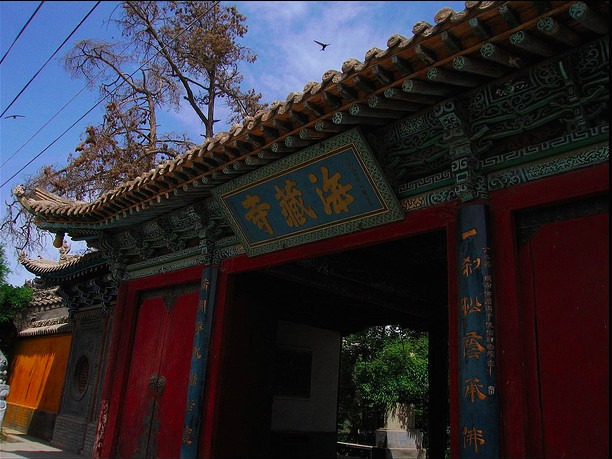
The complex unfolds around a succession of courtyards and pavilions aligned on a north-south axis, following the canonical design of Confucian temples. The Dacheng Pavilion (Great Accomplishment), dedicated to Confucius, anchors the site. Stelae carved with classical Chinese characters line the pathways, some dating to the Ming and Qing dynasties. Double-eave roofs, red-lacquered columns, and glazed ceramic ornaments attest to the care invested in its restoration.
History and context
Wuwei, formerly Liangzhou, was a major administrative and cultural centre under the Han, Tang, and subsequent dynasties. The Wenmiao was founded to host imperial examinations and cultivate a lettered elite in a region often viewed as frontier territory. Its survival through the centuries — despite conflicts and the frequent earthquakes that plague Gansu — makes it a living record of Confucianism's spread westward across Chine.
Highlights of your visit
The Dacheng Pavilion
The ceremonial heart of the temple, this pavilion houses Confucius's spirit tablet and ritual offerings. The carved wooden architecture, with its interlocking dougong brackets, deserves careful study from the courtyard below.
The forest of stelae
A collection of calligraphed stelae gathers classical texts and commemorative inscriptions. For those who read classical Chinese, it's a direct historical source; for others, the graphic quality of the characters remains visually striking.
The courtyards and gardens
The tree-planted courtyards — notably cypress and ginkgo — offer a rare sense of contemplation in central Wuwei. Here you perceive most clearly the site's original function: a space for meditation and study.
Photography tips
Morning light, before the crowds arrive, is ideal for photographing rooflines and carved details without backlighting. The interior courtyards, framed by pavilions, offer the symmetrical perspectives characteristic of Confucian architecture. Check on-site whether photography is restricted around ritual tablets.
Location and access
The temple stands in historic central Wuwei, near the municipal museum. Wuwei is served by the Lanzhou–Xinjiang railway line (express trains from Lanzhou in under two hours). In the city, taxis and local buses provide easy access to the site. Accessibility for visitors with reduced mobility is limited due to thresholds and traditional pavilion steps.
Nearby attractions
- Wuwei Museum — home to the famous Bronze Horse at Gallop, the city's symbol, unearthed from a nearby Han tomb.
- Leitai Tower and Temple — Han funerary site where the bronze horse was excavated, a few kilometres north of the city centre.
- Yumen Pass — further along the Silk Road, to extend your journey towards Dunhuang.
Frequently asked questions
Spring (April–May) and autumn (September–October) offer the most pleasant conditions: moderate temperatures and favourable light for visiting and photography. Summer can be hot and dry in Gansu; winter is cold but the site sees fewer visitors.
No strict dress code is enforced, but respectful and modest attire is appropriate in this site of Confucian remembrance. Avoid overly casual clothing out of respect for the space.
Yes, both sites are close together in the city centre. Half a day suffices to tour the temple and then the museum, where the famous Han bronze horse is displayed — a logical pairing to understand Wuwei's history.
Photography is generally permitted in courtyards and exterior areas. Certain interior zones, particularly around ritual tablets, may be restricted. Check signage on-site or ask at the entrance.
Wuwei is accessible from Lanzhou by express train (Xinjiang line). The journey takes under two hours. From Wuwei station, the city centre and temple are reachable by taxi or local bus.
Interested in this visit?
We can include it in your personalised itinerary.