Qiyi Glacier (July 1st Glacier)
Qiyi Glacier (July 1st Glacier)
About a hundred kilometres south of Jiayuguan, Qiyi Glacier unfolds its tongue of blue ice across the flanks of the Qilian Range, at over 4,000 metres altitude — a spectacular contrast with the nearby Gobi Desert.
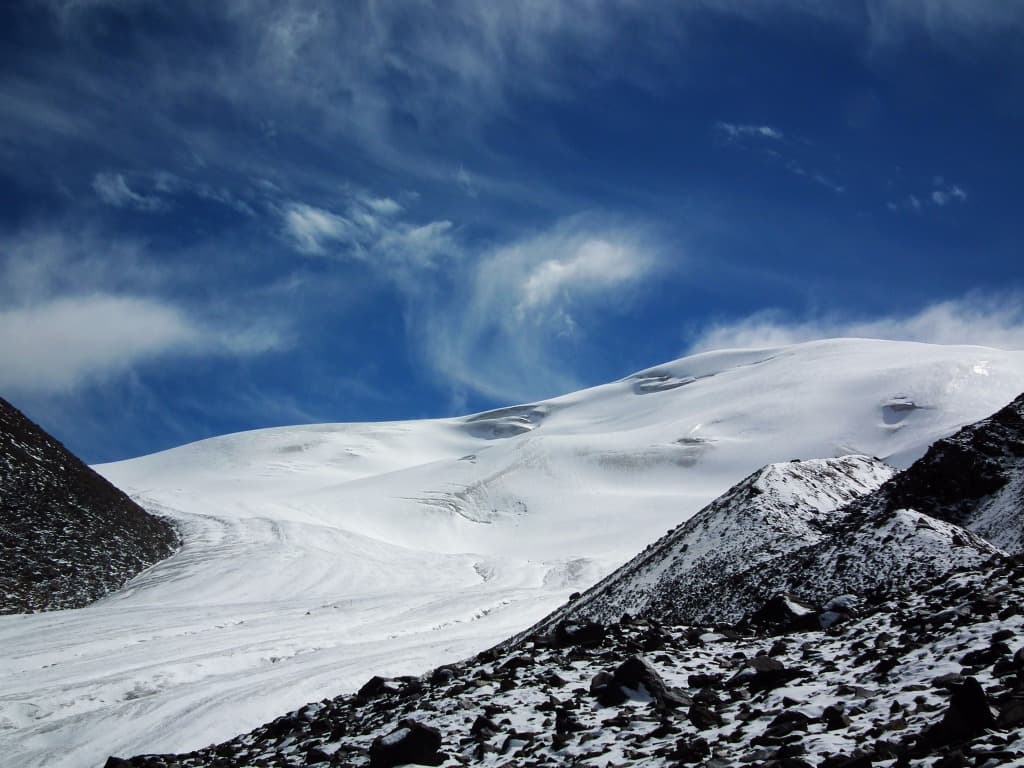
Qiyi Glacier — literally "July 1st" — stretches across the northern flanks of the Qilian Range, at an altitude exceeding 4,000 metres, about a hundred kilometres south of Jiayuguan. It is one of the most accessible continental glaciers in Chine, nestled in a high mountain arid landscape cut through by the permanent whiteness of ice. For travellers crossing the Gansu corridor, it makes for a striking detour between desert and glacial realm.
Practical essentials at a glance
- Access: road from Jiayuguan heading south towards the Qilian Range; the final track is passable by four-wheel-drive vehicle or local shuttle depending on season.
- Altitude: the observation site exceeds 4,000 m — allow time for acclimatisation if you're coming from low altitude.
- What to wear: warm clothing essential even in summer, frequent strong winds; hiking boots with non-slip soles recommended.
- Suggested duration: half-day from Jiayuguan, including the return journey.
- Best time to visit: May to September, when the road is clear; the glacier is closed or difficult to reach in winter.
What you'll see
The glacier appears as a tongue of ice descending between dark rocky walls. In front of the glacier, a zone of moraines and meltwater streams forms a contrasting mineral landscape. Boardwalks or marked trails allow you to approach the glacial tongue without treading directly on it. On clear days, the snow-capped peaks of the Qilian close the horizon.
History and context
The name "Qiyi" (七一, July 1st) refers to the founding date of the Communist Party of Chine; the glacier was named during the first Chinese scientific expeditions in the 1950s. It has since been monitored by glaciologists as an indicator of glacial retreat in Central Asia. Its progressive melting is documented and visible: markers left by successive expeditions show a notable withdrawal of the ice tongue.
Highlights of your visit
The glacial tongue up close
Established trails allow you to approach the ice within metres. The blue-green colour of ancient ice, compressed under decades of snow, contrasts with the grey rock of the lateral moraines.
The panorama over the Qilian Range
From the observation area, the view encompasses several peaks exceeding 5,000 metres. The rarefied air and high-altitude light lend particular clarity to the outlines of the ridges.
The meltwater zone and streams
In summer, meltwater creates small torrents that cut across the moraines. This active glacial front vividly illustrates the glacier's dynamics and its ongoing evolution.
Photography tips
Morning light, before valley haze rises, offers the best conditions. Expose for the ice to avoid overexposure: reflection is intense. A polarising filter reduces glare and brings out the blue of the ice. Avoid venturing off marked trails for unusual angles — ice at the edges can be unstable.
Location and access
The glacier is located in Jiayuguan District, Gansu Province, approximately 100 km south of the city by the Qilian Range road. Most visitors arrange the trip from Jiayuguan Fortress by combining both sites over a full day. There is no regular public transport to the glacier; a rental car or organised tour is necessary. Accessibility for visitors with reduced mobility is limited due to mountainous terrain and altitude.
In the vicinity
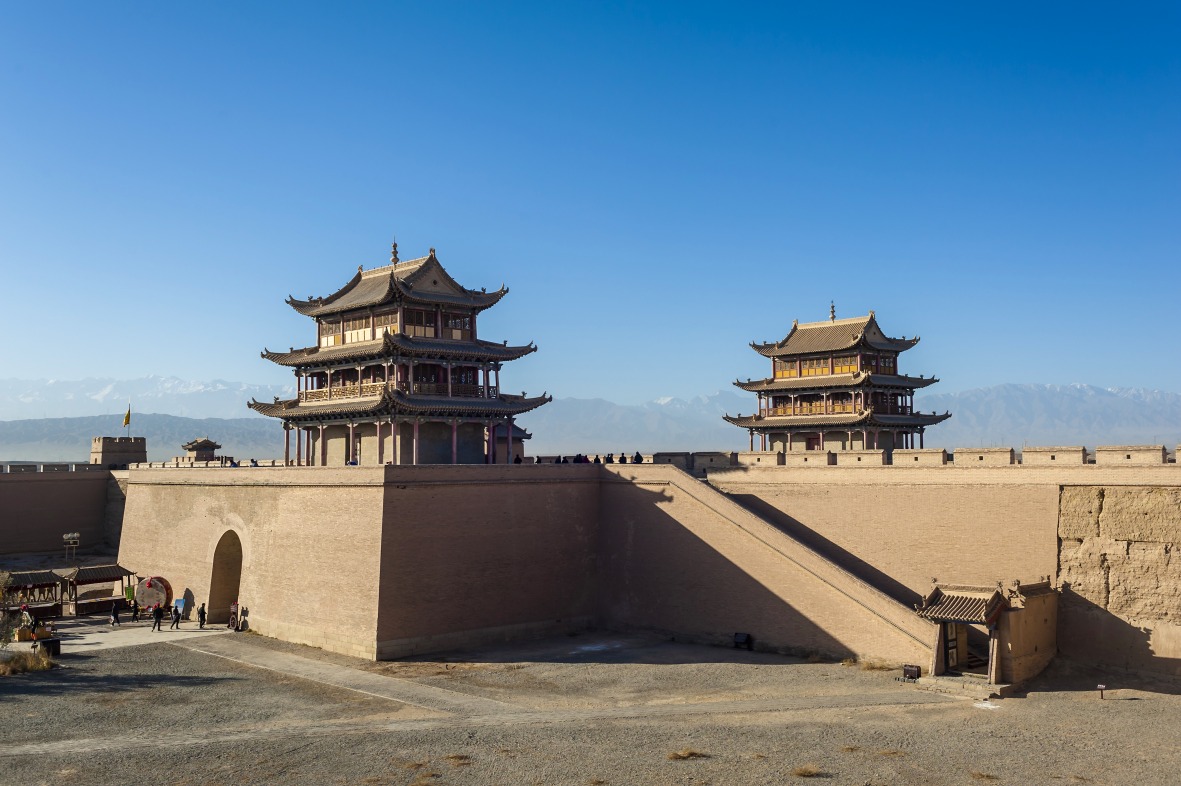
- Jiayuguan Fortress — the western terminus of the Ming Great Wall, about 100 km to the north; natural starting point for the glacier excursion.
- Great Wall of Jiayuguan — rammed-earth sections in the Gobi Desert, a radically different landscape from the glacial world.
- Jiayuguan Great Wall Museum — to contextualise the history of the Gansu corridor before or after your visit.
Frequently asked questions
May to September, when the access road is passable. In July and August, melting is active and moraine streams are clearly visible. Avoid winter: the road can be cut off by snow.
The site exceeds 4,000 m altitude. Mountain sickness can affect even healthy people. Climb slowly, stay hydrated and plan a day of acclimatisation in Jiayuguan if you're coming from low altitude.
There is no regular public transport. The most common solution is a rental car or an organised tour with a local agency in Jiayuguan. The journey takes about two hours depending on track conditions.
Direct access to the ice is generally limited to marked trails and boardwalks. Walking freely on the glacial tongue is not advised for safety reasons and site conservation.
Yes, but the distance between the two sites is significant. It's best to devote an entire day to the glacier and visit the fortress another day, or set out very early in the morning.
Photos
Interested in this visit?
We can include it in your personalised itinerary.