Meidaizhao Lamasery
Meidaizhao Lamasery
Founded by Altan Khan in 1575 on Mount Yinshan, Meidaizhao Lamasery marks the spread of Tibetan Buddhism throughout Inner Mongolia.
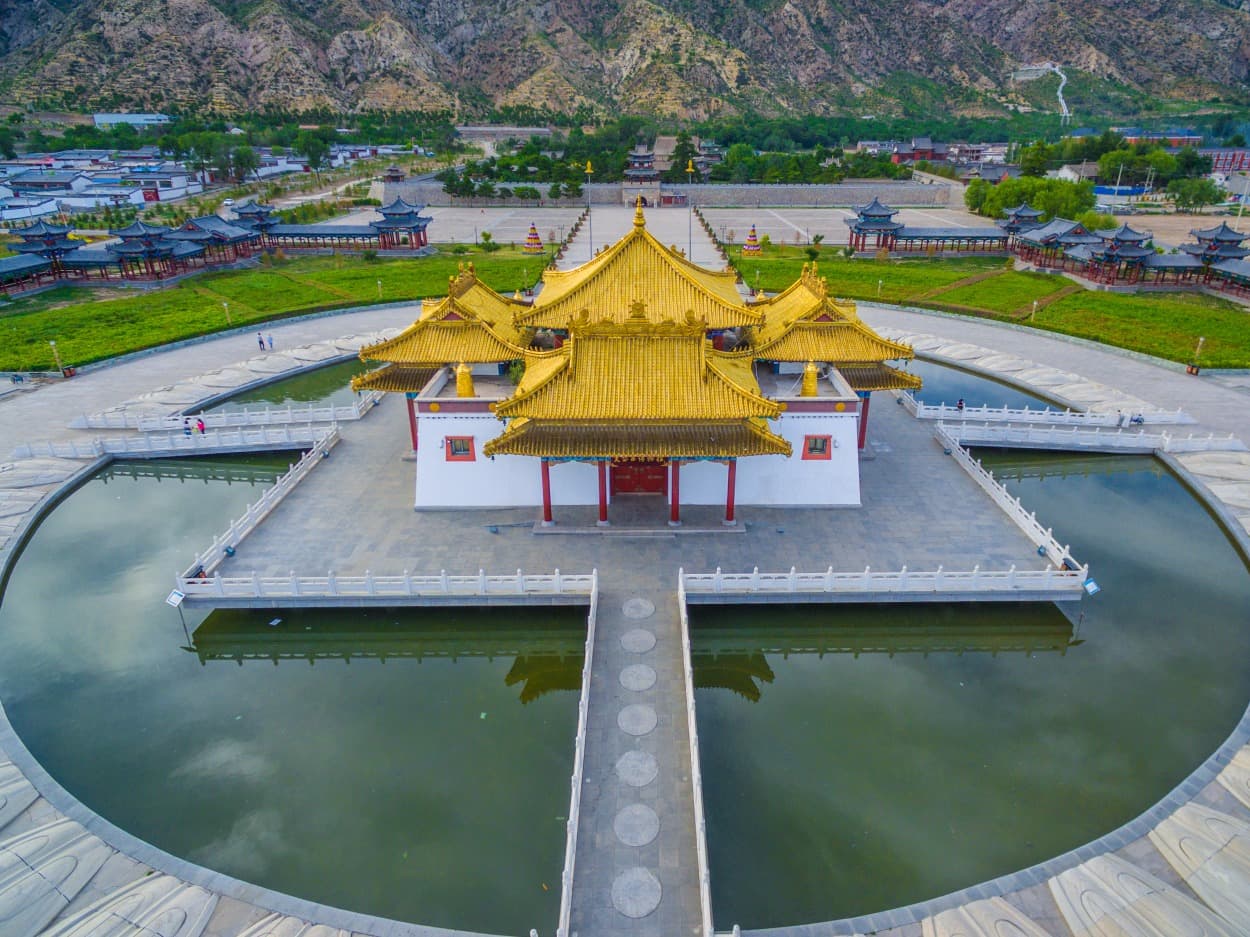
Nestled on the foothills of Mount Yinshan, between Hohhot and Baotou, the Meidaizhao Lamasery blends the defensive architecture of the Ming Dynasty with Tibetan Buddhist iconography. This fortified complex from the 16th century, founded by Altan Khan, marks one of the crucial anchoring points of Tibetan Buddhism in Inner Mongolia.
Why visit Meidaizhao Lamasery
The site stands out for its dual identity: it is both a former fortified city and a Buddhist monastery. This singularity stems from its history—a princely residence transformed into a lamasery—and from its architecture, which combines Ming Chinese codes with Mongol aesthetics. For those interested in the spread of Tibetan Buddhism beyond Tibet, Meidaizhao is a documented landmark, linked to the encounter between Mongol power and the Gelugpa clergy in the 16th century.
The complex remains relatively unfrequented by foreign travelers, making it a peaceful stop, away from mainstream circuits, when traveling through Inner Mongolia.
History: Altan Khan and the birth of a sanctuary
The lamasery was built in 1575 by Altan Khan, chief of the Tümed Mongol tribe and descendant of Genghis Khan. After unifying the Mongol tribes from north to south, Altan Khan obtained from the Ming court the title of Emperor Shunyi Wang of the Longqing, sealing a peace agreement that would last several decades. His wife, the great queen Sannianzi, played a key political role in maintaining this balance.
The edifice initially served as an official residence and fortress, at a time when the Ming Dynasty was weakened by internal corruption. A major turning point came in 1578, when Altan Khan met the Tibetan monk Sonam Gyatso and conferred upon him the title of "Dalai Lama"—Sonam Gyatso thus became retroactively the 3rd Dalai Lama, the first two having received the title posthumously. This act officially confirmed the conversion of the Tümed Mongols to Tibetan Buddhism and made Meidaizhao one of the cradles of this diffusion. The transformation of the fortress into a lamasery followed this episode, and a Mongol missionary named Maidalihutukertu would continue the work of propagation in the early 17th century.
What to see on site
The fortified enclosure
The fortified walls extend for 681 meters in length and reach 5 meters in height, flanked by watchtowers at the corners. This structure clearly recalls the original military function of the site, designed to withstand incursions.
The Sakyamuni Hall
The main hall of the complex, it houses murals representative of Tibetan Buddhist iconography. The pigments and compositions merit close attention, with some frescoes having retained their original colors.
The Hall of the Three Buddhas
This glazed hall, dedicated to the three Buddhas (past, present, future), occupies Altan Khan's former meeting hall. Its architecture typical of the Ming Dynasty—wooden framework, double-eaved roof—illustrates the stylistic hybridization of the site.
The statue of Altan Khan and Sannianzi
Beneath the trees of the complex, a stone statue depicts Altan Khan and Queen Sannianzi side by side, a rare testament to a Mongol sovereign couple in Buddhist statuary.
When to visit
The best period extends from May to September, when temperatures are mild on the Mongol plateau. Winters in Inner Mongolia are long and rigorous, with temperatures dropping well below freezing.
A special moment punctuates the sanctuary's life: the Meidaizhao Temple traditional fair, which opens each year on the 13th day of the 5th lunar month (generally in June of the Gregorian calendar) and lasts one week. Agricultural products, local crafts, and lively negotiations compose an atmosphere of a traditional Mongol market, to be combined with a visit to the site.
Practical information
- Opening hours: open during the day, year-round.
- Admission: moderate entrance fee, payment on site in yuan.
- Duration of visit: allow 1.5 to 2 hours to explore the entire complex.
- What to bring: modest clothing in worship halls, water and a hat in summer (little shade in the courtyard).
How to get there
The site is located 80 km east of Baotou, on the road connecting Baotou to Hohhot. Several options:
- From Baotou: long-distance bus or chartered taxi for the day (most flexible solution).
- From Hohhot: allow about 2 hours by private car. Local buses serve the area but often require a connection.
- Nearest airports: Hohhot (Baita) and Baotou Donghe, both connected to Beijing.
Nearby attractions
The lamasery fits naturally into a circuit through Inner Mongolia:
- Hohhot, the regional capital, is home to several Buddhist temples and the Inner Mongolia Museum.
- The Hexigten Geopark, further east, offers steppe landscapes and volcanic formations.
- To further explore Buddhist rock art in Chine, the Bezeklik Thousand Buddhas Caves in Xinjiang constitute another major landmark.
Organize your trip
Meidaizhao Lamasery fits fully into a cultural and nature itinerary through Inner Mongolia. To build a bespoke journey integrating this site, consult our circuits in Chine.
Interested in this visit?
We can include it in your personalised itinerary.