Mount Kongtong (崆峒山)
Mount Kongtong (崆峒山)
A classified Taoist massif west of Pingliang, Mount Kongtong brings together cliff-cut temples, pine forests, and limestone escarpments. Associated with the Yellow Emperor, it remains one of the major centers of Taoism in northwestern Chine.
Mount Kongtong (崆峒山) rises west of Pingliang in Gansu Province. Among the most ancient Taoist massifs in Chine, it is associated with the Yellow Emperor Huangdi, who according to tradition consulted the sage Guangchengzi there. Its limestone cliffs, pine forests, and temples clinging to rock faces make it both a natural and spiritual site, designated a national scenic area.
Practical Information at a Glance
- Admission: paid entrance (site ticket plus internal shuttle surcharge)
- Recommended duration: a full day for the main temples and trails
- Attire: hiking shoes essential; respectful dress in temples
- Access: from Pingliang by bus or taxi; the site operates internal shuttle services
- Accessibility for visitors with reduced mobility: limited — main trails feature numerous steps
What to See
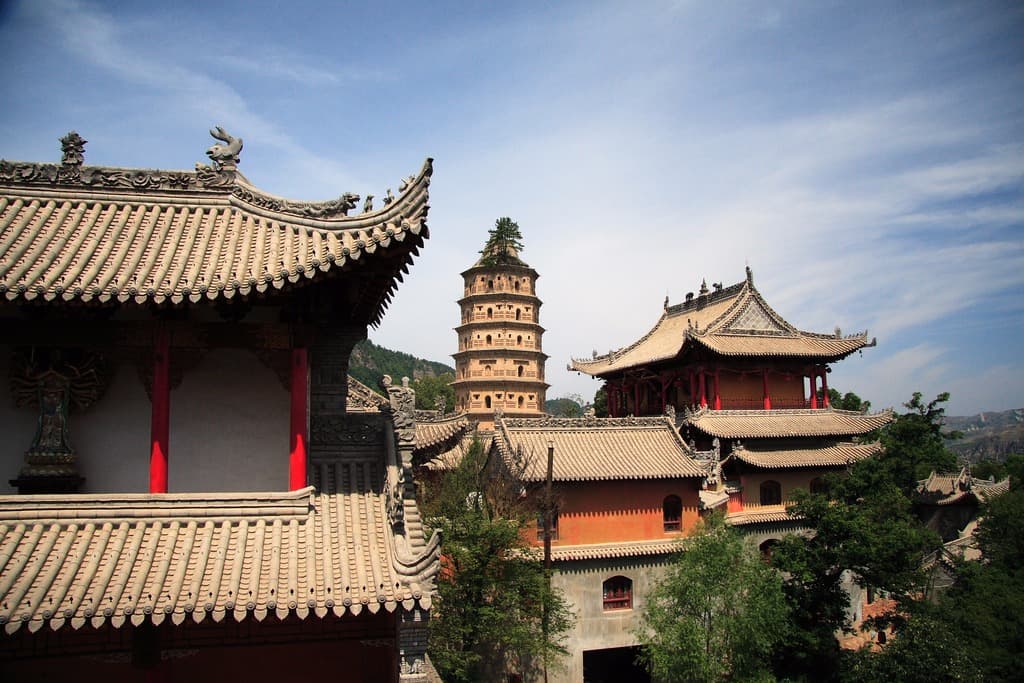
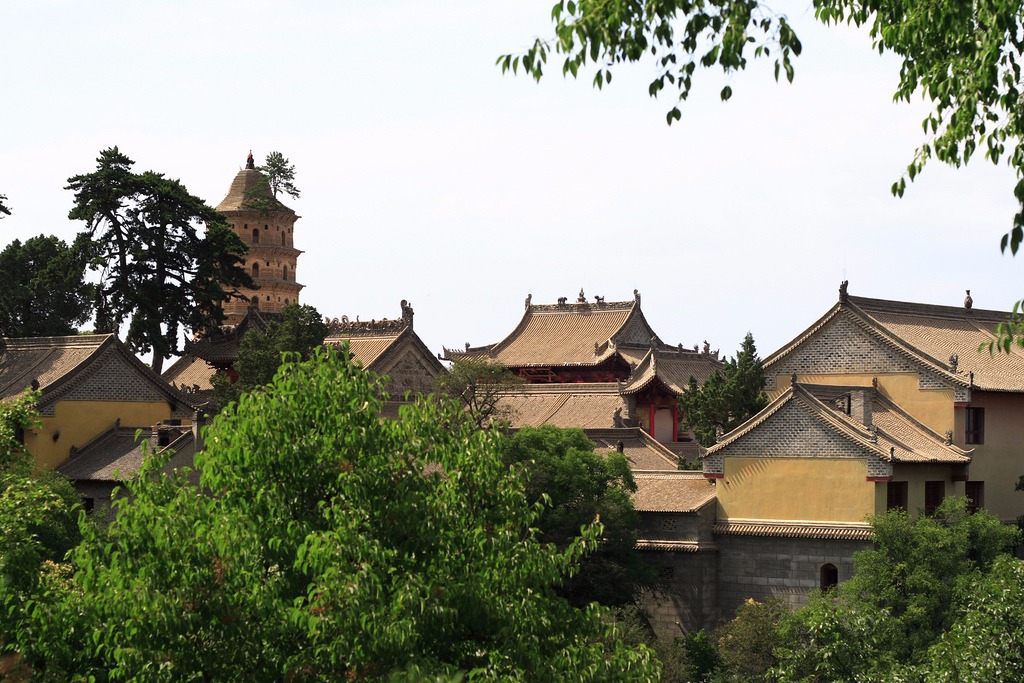
The massif comprises several peaks, including Incense Peak (Xiangshan) and Supreme Peak (Taiwu). Dozens of Taoist and Buddhist temples dot the trails, some built directly into the rock. Mixed forests cover the slopes, providing dense canopy in summer. Vertical cliffs cut through the landscape, typical of Loess karst formations.
History and Context
Kongtong is mentioned in Sima Qian's Records of the Grand Historian: the Yellow Emperor allegedly journeyed there to learn the Way. The site became a major center of Taoism under the Tang and Song dynasties. Several martial arts schools also have roots here, with «Kongtong boxing» (崆峒派) being one of Chine's recognized martial traditions.
Highlights of the Visit
The Palace of the Immortal (Wanshou Palace)
The principal Taoist complex on the massif, it comprises several halls dedicated to deities of the Taoist pantheon. The architecture integrates with the rock faces, with covered galleries connecting the buildings.
Ridge Trails
Paths linking the different peaks offer sweeping views across the Loess Plateau and, on clear days, toward the foothills of Liupan Shan. The ascent to Supreme Peak is the most frequented.
Caves and Hermitages
Several natural cavities have been adapted as retreats by Taoist monks. Some still house statues and inscriptions carved into the rock.
Etiquette and Visitor Rules
- Remove shoes before entering certain worship halls (signs posted on site).
- Do not photograph religious ceremonies in progress without the officiants' consent.
- Speak softly in prayer spaces; avoid overly light clothing.
- Do not touch statues or ritual objects.
Photography Tips
Morning light is ideal for photographing temples from ridge trails, before heat haze veils the valleys. In autumn, russet foliage contrasts with gray rock faces. Covered galleries offer interesting perspective framings. Check photography restrictions in each temple: some halls prohibit photography.
Location and Access
Kongtong Shan lies roughly twelve kilometers west of Pingliang's city center. The town is accessible by train from Lanzhou (approximately 2.5 hours) and Xi'an. Local buses and taxis connect Pingliang station to the site entrance. Inside, motorized shuttles serve main access points to the trails.
Nearby
- Suspended Caves of the region — temples carved into cliffs, continuing the tradition of northwestern Taoist sites.
- Pingliang's Old Town — lively market and Silk Road architecture to explore before or after the climb.
Photos
Interested in this visit?
We can include it in your personalised itinerary.