Qingming Street
Qingming Street
A historic axis of Pingyao stretching 750 meters, Qingming Street lines ancient shops, a Ming market tower and typical Shanxi restaurants.
Qingming Street runs through the old city of Pingyao, in Shanxi Province, for nearly 750 meters. Lined with around a hundred buildings from the Ming and Qing dynasties, it preserves the character of a major Chinese trading thoroughfare as it functioned centuries ago, complete with silk shops, traditional restaurants, and a three-story market tower.
Why visit Qingming Street
Qingming Street is the historic commercial spine of Pingyao, a fortified city inscribed on the UNESCO World Heritage list. It brings together three distinct points of interest along a single axis:
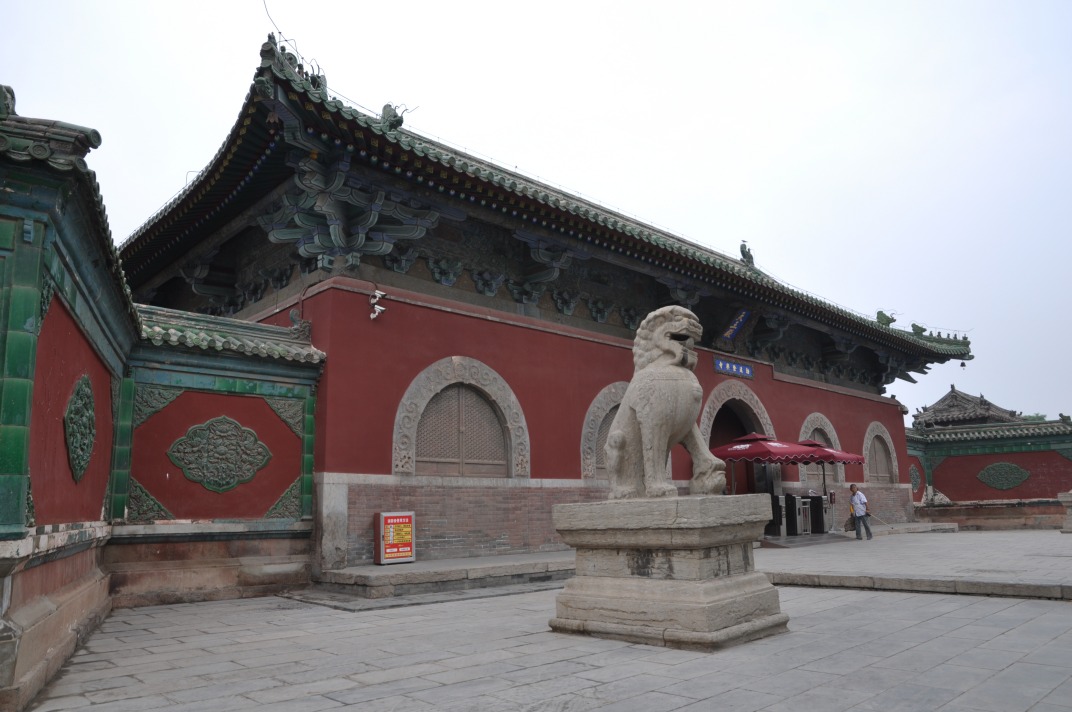
- Architectural: facades, commemorative arcades, decorated passageways, and traditional brick and stone courtyards typical of Ming and Qing styles.
- Historical: former seat of the city government and temple of the gods, bearing witness to the district's political and religious role.
- Gastronomic: restaurants serving Shanxi specialties, notably salted beef, stir-fried noodles, and Wantuo.
Listed in 2009 on China's cultural heritage inventory, the street can be walked through in 1 to 2 hours depending on shop stops.
History of Qingming Street
The street was developed during the Ming dynasty (1368–1644). It quickly became the benchmark market for businessmen from Shanxi Province, at a time when Pingyao established itself as one of imperial China's financial centers, notably thanks to its banks (the piaohao).
The influx of merchants attracted shops, banks, and trading companies, transforming the axis into the city's economic heart. The buildings were renovated in 1688 under the Qing dynasty, but the overall architectural ensemble from the Ming (1368–1644) and Qing (1616–1912) periods was preserved to maintain its original character.
Today, Qingming Street houses the major antiques market of Shanxi Province: antique objects, calligraphy, porcelain, and local curiosities are sold in restored historic shops.
The name Qingmingjie is sometimes literally translated as "long street" in Chinese, referring to its layout that structures the southern part of the old city.
What to see along the street
The market tower
Standing 18.5 meters tall and organized across three stories, the market tower rises at the intersection of the main alleyways. Its gates, pillars, porches, and rooflines form a representative example of Ming architecture. It serves as the visual centerpiece of the street.
Historic silk shops
Two storefronts recall the street's textile past: Kuichengyu and Yougtaicheng, former silk and satin houses, testify to the luxury trade that passed through Pingyao.
Official and religious buildings
Several buildings of historical interest dot the axis, including the seat of the former city government and the temple of the gods. The street begins south of the Xingguo Temple, the logical starting point for a walking tour.
Shanxi's table
Restaurants along the street serve Shanxi cuisine classics: local salted beef, stir-fried noodles, and Wantuo, a buckwheat flour preparation characteristic of the region.
Practical information
- Opening hours: the street is accessible year-round; most shops and restaurants open in the morning and close in the evening. Hours vary by establishment.
- Admission: access to the street is free. A combined ticket covers the main monuments of Pingyao's old city (modest fee).
- Visit duration: allow 1 to 2 hours to walk the street, longer if you take a meal or explore the antique dealers.
- Best time: early morning or late afternoon to avoid crowds and enjoy the light on the historic facades.
How to get there
Pingyao is reached from Taiyuan, capital of Shanxi, by regular train (approximately 1 to 2 hours depending on service). High-speed rail connections also serve the city from Beijing and Xi'an.
Once at Pingyao station, the old city is a few minutes away by taxi or electric shuttle. Within the walls, motorized traffic is restricted: Qingming Street is explored on foot, or aboard small electric vehicles that travel through the historic center.
What to see nearby
Pingyao fits into a broader Chinese itinerary. Several sites complement a cultural visit to the region and country:
- Great Pagoda of the Wild Goose in Xi'an, a classic stop on the Shanxi route.
- The Great Wall at Juyongguan, accessible from Beijing.
- Bezeklik Thousand Buddha Caves, to continue westward into China.
- Hexigten Geopark, for a nature component in the north of the country.
Frequently asked questions
Frequently asked questions
Plan 1 to 2 hours to walk through it comfortably, longer if you include a meal at a traditional restaurant or stops in antique shops.
Walking the street is free. However, some monuments in Pingyao's old city are included in a combined ticket at a modest fee.
Shanxi classics: local salted beef, stir-fried noodles, and Wantuo, a regional buckwheat flour preparation.
Qingmingjie is sometimes literally translated as "long street" in Chinese, referring to its layout that structures the southern part of the old city over nearly 750 meters.
Qingming Street was inscribed in 2009 on China's cultural heritage inventory, complementing Pingyao's old city's UNESCO World Heritage status.
Planning your visit
Qingming Street fits naturally into a cultural circuit across Shanxi and ancient Chinese capitals. To build a complete itinerary including Pingyao, consult our trips to Chine and their cultural highlights.
Nearby

Interested in this visit?
We can include it in your personalised itinerary.