Summer Palace of the Panchen Lamas (Dechen Podrang)
Dechen Podrang, the summer palace of the Panchen Lamas in Shigatse, blends traditional Tibetan architecture, ornate chapels, and tree-lined gardens, just steps away from Tashilhunpo Monastery.
In Shigatse, Tibet's second-largest city, the summer palace of the Panchen Lamas — known as Dechen Podrang — sits within a wooded estate at the foot of Tashilhunpo hill. A seasonal residence of the Panchen Lamas, the spiritual successors of the Gelugpa lineage, it offers a more intimate counterpoint to the grand neighboring monastery. Traditional Tibetan architecture, gardens, and a contemplative atmosphere make it a meaningful stop for those interested in Tibet's religious heritage.
What you'll see
The complex brings together multi-story residential buildings, inner chapels adorned with thangkas and Buddhist statues, and tree-lined gardens that stand in contrast to the aridity of the Tibetan plateau. Reception halls preserve furnishings and liturgical objects connected to the Panchen Lamas. The site draws fewer visitors than Tashilhunpo, allowing for a more peaceful visit.
History and context
The Panchen Lamas, whose main seat is Tashilhunpo Monastery founded in 1447, used this palace as a summer retreat. The Panchen Lama lineage represents one of the two highest authorities in Gelugpa Tibetan Buddhism, alongside the Dalai Lama. The palace reflects the considerable political and spiritual influence these figures wielded over central Tibet and in relations with the Qing imperial court of Chine.
Highlights of your visit
The inner chapels
The prayer halls house gilded statues and murals characteristic of Tibetan religious art. The atmosphere is reverent; monks may conduct services at certain times.
The gardens and views of Tashilhunpo
The wooded estate offers a clear perspective of Tashilhunpo Monastery's golden roofs. It is one of Shigatse's rare green spaces, especially pleasant in summer.
Tibetan residential architecture
White facades with black-framed windows, flat roofs adorned with banners, and interior courtyards exemplify the Tibetan palatial style, distinct from strictly religious monasteries.
Etiquette and visiting rules
- Dress code : shoulders and knees covered in chapels.
- Shoes : removal may be requested at the entrance to certain prayer rooms — follow instructions on site.
- Silence in active places of worship; do not disturb monks in prayer.
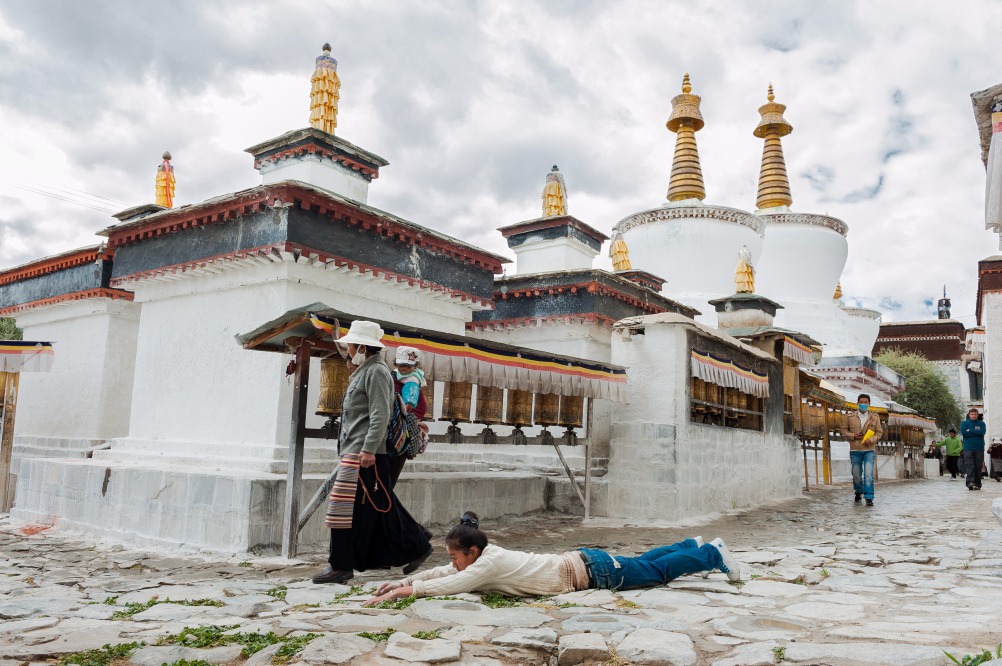
- Circumambulation : respect the circulation direction (clockwise) around sacred buildings.
- The site is subject to Tibet access regulations: a Tibet Travel Permit is mandatory for all foreign visitors.
Photography tips
Morning light is favorable on white facades and gilded roofs. Always ask permission before photographing monks or worshippers. Photography may be restricted or forbidden inside chapels — check signs at the entrance of each room.
Location and access
The palace is located in Shigatse, in the immediate vicinity of Tashilhunpo Monastery. Shigatse is accessible from Lhassa by highway (approximately 280 km) or by the Lhassa–Shigatse train. Local tuk-tuks and taxis serve the Tashilhunpo area from the city center. Access to Tibet requires a Tibet Travel Permit obtained through an accredited agency — Nomadays can assist you with these arrangements.
Nearby attractions
- Tashilhunpo Monastery — seat of the Panchen Lamas, one of the largest active Gelugpa monasteries in Tibet.
- Shigatse Dzong — restored fortress overlooking the city, with panoramic views of the valley.
- Shigatse Market — vibrant Tibetan market where craftspeople and nomads from the region shop.
Frequently asked questions
Yes. All foreign visitors to Tibet must hold a Tibet Travel Permit, obtained mandatorily through an accredited travel agency. Additional permits may be required depending on your itinerary in the region.
April through October offer the most favorable conditions. Summer (June–August) corresponds to the rainy season on the southern face of the Himalayas, but Shigatse generally remains accessible. Winter is cold and some road access may be closed.
Yes, the two sites are close to each other. Plan a half-day for Tashilhunpo and include the summer palace in the same outing. Start with Tashilhunpo in the morning, when light is favorable and crowds are lighter.
Restrictions vary by room. Photography is often forbidden or subject to an additional fee in chapels. Check signs at the entrance of each space and respect the instructions of guards.
One to one and a half hours is sufficient to tour the palace and its gardens. If you wish to observe monastic life or linger in the chapels, allow more time.
Interested in this visit?
We can include it in your personalised itinerary.