Pule Temple (Temple of Universal Joy)
Pule Temple (Temple of Universal Joy)
Pule Temple, the 'Temple of Universal Joy', combines Han and Tibetan architecture east of Chengde. Its golden rotunda and views over the Bangchui cliffs make it a major imperial site, UNESCO World Heritage listed.
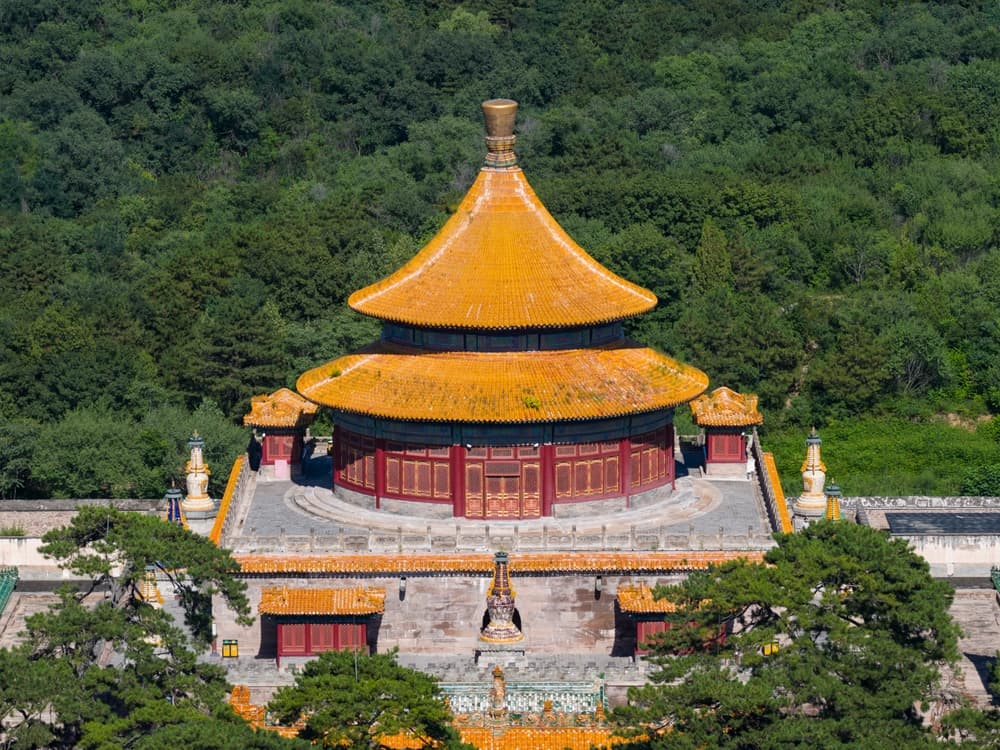
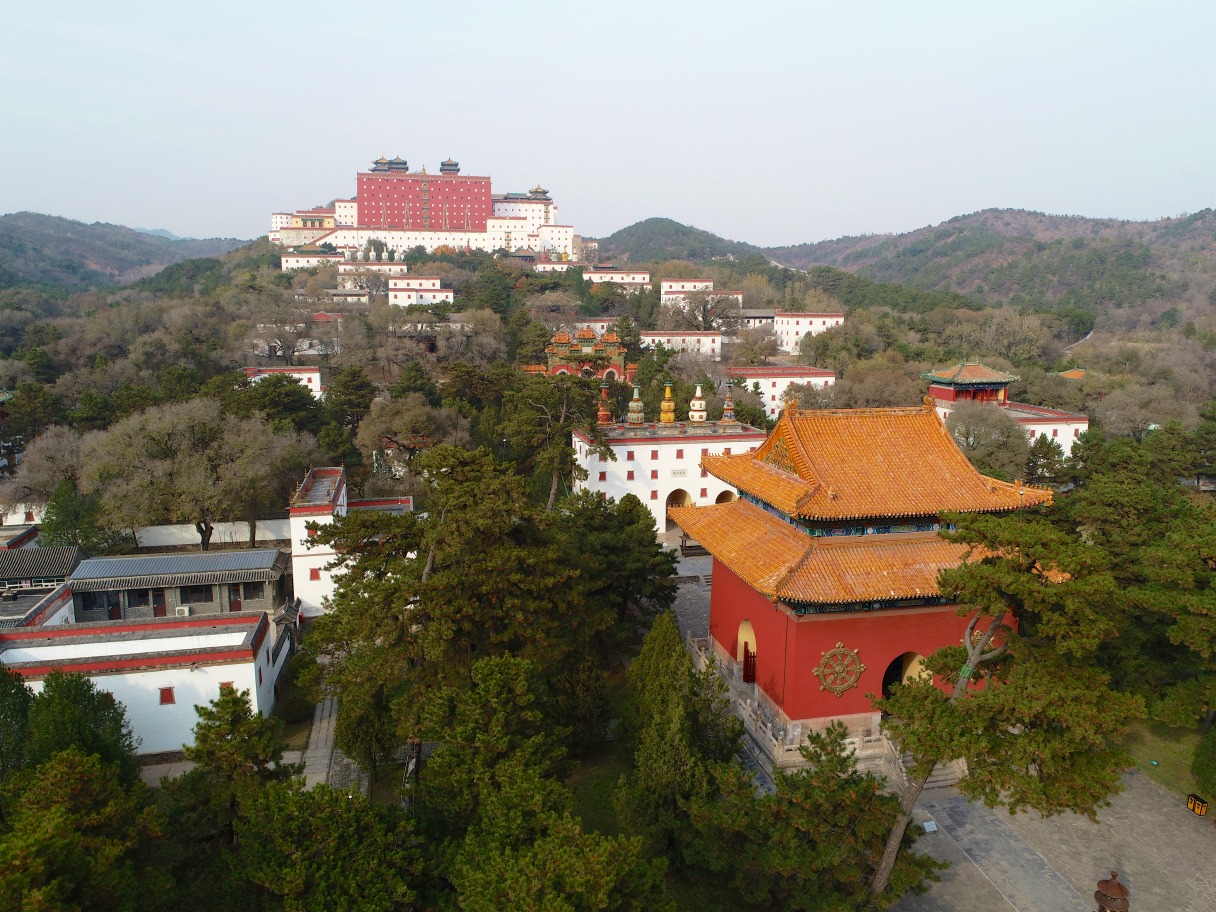
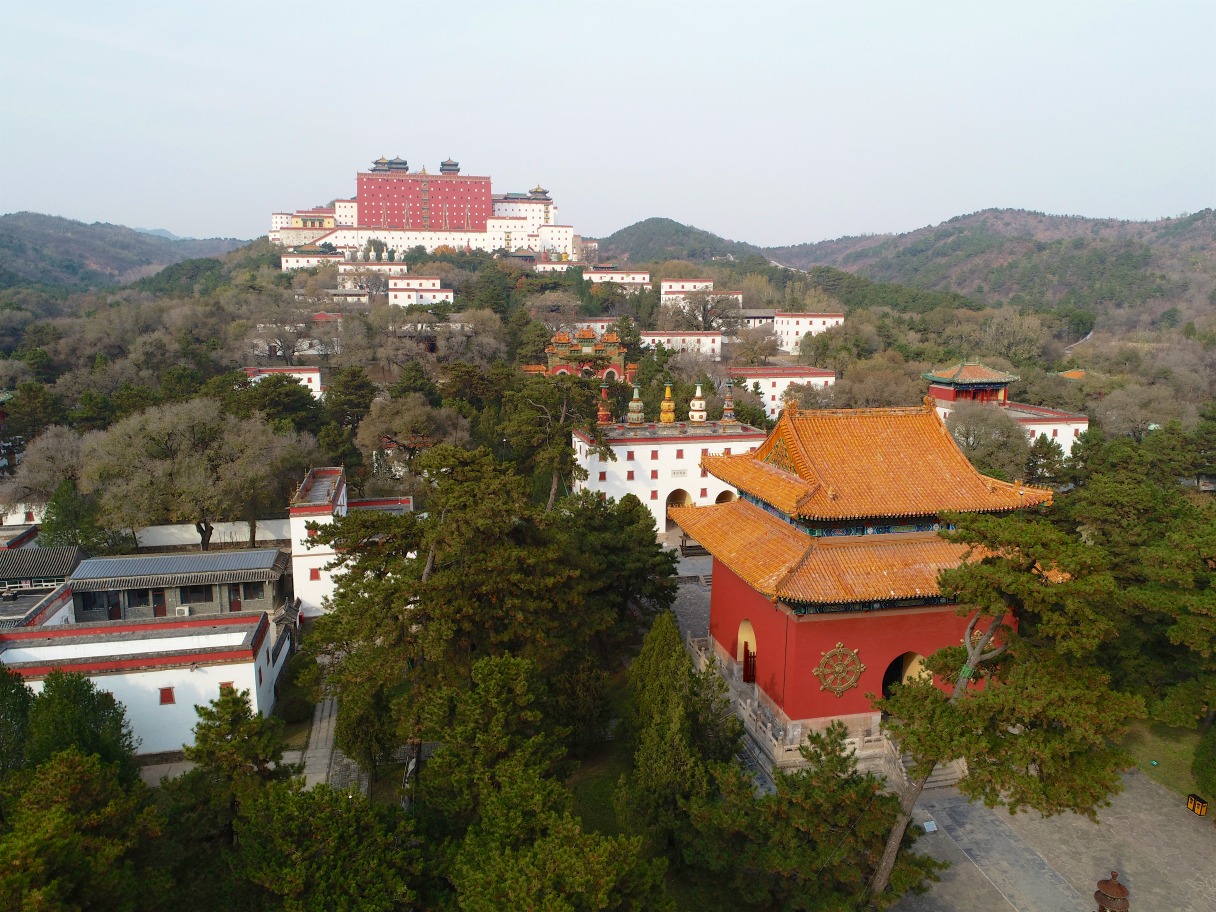
Pule Temple, or the 'Temple of Universal Joy', rises to the east of Chengde, backed by the cliffs that dominate the valley. Built under Emperor Qianlong in the 18th century, it served to receive delegations of Mongols and Kazakhs visiting the imperial court. Its layout blends Tibetan and classical Han architecture, crowned by a double-roofed rotunda reminiscent of the Temple of Heaven in Beijing.
Practical information at a glance
- Access: east of Chengde's city center, at the foot of the Bangchui cliffs; reachable by urban bus or taxi from the station.
- Recommended duration: 1 to 1.5 hours for a complete visit.
- Dress code: no strict obligation, though appropriate attire is expected in the worship halls.
- Accessibility: sloped terrain with stairs; partial access difficult for people with reduced mobility.
What you'll see
The temple is organized into two main zones. The front section, Han-inspired, aligns classical pavilions along a north-south axis. The rear section, Tibetan in character, culminates in the Xiangyuan rotunda, crowned with a double roof of gilded tiles. Inside, a sculptured wooden mandala and a thousand-armed Guanyin statue occupy the heart of the main hall.
History and context
Qianlong commissioned Pule in 1766 to strengthen diplomatic ties with the peoples of the steppes. The temple was not a place of daily worship: it functioned as a space for reception and political ceremony. Its hybrid architecture was a deliberate message—to show foreign visitors that the empire mastered their own religious and artistic codes.
Highlights of the visit
The Xiangyuan rotunda
This is the centerpiece of the site. Its circular silhouette, glazed yellow tiles, and red lacquered wooden framework make it the most photographed element. The interior houses the mandala and Guanyin statue in striking semi-darkness.
The view over Bangchui cliffs
From the temple's upper terrace, the rock columns of Bangchui ('club') stand silhouetted above the trees. This panorama unites imperial architecture with spectacular natural landscape.
The entrance pavilions
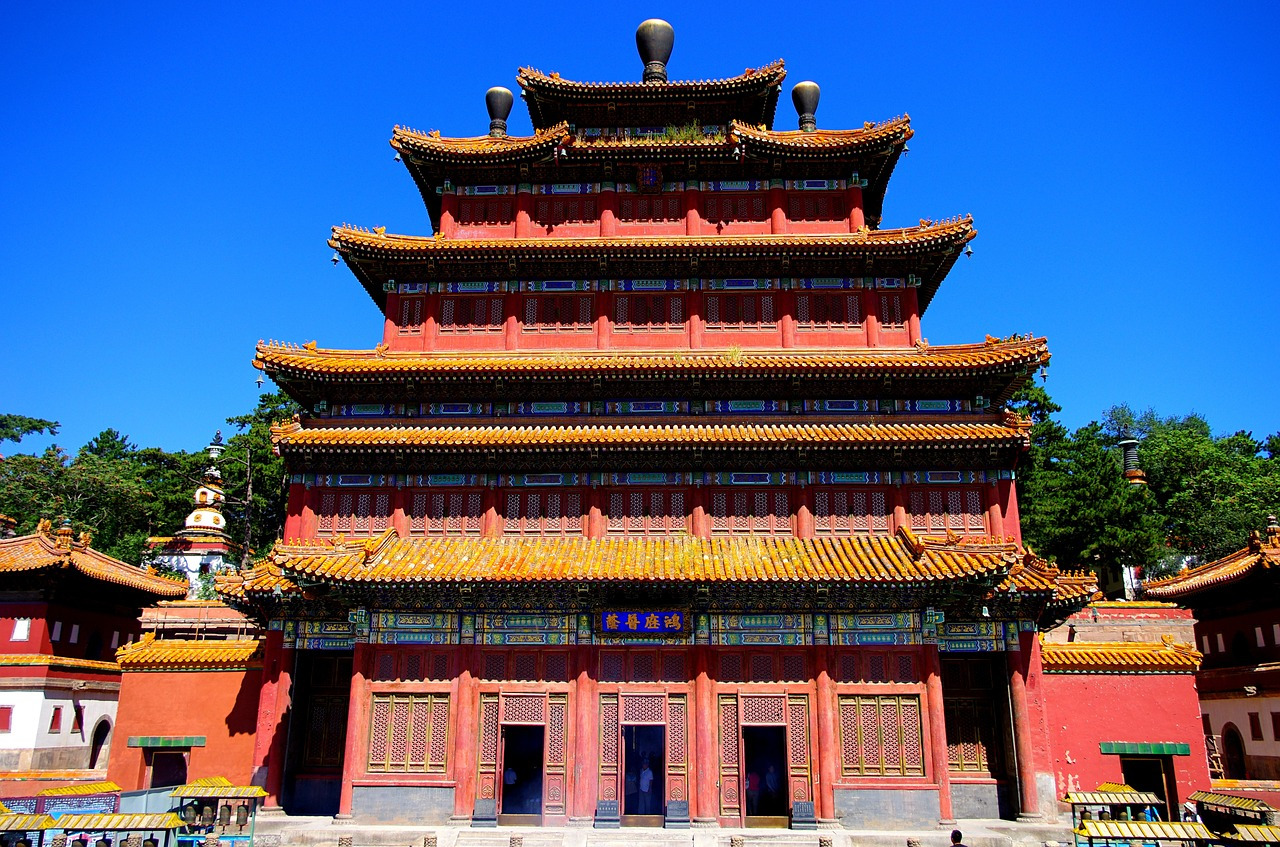
The sequence of gates and pavilions preceding the rotunda perfectly illustrates Han architectural grammar: double-eave roofs, dragons on ridgepoles, paved courtyards. An intentional contrast with the Tibetan rotunda that concludes the visit.
Etiquette and visiting rules
- Speak quietly in halls where Buddhist statues are displayed.
- Photography is generally permitted outdoors; check restrictions inside the rotunda before shooting.
- Do not touch statues or carved elements.
Photography tips
Morning light illuminates the rotunda's facade straight on. In late afternoon, the Bangchui cliffs take on warm hues visible from the upper terrace. A wide-angle lens lets you frame the rotunda with its entire double roof from the lower courtyard.
Location and access
Pule Temple stands immediately east of Chengde's city center, near the Bangchui cliffs. It neighbors the Puning Temple and the Mountain Resort domain, the city's two other major imperial sites. A taxi from Chengde station takes about ten minutes.
In the surrounding area
- Puning Temple — Chengde's largest Tibetan temple, famous for its 22-meter-tall Guanyin statue.
- Imperial Mountain Resort (Bishu Shanzhuang) — vast summer palace and UNESCO-listed imperial park.
- Bangchui Cliffs — rock columns accessible by cable car, with sweeping views over Pule Temple.
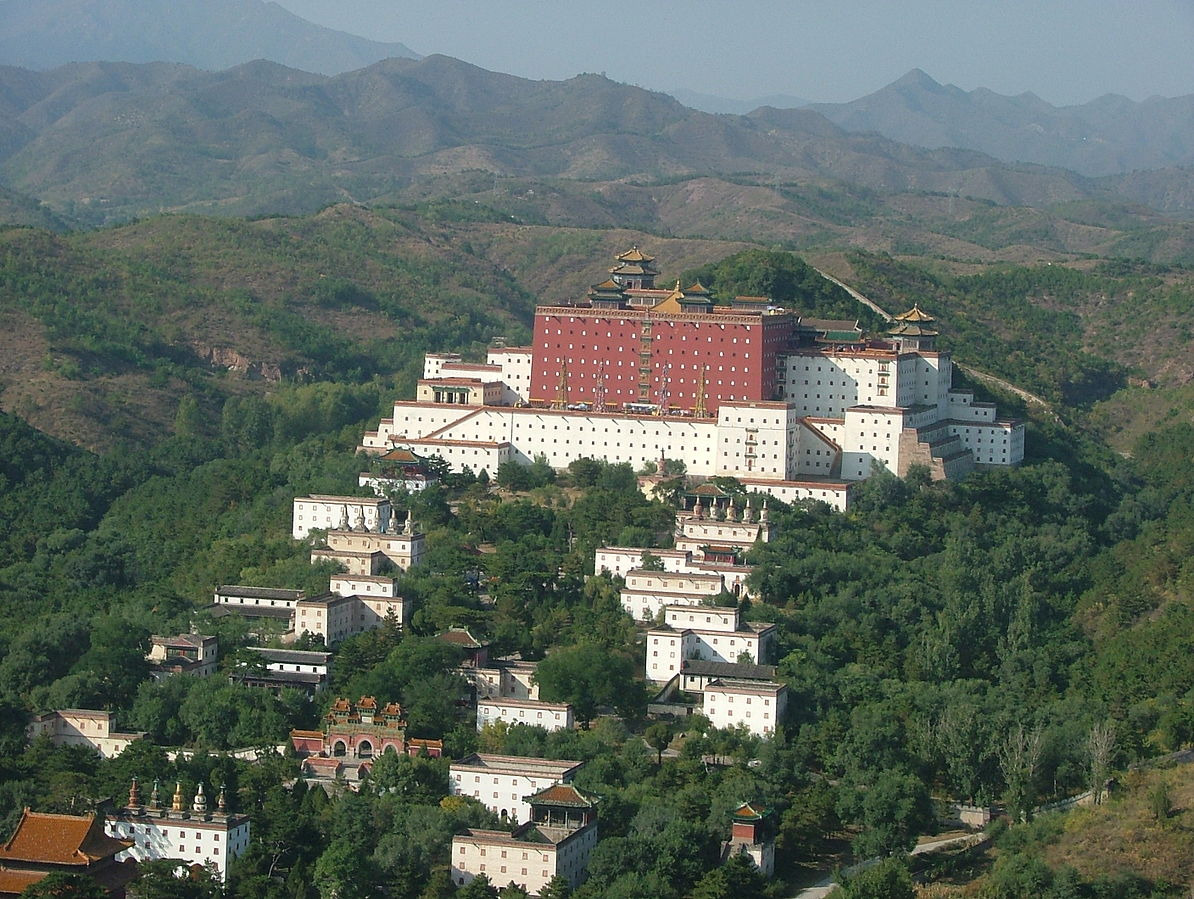
- Putuo Zongcheng Temple — replica of the Potala Palace in Lhasa, west of the city.
Frequently asked questions
Spring (April–May) and autumn (September–October) offer pleasant temperatures and colorful vegetation around the site. Summer is warm but remains peak tourist season in Chengde.
Yes, both sites are adjacent. From the temple's upper terrace, a path leads to the cliffs' cable car. Allow half a day for both.
Photos are unrestricted in courtyards and outdoors. Inside the Xiangyuan rotunda, restrictions may apply; check at the building's entrance.
The terrain is sloped and includes several staircases. Access to the upper rotunda is difficult in a wheelchair. The lower temple section remains partially accessible.
One to one and a half hours is sufficient to walk through the entire temple at a leisurely pace, including photos.
Yes. It is part of the 'Imperial Mountain Resort and surrounding temples of Chengde' site, inscribed as a UNESCO World Heritage site in 1994.
Nearby
Interested in this visit?
We can include it in your personalised itinerary.