Outer Temples of Chengde (Waibamiao)
Outer Temples of Chengde (Waibamiao)
Scattered across the hills surrounding Chengde's imperial park, the eight outer temples (Waibamiao) blend Han and Tibetan architectural styles. Built during the Qing dynasty, they are UNESCO-listed and home to the colossal Guanyin statue of Puning Si.
Scattered across the hills encircling Chengde's imperial park, the eight outer temples — known as Waibamiao in Chinese — form a unique monastic complex built under emperors Kangxi and Qianlong in the 17th and 18th centuries. Blending Han, Tibetan, and Mongol architectural styles, they served both as places of worship and as diplomatic instruments to bring the frontier peoples under Qing imperial rule. UNESCO World Heritage–listed, several remain active monasteries today.
Quick Facts
- Access: The temples are spread north and east of Chengde's imperial park; some are walkable from the mountain residence, while others require a taxi or local bus.
- Recommended duration: Half a day for the main temples (Puning Si, Putuo Zongcheng); a full day to explore all eight.
- Dress code: Respectful attire required at active temples; shoulders and knees should be covered.
- Accessibility: Limited — sites feature numerous stairs and sloping terrain.
What You'll See
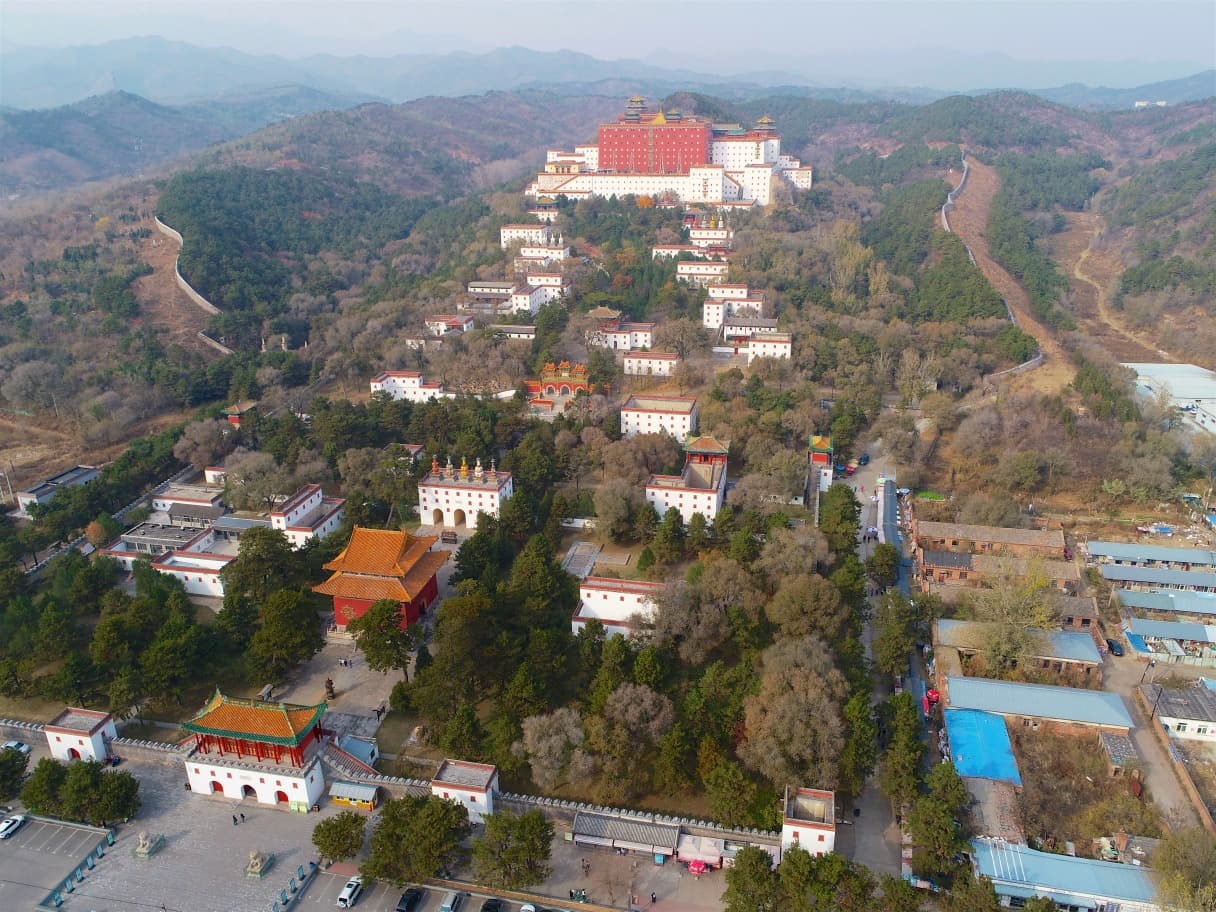
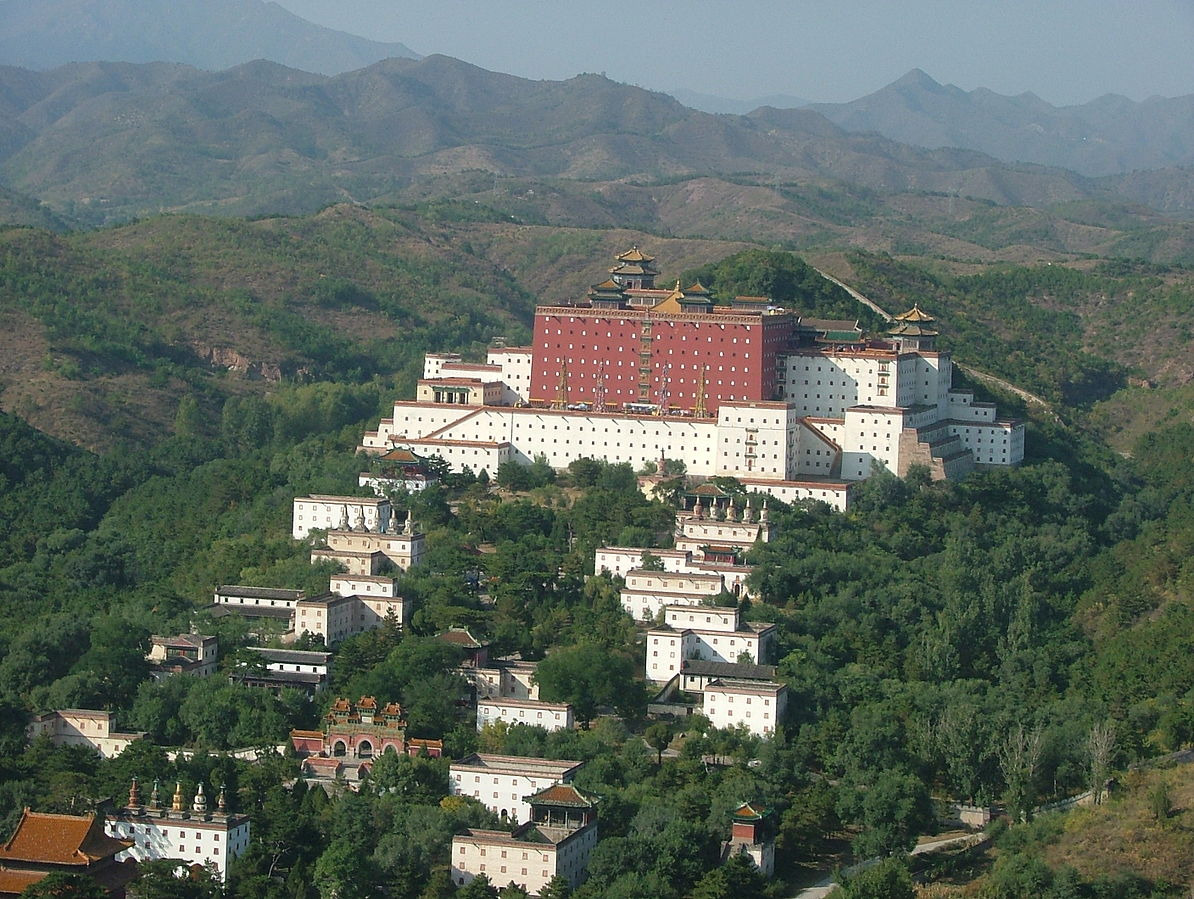
Each temple has a distinct architectural identity. Puning Si (Temple of Universal Peace) houses a 22-meter wooden Guanyin statue, among the world's largest. Putuo Zongcheng draws inspiration from Lhassa's Potala Palace with its tiered red and white façades. Xumifushou echoes the Tashilhunpo Monastery. The remaining temples — Pule Si, Puren Si, Pushan Si, Anyuan Miao, Shuxiang Si — range from classical Han style to hybrid Tibetan forms.
History and Context
Construction spanned from 1713 to 1780. Emperor Qianlong commissioned these temples to host Mongol, Tibetan, and Uyghur delegations visiting Chengde during imperial hunting expeditions. Each temple conveyed a specific political message: that the Qing Empire respected and integrated the religious traditions of its vassal peoples. Several temples deliberately replicated celebrated Central Asian sanctuaries to flatter foreign dignitaries.
Highlights of Your Visit
Puning Si — the Giant Guanyin
The Mahayana Hall shelters the thousand-armed Guanyin statue, carved from pine and cypress wood. At 22 meters tall, its scale demands a multi-level interior gallery structure. The temple remains active, with Buddhist monks in residence.
Putuo Zongcheng — the "Little Potala"
Built to celebrate Qianlong's 60th birthday and his mother's 80th, this 22-hectare complex mirrors the Potala Palace's general layout. Red terraces and gilded chapels command panoramic views of the valley and imperial residence.
Pule Si — the Manchu Rotunda
This temple marries a classical Han façade with a circular Tibetan-inspired rotunda, recalling Peking's Temple of Heaven. It was built to receive Kazakh and Kyrgyz delegations.
Etiquette and Visiting Rules
- Remove your shoes before entering prayer halls in active temples.
- Do not touch statues or ritual objects.
- Speak quietly in worship spaces; ceremonies may be held at any time at Puning Si.
- Certain interior areas are off-limits to non-practitioners.
Photography Tips
Morning light is ideal for Putuo Zongcheng: the red façades capture the sunrise without harsh shadows. At Puning Si, the Guanyin statue is difficult to photograph in full from ground level — the side galleries offer better angles. Photography is generally permitted in outdoor courtyards; check signs at interior hall entrances for restrictions.
Location and Access
The temples lie north and east of the Imperial Mountain Residence in Chengde, Hebei Province. Chengde is accessible from Beijing by high-speed train. Local buses and taxis connect the temples from the city center. The undulating terrain makes walking between all sites tiring; renting a taxi or vehicle is advisable for visiting multiple temples in a single day.
Nearby Attractions
- Imperial Mountain Residence (Bishu Shanzhuang) — China's largest imperial park, directly adjacent to the temples.
- Club-Shaped Rock (Bangchui Shan) — an iconic rock formation visible from several temples.
Frequently asked questions
No. Two or three temples provide a satisfying visit. Puning Si and Putuo Zongcheng are the most representative; Pule Si rounds out the trio nicely if time permits.
Cover your shoulders and knees at all active temples. Bring shoes that are easy to remove for prayer halls.
It's possible but ambitious. You'll do better dedicating half a day to the residence and the other half to the main temples, especially if you want to savor each site.
Most are open all year. Chengde's winters are cold and visitor numbers drop; spring and autumn offer the best conditions.
Yes in outdoor courtyards. Inside prayer halls, restrictions vary by temple — respect the signs posted at entrances.
The temples are spread across several kilometers. A taxi or rental vehicle is the most practical way to visit multiple sites in a day. Local buses exist but service varies.
Photos
Interested in this visit?
We can include it in your personalised itinerary.