Yulin Caves (榆林窟)
Yulin Caves (榆林窟)
Carved into a gorge 75 km east of Dunhuang, the Yulin Caves shelter Buddhist murals spanning over a thousand years of history, from the Tang to the Qing dynasties, set within a remarkably preserved natural landscape.
The Yulin Caves lie approximately 75 km east of Dunhuang, in Guazhou County, carved into the cliffs of a narrow gorge traversed by the Yulin River. Less visited than the Mogao Caves, they preserve Buddhist murals of remarkable quality, spanning a period from the Tang dynasty through the Qing period. Their exceptional state of preservation and contemplative atmosphere make them a precious stop for anyone interested in the rock art of the Silk Road.
Practical Information at a Glance
- Access: Road from Dunhuang to Guazhou, then track toward the Yulin Gorge — private vehicle or organized tour recommended.
- Suggested duration: 2 to 3 hours on-site.
- Dress code: Modest dress required; some caves require removing shoes.
- Guided visit: A site keeper accompanies visitors to open the caves — independent exploration inside the chambers is not permitted.
- Photography: Forbidden inside the caves (flash and tripods strictly prohibited).
What You'll See
The site comprises about forty caves spread across both banks of the gorge, connected by a bridge. Paintings cover the walls and ceilings: scenes from the Buddha's life, mandalas, bodhisattva figures, donor representations. Caves dating from the Tang and Song dynasties display particularly elaborate compositions. A few polychrome clay statues have survived the centuries.
History and Context
The Yulin Caves were excavated beginning in the period of the Sixteen Kingdoms (4th century), then enriched under the Tang, Song, Xixia (Tangut), Yuan, and Ming-Qing dynasties. They form a direct complement to the Mogao Caves: certain artists and patrons worked at both sites. Xixia influence is particularly visible, with iconographies unique to this vanished kingdom.
Highlights of Your Visit
Xixia-Era Murals
Caves dating from the Xixia kingdom (10th–13th centuries) are rare in Chine. Their murals blend Tibetan, Chinese, and Central Asian influences in a unique hybrid style. They document a culture erased by the Mongol conquest.
The Gorge and Natural Setting
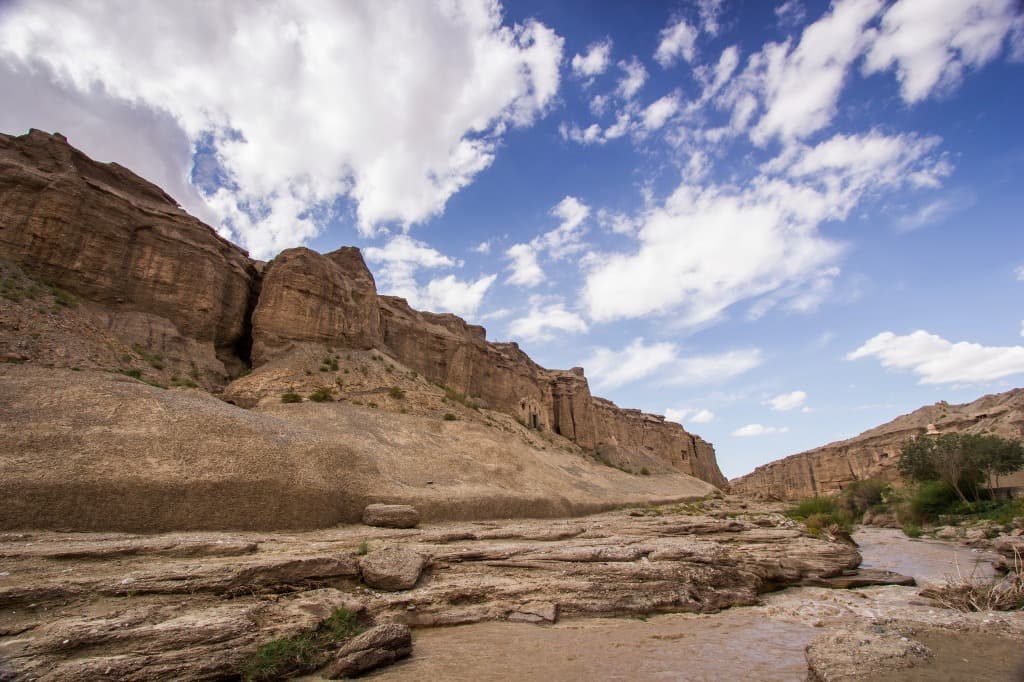
The Yulin River flows through a steep gorge bordered by poplars. The contrast between vegetation, ochre cliffs, and the quiet of the place creates an atmosphere quite different from the Mogao site—more austere and less crowded.
Tang Dynasty Caves
Several Tang-period caves preserve murals in still-vivid colors: representations of the Western Paradise, narrative scenes from the Vimalakirti Sutra, guardian figures with expressive faces.
Etiquette and Visiting Rules
- Follow the site keeper at all times; do not touch painted walls.
- Speak quietly inside the caves.
- Photography strictly forbidden inside — respect this rule for the preservation of pigments.
- Dress covering shoulders and knees recommended.
Photography Tips
Photography is prohibited inside the caves. However, the gorge itself offers fine photographic opportunities: the bridge connecting the two banks, the cliffs in late afternoon golden light, and the poplars along the riverbank in spring or autumn.
Location and Access
The Yulin Caves are located in Guazhou County (formerly Anxi), approximately 75 km east of Dunhuang. The road is paved to near the site. The most practical approach is to rent a vehicle with driver in Dunhuang or book a full-day excursion combining Yulin with other sites in the region. The Mogao Caves are the essential reference site to visit alongside it.
In the Surrounding Area
- Mogao Caves — Dunhuang's major Buddhist site, with more than 490 decorated caves spanning 1,600 years of history.
- Mingsha Dunes and Crescent Lake — The great singing sand dunes at the gates of Dunhuang, with their crescent-moon lake.
- Yumen Guan Ruins (Jade Gate) — An ancient Silk Road frontier post, west of Dunhuang.

Interested in this visit?
We can include it in your personalised itinerary.