Zhangbi Ancient Castle
A fortified village in Shanxi, Zhangbi conceals beneath its narrow lanes a labyrinth of three-level military tunnels. On the surface, Taoist, Buddhist and Confucian temples alongside Ming ramparts form a rare and still-inhabited historical ensemble.
Perched on a plateau south of Jiexiu, in Shanxi Province, Zhangbi Castle is a fortified village over a thousand years old. Its defining feature: a network of underground tunnels carved at three levels beneath the lanes, originally designed for military purposes. On the surface, Taoist, Buddhist and Confucian temples coexist within just a few hectares—a religious density rarely found in a village of this size.
Practical Information at a Glance
- Access: Jiexiu is reachable by train from Taiyuan (Shanxi's capital); the castle lies about fifteen kilometers from the city center, accessible by taxi or local bus.
- Suggested Duration: 2 to 3 hours for a complete visit (surface + tunnels).
- Attire: Closed-toe shoes recommended for the tunnels (uneven flooring, low ceilings).
What You'll See
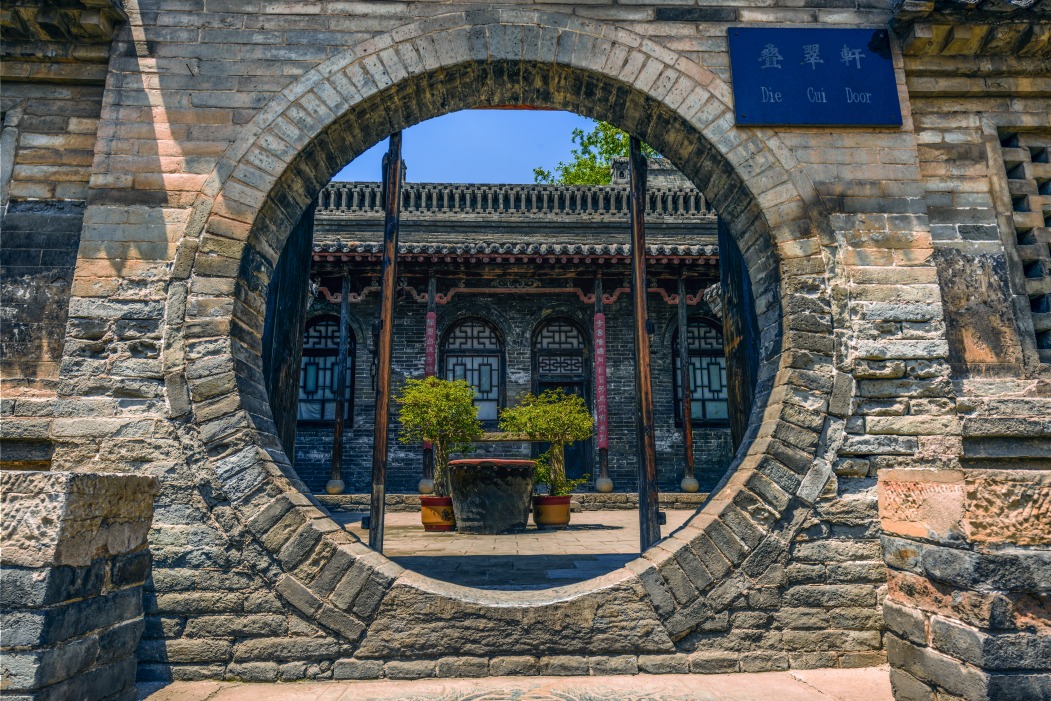
The village preserves its original layout: a main street running north-south, perpendicular lanes and partially intact ramparts. The rammed-earth and grey-brick houses date mostly from the Ming and Qing dynasties. The temples—including the Kang Lang Temple and several Taoist sanctuaries—remain active or have been carefully restored.
Beneath your feet, the tunnels extend for several hundred meters. They feature storage chambers, ventilation shafts and hidden passages. The guided underground tour is the most spectacular part of the site.
History and Context
The castle's origins trace back to the late Sui Dynasty or early Tang Dynasty (7th century), a period of intense conflict in northern Chine. The tunnels are thought to have served as refuge for the population and storage for provisions during invasions. The village later flourished under the Song, Jin, Ming and Qing dynasties, accumulating successive layers of architecture and religious heritage.
Zhangbi is classified among Chine's protected historical villages. Its intact character—it remains inhabited—sets it apart from museumified sites.
Highlights of Your Visit
The Underground Tunnels
Three levels of galleries, connected by ladders and ramps cut into the rock. The atmosphere is cool and dark; a local guide is essential to avoid getting lost and to understand the function of each chamber.
Surface Temples
A dozen sanctuaries concentrated within the village blend Taoist, Buddhist and local cult imagery. The murals in certain temples are remarkably well preserved.
The Ramparts and North Gate
The north gate, flanked by towers, is the most photographed vantage point. From there, your gaze spans the surrounding agricultural plateau and Shanxi's hills.
Etiquette and Visitor Rules
- Remove your shoes before entering certain sanctuaries (signs posted on-site).
- Speak quietly in spaces of active worship.
- Do not touch statues or murals.
- Ask permission before photographing residents.
Photography Tips
Morning light is ideal on the grey tile roofs and ramparts. The narrow lanes create beautiful perspectives in late afternoon. Within the tunnels, a tripod or camera with strong low-light performance is necessary; flash is often forbidden near murals.
Location and Access
Zhangbi is located in Jiexiu District, roughly 150 km south of Taiyuan. From Taiyuan, high-speed rail reaches Jiexiu in under an hour. The castle is not directly accessible by public transport from the station; a taxi or rental car is the most practical solution. The site is largely outdoors with uneven paved terrain, making it challenging for people with reduced mobility, particularly for the underground section.
Nearby Attractions
- Shuanglin Monastery — In Pingyao, its 2,000 painted clay statues rank among Chine's finest.
- Pingyao Old Town — A Ming-era UNESCO-listed city, approximately 30 km northeast of Jiexiu.
- Zhenguo Monastery — In Pingyao, home to one of Chine's oldest surviving timber roof structures.
Interested in this visit?
We can include it in your personalised itinerary.