Changchun
Changchun
Former capital of Manchukuo, birthplace of Chinese cinema and forest city: Changchun opens the doors to Northeast China.
Name: Changchun
Chinese name: 长春
Province: Jilin
Status: Sub-provincial City
Population: 7,677,100 inhabitants
Area: 20,571 km²
Changchun is a major industrial city and the provincial capital of Jilin. As the former capital of Manchukuo, Changchun is today a thriving metropolis where the automotive sector has taken root, manufacturing a considerable number of vehicles.
Far from being a typical tourist destination, this provincial capital nevertheless offers some beautiful landmarks and parks to entertain visitors passing through.
History
Changchun is a relatively new city, initially established in 1800 by imperial decree of the Jiaqing Emperor of the Qing Dynasty. It was then merely a small settlement used to collect taxes under the military administration of the province.
During the Sino-Japanese Wars and subsequent conflicts with Russia, Changchun found itself subjected to persecution on numerous occasions.
In 1931, Japan invaded Manchuria and established itself in Changchun. On March 1st, 1932, the last Chinese emperor established Manchukuo and made Changchun its capital. After years of conflict and resistance, the city was finally liberated from Japanese control and allowed to develop normally.
Today
Changchun is a highly influential regional center politically and economically in Northeast China. The city is renowned for its scientific advancement and universities. Changchun is also characterized as the automobile manufacturing hub. Numerous companies, including Toyota and Volkswagen, have established operations here to develop their engineering and produce all types of vehicles.
Changchun is also nicknamed the forest city. Thirty-nine percent of the city is covered by forests, parks and gardens that help purify the air.
Cinema also plays a significant role in the city, notably through the Changchun Film Studio. Hailed as the cradle of China's film industry, countless films have been shot and dubbed in the Changchun studios, earning it international recognition.
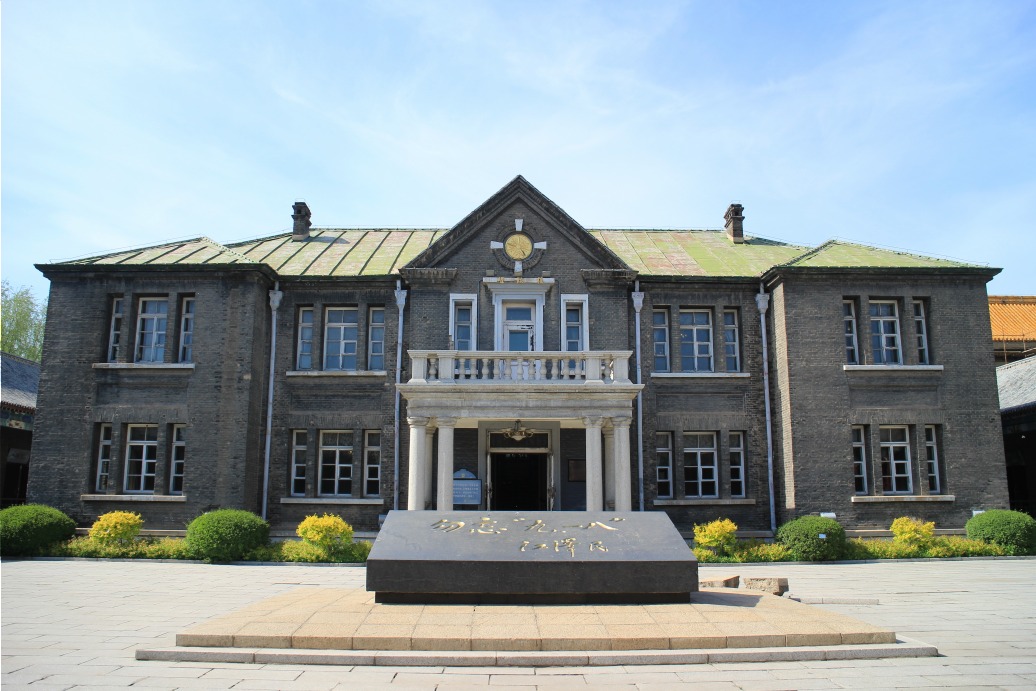
During a short stay in Changchun, do not miss the Palace of the Last Emperor, the former residence of the last emperor of the Qing Dynasty. Although the mansion has been reconstructed, all rooms are identical to the originals.
Climate
Changchun is located in the center of the Songlia Plain and is influenced by a semi-humid climate. Temperatures vary considerably, allowing distinct seasons. Springs are dry and windy, summers short and hot, autumns sunny and pleasant, and winters very cold and snowy.
The average annual temperature is 4.8°C, with an average of -17.2°C in January, the coldest month, and 23°C in July.
Despite the intense cold, winter is a wonderful time to visit Changchun and enjoy the enchanting atmosphere and the ice festival.
By Plane
Changchun Longjia International Airport, located between the city and Jilin, opened in 2005 and offers regular flights from around forty domestic cities including Beijing, Shanghai, Guangzhou, Xi'an, Tianjin, Hangzhou, Wuhan, and Qingdao.
International flights operate to Hong Kong, Tokyo, Seoul, Busan, and Vladivostok.
By Train
Changchun has two railway stations.
The main station regularly connects to Harbin, Jilin, Shenyang, Beijing, Dalian, and Shanghai.
The west station is connected to Dalian, Hefei, Wuhan, Dalian, and Harbin.
Long-Distance Bus
Road development enables rapid connections to Siping, Jilin, and Yingchengzi.
Long-distance buses serve Changchun from Beijing, Dalian, Harbin, Jilin, and Shenyang.
Changchun has around a dozen bus lines connecting the main attractions.
Taxis also operate throughout the city at a starting fare of 5 yuan.
What to do in Changchun?
- Visit the Palace Museum of the Last Emperor of Manchukuo.
- Play the movie star at the Changchun Film Studio.
- Take advantage of winter to discover the ice festival.
Find detailed information on all attractions in Changchun.
Want to discover this destination?
Our local advisors design your tailor-made trip.