Nanjing
Nanjing
Former imperial capital and capital of the Republic of China, Nanjing concentrates 24 centuries of history between Purple Mountain, Ming City Wall and Xuanwu Lake.
Name: Nanjing
Chinese name: 南京
Province: Jiangsu
Status: Sub-provincial city
Population: 8,004,700
Area: 6,598 km²
Nanjing, literally meaning capital of the South, is the capital of Jiangsu province. Also called Nanjing, it served as an imperial capital on multiple occasions as well as the capital of the Republic of China.
The city has undoubtedly shaped China's history and reveals, among its towering modern buildings, remarkably well-preserved vestiges of the past. This historical imprint alone is enough to establish Nanjing as a must-see destination for any trip to China.
History
Prehistoric sites and artifacts discovered in the Nanjing region suggest the area was inhabited 5,000 years ago.
Its recorded history traces back to the Warring States period (453 BC – 221 BC), when it was at the center of numerous conflicts.
In 229, Nanjing became the capital of the Kingdom of Wu, then known as Jiankang. It served as the capital of Southern China until the Sui dynasty unified China and destroyed much of the city. Nanjing was subsequently rebuilt during the Tang dynasty and again became a prosperous capital before gradually fading into obscurity.
In 1368, the Ming dynasty re-established their capital in Nanjing, giving it for the first time the name Capital of the South, Nanjing. The city was then expanded and heavily fortified with a city wall that still stands today.
This glorious resurgence was short-lived, however. In 1420, Nanjing lost its status when Yongle, the third Ming emperor, relocated the capital to Beijing.
The Opium Wars of the 19th century brought the British to Nanjing, where the famous Treaty of Nanjing (1842) was signed, aimed at opening certain Chinese ports to foreign trade and ceding Hong Kong to the British.
Slightly later, in 1853, the Taiping established their capital in Nanjing under the name Tianjing, meaning "Heavenly Capital". A year later, the city was besieged by the Qing army and the Taiping were massacred.
In 1912, Sun Yat-sen's revolution overthrew the Qing dynasty and founded the Republic of China with Nanjing as its capital.
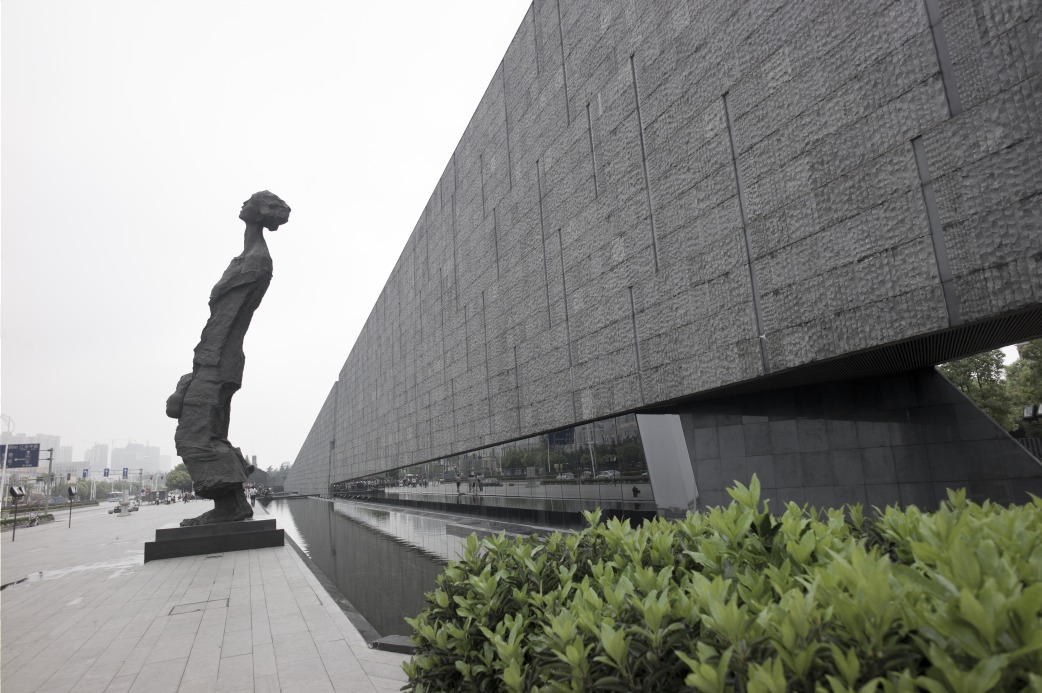
In 1937, the city suffered terrible atrocities when the Japanese army captured Beijing and bombarded Nanjing, which was then the official capital. The violence of this battle led to the massacre of hundreds of thousands of civilians and soldiers, now known by the tragic name of the Nanjing Massacre.
On April 23, 1949, the People's Liberation Army conquered Nanjing, officially ending the Republic of China. Since then, the city has become the capital of Jiangsu province.
Today
Capital of Jiangsu province and former capital of numerous dynasties and the Republic of China, Nanjing is today a major modern city marked by an extraordinary past.
The city sprawls along the southern bank of the Yangtze River and features tree-lined boulevards and streets, grand modern buildings, soaring towers set among parks with lush vegetation, waterways and lakes. This blend of modernity and antiquity earns it the status of one of China's most pleasant cities.
Nanjing has left its mark on China's history and reveals to its visitors vestiges that played important roles in the city's creation.
Visiting Nanjing by retracing its history is entirely possible given the wealth of sites. Purple Mountain, or Zijin Mountain, is a large wooded park that houses within itself a considerable number of historical sites. Among the most interesting, you'll find the Sun Yat-sen Mausoleum at its summit and the Ming Tomb Xiaolin (tomb of Emperor Hongwu) on the clifftside.
The City Wall of Nanjing, the world's oldest surviving urban wall, built by the Ming, testifies to the city's combative character at the time. You can admire the great fortified gates piercing the walls at several strategic points. Continue on to Jiming Temple, one of Nanjing's best-preserved Buddhist structures, and the ruins of the Ming Palace.
To better understand Nanjing's rich history, the city has several outstanding museums: the Nanjing Museum displays artifacts dating from the Neolithic period in a building featuring architectural style typical of Ming temples. The Historical Museum of the Nanjing Treaties recounts, through photographs and newspaper clippings, the history of the treaties. Finally, the Nanjing Massacre Memorial bears witness to the atrocities suffered by the population during the 1937 Japanese occupation.
For those wishing to take a break from discovering historical monuments, Nanjing has lovely gardens and offers pleasant walks along the Qinhuai River or near Mochou Lake, for example.
Nanjing is also famous for its prestigious university, one of the world's oldest. This esteemed institution welcomes thousands of international students each year.
Nanjing is a city not to be missed and promises a stay rich in discoveries for travelers.
Climate
Nanjing has a humid subtropical climate influenced by the Asian monsoon. The four seasons are distinct, with high humidity year-round, very hot and humid summers, cold and humid winters, and pleasant springs and autumns in between.
Like Chongqing and Wuhan, Nanjing is considered one of China's three furnaces.
The average annual temperature is 14.46°C. In January, the coldest month, the average temperature is recorded at 2.4°C, while in July, the hottest month, the average temperature is 27.8°C.
The monsoon occurs in summer from June to August, so it is inadvisable to visit Nanjing during this period. Moreover, the heat is stifling, which can be very unpleasant for sightseeing.
The best times for a trip to Nanjing are in May, September, October and November, when the weather is very pleasant and favorable for exploring the city.
Air
Nanjing Airport (Lukou International Airport) serves both domestic and international flights.
The airport currently has 85 routes to domestic and international destinations, including Japan, South Korea, Thailand, Malaysia, Singapore, Hong Kong, the USA and Germany.
Regular flights also connect Nanjing to all major Chinese cities.
Train
Nanjing is an important railway hub in eastern China. The city is located on the Beijing-Shanghai line, served by numerous destinations and is a highly coveted stop.
Other express and regular trains serve the city from Hangzhou, Guangzhou, Suzhou and other cities in neighboring provinces.
Long-distance Bus
Nanjing has 7 long-distance bus stations connected to many Chinese cities including Shanghai, Hefei, Huangshan, Hangzhou, Suzhou, Wuxi, Yangzhou…
Boat
Ferries run daily between Nanjing and Shanghai. Others travel up the Yangtze to Wuhan or Chongqing.
Nanjing benefits from a relatively modern and efficient metro system that crosses the city from one end to the other and serves the main districts.
Buses and taxis travel the streets. Tourist bus lines have been established to serve the main points of interest.
What to do in Nanjing?
- Spend a day at Purple Mountain to discover all the historical buildings it contains.
- Retrace the city's history at the Nanjing Historical Museum and the Nanjing Massacre Memorial.
- Walk in the footsteps of the Ming along the Ming City Wall ramparts.
- Visit the Confucius Temple, the Jiming Temple.
- Stroll around Qinhuai Lake.
Discover all of Nanjing's attractions.
Want to discover this destination?
Our local advisors design your tailor-made trip.