Quanzhou
Quanzhou
Inscribed on the UNESCO World Heritage List in 2021, Quanzhou was the world's largest port under the Song and Yuan dynasties. Mosques, temples and Minnan heritage in Fujian province.
Name: Quanzhou
Chinese name: 泉州
Province: Fujian
Status: Prefectural city
Population: 7,520,000 inhabitants
Area: 11,015 km²
Located northeast of Fuzhou in Fujian province, Quanzhou stands as one of Chine's most celebrated historic and cultural cities. It is also among the country's largest ports and represents a vivid testament to Chine's economic development.
History
Quanzhou was an ancient international trading port and a vital stopover on the maritime Silk Road.
In the 13th century, Marco Polo described the city as one of the world's most significant port hubs.
Quanzhou reached its zenith under the Song and Yuan dynasties, when the port began attracting the attention of foreign merchants.
Under the Qing dynasty, political unrest drove local populations to seek exile in Southeast Asia.
Today
Situated along the Jin River, Quanzhou has emerged as one of Chine's premier trading ports. The city is easily explored on foot through its bustling commercial lanes. Most of Quanzhou's tourist attractions cluster within the city center.
As the departure point for the Maritime Silk Road, Quanzhou is a city of remarkable religious diversity: Christianity, Buddhism, Islam, Taoism, and Manichaeism converge here, earning it the affectionate nickname "Museum of World Religions." This cultural tapestry has left indelible marks throughout the city's historic sites.
The Qingjing Mosque, Kaiyuan Temple, and Tianhou Temple all bear witness to this plurality.
Other architectural landmarks such as the Luoyang Bridge and the ancient stone city ramparts of Chongwu are equally worthwhile and reflect Quanzhou's historical significance.
Climate
Quanzhou's weather is subtropical maritime, influenced by monsoon patterns. The climate is consequently warm and humid throughout most of the year, with average annual temperatures ranging from 18°C to 20°C.
Quanzhou can be visited year-round. However, from May to June, rainfall increases notably, so pack rain gear accordingly.
Air
Quanzhou has no airport of its own. However, Jinjiang Airport is located just ten kilometers from the city. Regular flights connect the airport to Pékin, Shanghai, Chengdu, Shenzhen, Hangzhou, and many other major Chine cities.
Rail
Quanzhou has a railway station served by trains from Shanghai and Guangzhou, as well as other cities within the province such as Fuzhou and Xiamen.
Long-distance Bus
Quanzhou has several long-distance bus terminals. Numerous buses traverse the province, connecting Quanzhou to Fuzhou and Xiamen.
With well-developed road infrastructure, Quanzhou is also accessible from cities like Guangzhou, Qingdao, Hangzhou, and Shanghai.
Boat
With nearly 24 port terminals, Quanzhou is readily accessible by boat from Shanghai, Dalian, Hong Kong, and Hainan Island.
Since 2006, Quanzhou has also been served by ferry service from Kinmen, Taiwan.
Buses cover most of the city. Bus No. 601 is the tourist bus that will take you to the city's major tourist sites.
Taxis are plentiful throughout the city and fares are very reasonable.
What to Do in Quanzhou?
- Visit Kaiyuan Temple, one of Quanzhou's oldest structures.
- Pay your respects at the Qingjing Mosque, one of the rare surviving mosques from the Song dynasty.
- Stop by the fascinating Puppet Museum.
- Pay homage to the Goddess of the Sea (Mazu) at Tianhou Temple.
- Explore the city's maritime history at the Marine Museum.
- Venture outside the city to discover the Chongwu Ramparts, an ancient stone fortress.
Discover all of Quanzhou's attractions.
Attractions in Quanzhou
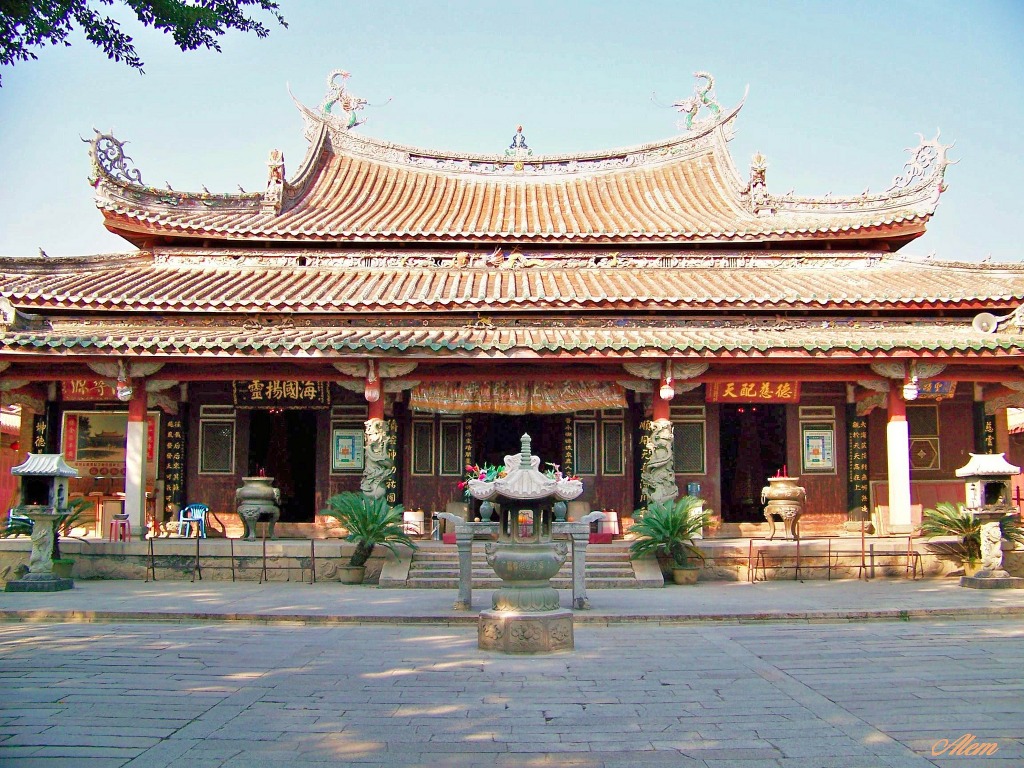
Temple Tianhou
À Quanzhou, le temple Tianhou est le premier sanctuaire dédié à la déesse de la mer Mazu dans la province du Fujian. Fondé en 1196, classé patrimoine national.
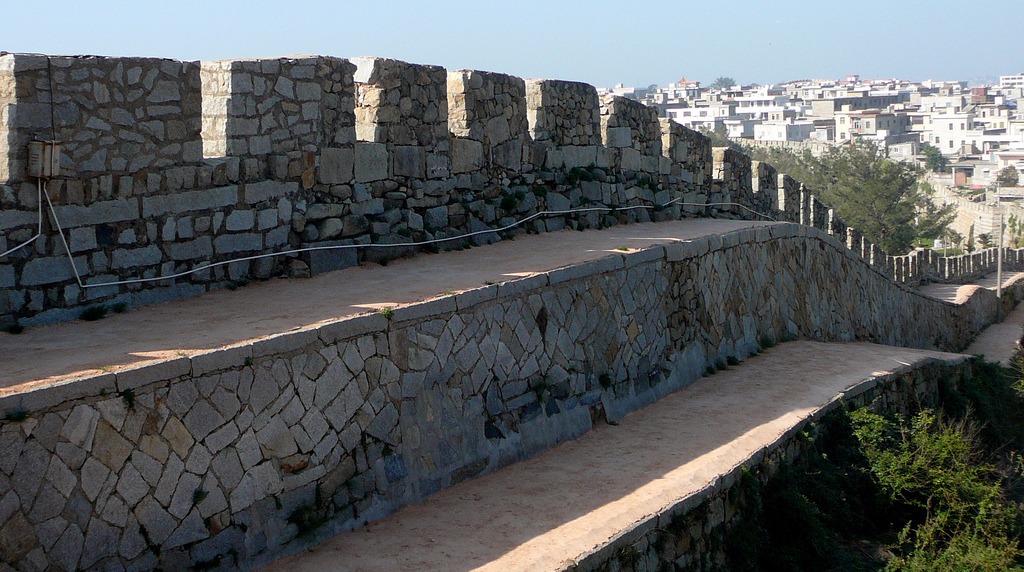
Ancienne ville et remparts de Chongwu
Près de Quanzhou, dans le Fujian, l'ancienne ville de Chongwu conserve 2,5 km de remparts Ming en granit, un parc de sculpture sur pierre et la culture Hui'an.
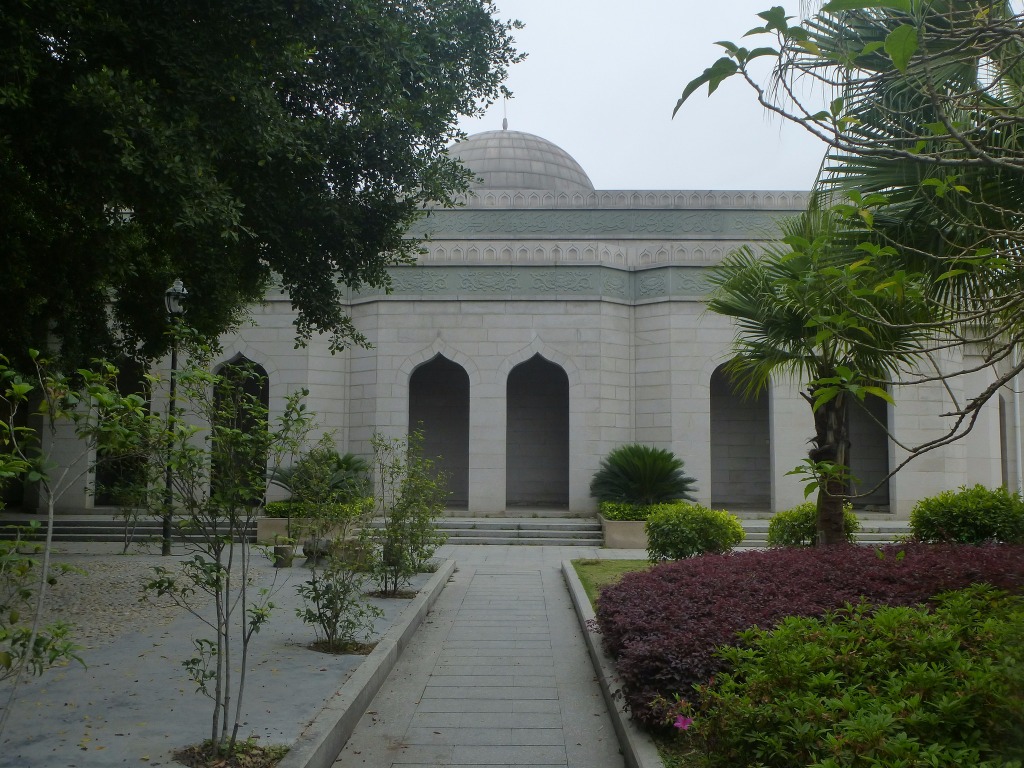
Mosquée Qingjing
Fondée en 1009 à Quanzhou, la mosquée Qingjing est l'une des rares mosquées Song de Chine, témoin du commerce maritime sino-arabe.
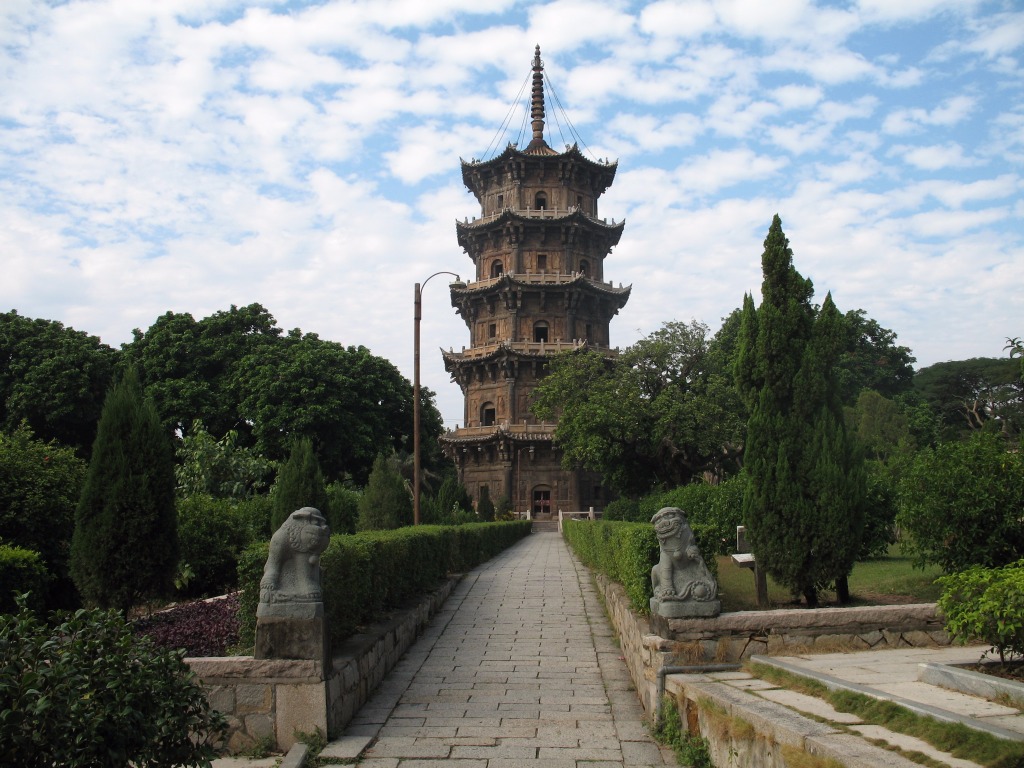
Temple Kaiyuan
Plus grand temple bouddhiste du Fujian, le temple Kaiyuan rassemble à Quanzhou treize siècles d'histoire, deux pagodes de pierre et un musée maritime Song.
Want to discover this destination?
Our local advisors design your tailor-made trip.