Zhujiajiao
Zhujiajiao
Just an hour from Shanghai, Zhujiajiao unfolds its canal-lined streets bordered by Ming and Qing houses, its thirty-six stone bridges and lively alleyways. A journey into ancient China at the heart of the Yangtze River Delta.
Zhujiajiao is a water town founded over 1,700 years ago, roughly fifty kilometers west of Shanghai. Its canals lined with Ming and Qing residences, its thirty-six stone bridges and paved alleyways make it one of the best-preserved water settlements in the Jiangnan region. Less than an hour from downtown Shanghai, it offers a striking contrast to the metropolis.
Quick practical facts
- Access from Shanghai: direct buses from Pu'an Lu station (line 朱家角) or car/taxi — approximately 1 hour depending on traffic.
- Entry: the village is freely accessible; a paid group ticket grants entry to interior historic sites (temples, gardens, museums).
- Recommended duration: half a day suffices for the canals and bridges; a full day to explore the ticketed sites.
- Dress code: no specific requirements, but comfortable shoes are essential on the cobblestones.
- Accessibility: paved alleyways and step bridges make wheelchair access challenging.
What to see
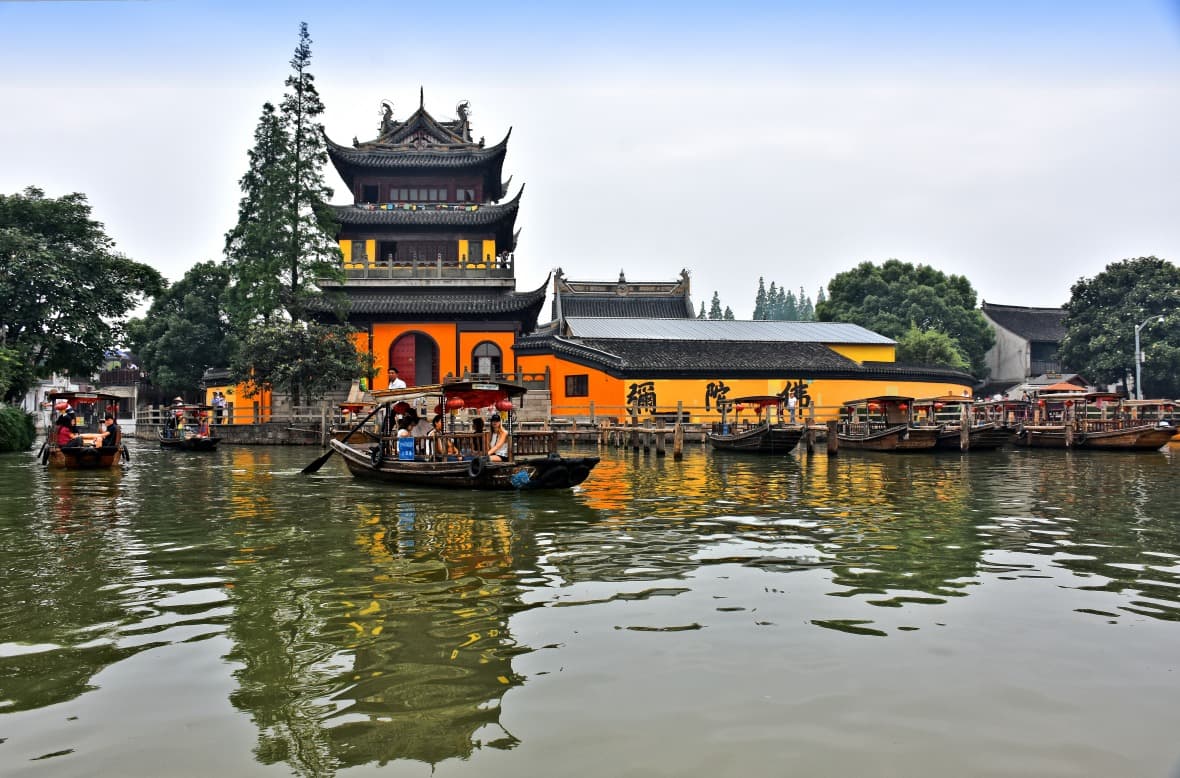
The canal network structures the entire town. Flat-bottomed boats (wupeng chuan) glide beneath arched bridges, including the renowned Fangsheng Bridge (Fangsheng Qiao), a five-arch span dating from the Ming period. Whitewashed facades and grey tile roofs reflect in the dark water. Street shops sell fermented tofu, glutinous rice dumplings and tea-marinated eggs, local specialties.
History and context
The site has been inhabited since the Three Kingdoms period (3rd century). It developed as a commercial hub under the Ming and Qing dynasties through cotton and silk trade. At its height, Zhujiajiao numbered among the most active markets in the Yangtze River Delta. Several merchant houses and temples from this era remain, designated as China's national heritage.
Highlights of your visit
Fangsheng Bridge
Built in 1571 during the Ming dynasty, this five-arch bridge is the largest and oldest in Zhujiajiao. Spanning roughly 70 meters, it offers an unobstructed view of the two main canal branches. Local tradition involves releasing fish or turtles here for good fortune.
Bei Da Jie Street
The main commercial thoroughfare, it runs alongside the canal for several hundred meters. Shops sell regional goods: rice vinegar, moon cakes, bamboo crafts. Activity peaks in the morning when locals do their shopping.
City God Temple (Chenghuang Miao)
This active Taoist temple, founded during the Ming period, is dedicated to the city's protective deity. Incense burns here continuously. Interior architecture preserves wood carvings and painted frescoes characteristic of Jiangnan style.
Kezhi Garden
A private garden in classical Chinese style, developed at the end of the Qing period. Pavilions, rockeries, pools and covered galleries succeed one another across a modest footprint, following the principles of the scholar's garden.
Photography tips
Morning light, before the arrival of crowds, is ideal for capturing canal reflections. Fangsheng Bridge frames well from the lower banks. Weekdays see fewer visitors in the alleyways. Photography inside temples may be restricted — check signage on site.
Location and access
Zhujiajiao lies in Qingpu District, west of Shanghai. Regular direct buses depart from downtown. By car or taxi, the route uses the A9 expressway. No subway line currently serves the village directly. Shanghai's attractions make the logical base for organizing your visit.
Nearby
- Tongli — another Jiangnan water town in Jiangsu province, renowned for gardens and bridges.
- Wuzhen — exceptionally well-preserved Zhejiang water town, with an animated evening quarter.
- Xitang — a town featuring long covered galleries running alongside canals, roughly 90 km from Shanghai.
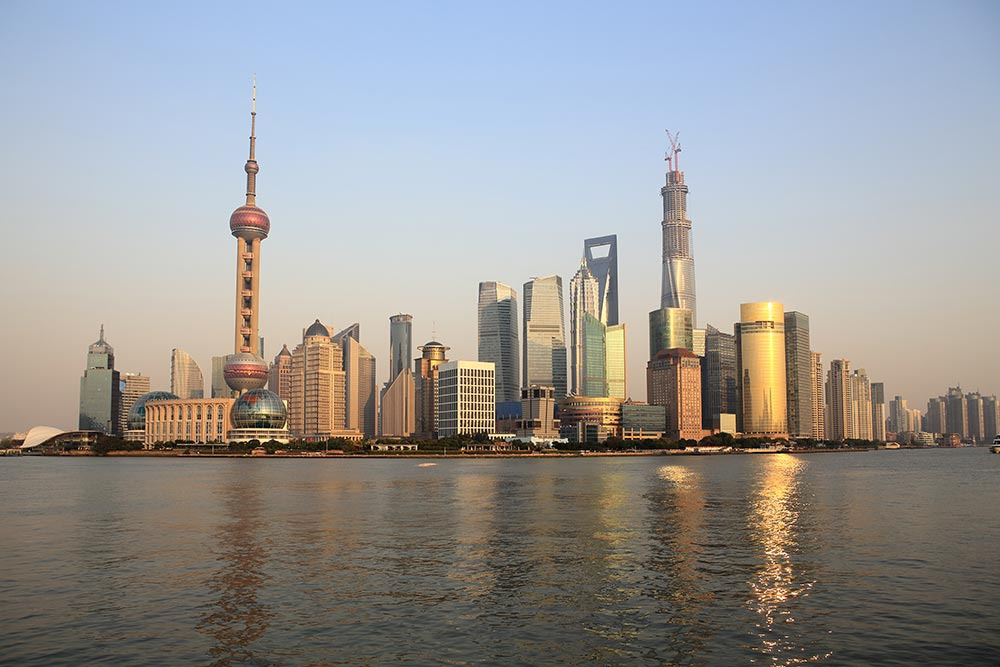
- Shanghai's Bund — Shanghai's historic riverfront, less than an hour's drive away.
Frequently asked questions
Spring (March-May) and autumn (September-November) offer pleasant temperatures and favourable light. Summer is hot and humid; National Day weekends (early October) attract large crowds.
The alleyways and canals are freely accessible. A group ticket is required for interior sites: temples, gardens and museums. Ask at the village entrance about available options.
Yes, this is the most common format. Half a day covers the essentials; a full day allows you to visit ticketed sites and dine locally without rushing.
A ride in a wupeng chuan (traditional bamboo-roofed boat) is a pleasant way to see the canals from the water. Landing points are found at several village locations. Allow about twenty minutes for a standard circuit.
Local specialties include fermented tofu, glutinous rice dumplings (tangyuan), tea-marinated eggs and braised pork. Restaurants and street stalls line mainly Bei Da Jie street.
Wheelchair access is challenging: alleyways are cobbled and bridges have steps. Some flat areas along the canals remain passable, but a complete visit is taxing for people with reduced mobility.
Photos
Want to discover this destination?
Our local advisors design your tailor-made trip.