Sunlight Rock Park (日光岩景区 / Riguang Yan)
Sunlight Rock Park (日光岩景区 / Riguang Yan)
Sunlight Rock is the highest point on Gulangyu, a car-free island on the UNESCO World Heritage list near Xiamen. From its 92-meter granite peak, the panorama sweeps across the strait and the island's colonial rooftops.
Sunlight Rock (日光岩, Riguang Yan) is the highest point on Gulangyu island, off the coast of Xiamen. This massive granite formation rises to approximately 92 meters and commands sweeping views of the South China Sea, colonial rooftops, and the Xiamen Strait. It is the visual symbol of Gulangyu, inscribed on the UNESCO World Heritage list since 2017.
Quick Essentials
- Island Access: Ferry from Xiamen terminals (Dongdu or Haicang) — the only way to reach the island, as cars are prohibited.
- Admission: The site is paid entry; a combined ticket covers multiple island attractions including Sunlight Rock.
- Recommended Duration: 1 to 1.5 hours for the climb, summit visit, and descent.
- What to Wear: Closed-toe shoes recommended — the granite steps can be slippery in humid conditions.
- Accessibility: The ascent involves steep stairs; wheelchair access to the summit is not available.
What to See
The site centers on a natural granite formation with carved stairways leading upward. At the summit, a viewing platform offers sweeping 360-degree views of Gulangyu, Xiamen's waterfront, and neighboring islands on clear days. Ancient calligraphic inscriptions are carved directly into the rock face.
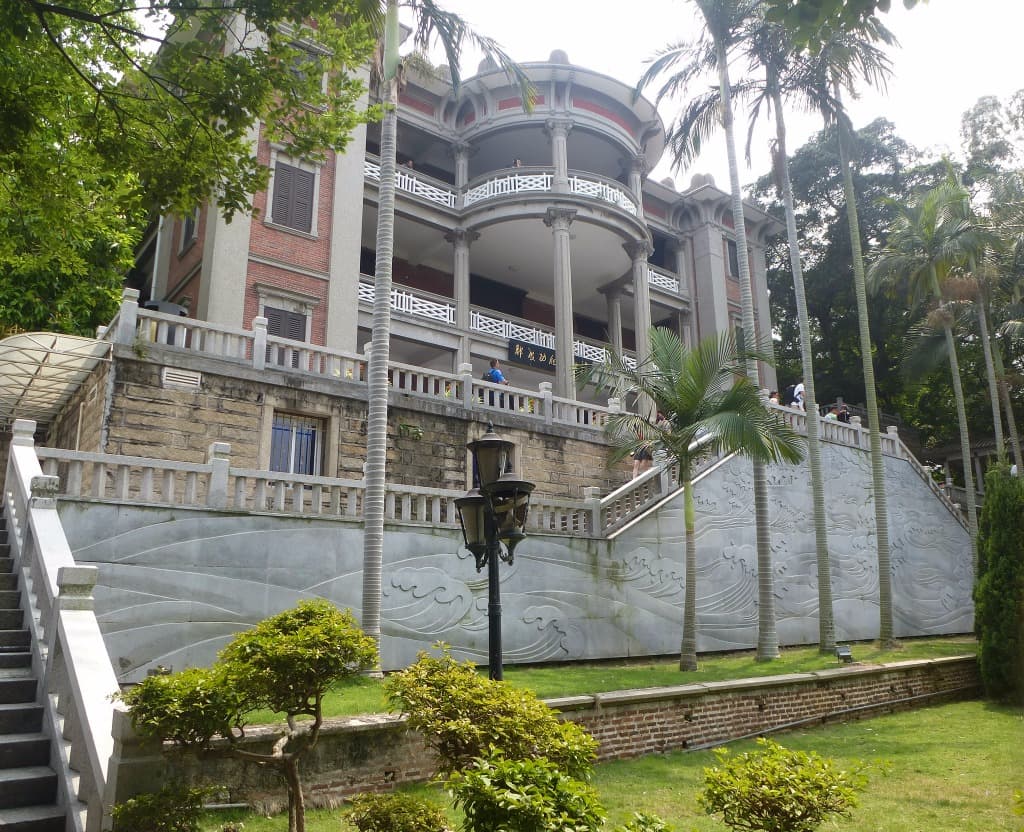
Midway up the slope stands a former Taoist temple and the ruins of a fortification built by General Koxinga (Zheng Chenggong) in the 17th century. The park also features gardens and shaded pathways winding between granite boulders.
History and Context
Sunlight Rock takes its name from the fact that it receives the sun's first rays each morning before any other point on the island. The site is linked to Koxinga (Zheng Chenggong), a national hero who used Gulangyu as a military base during his resistance against the Qing dynasty in the 17th century. Ruins of his fortifications remain visible today. The island itself served as an international trading post in the 19th and 20th centuries, explaining the colonial architecture that surrounds it.
Highlights of Your Visit
The Summit and Panorama
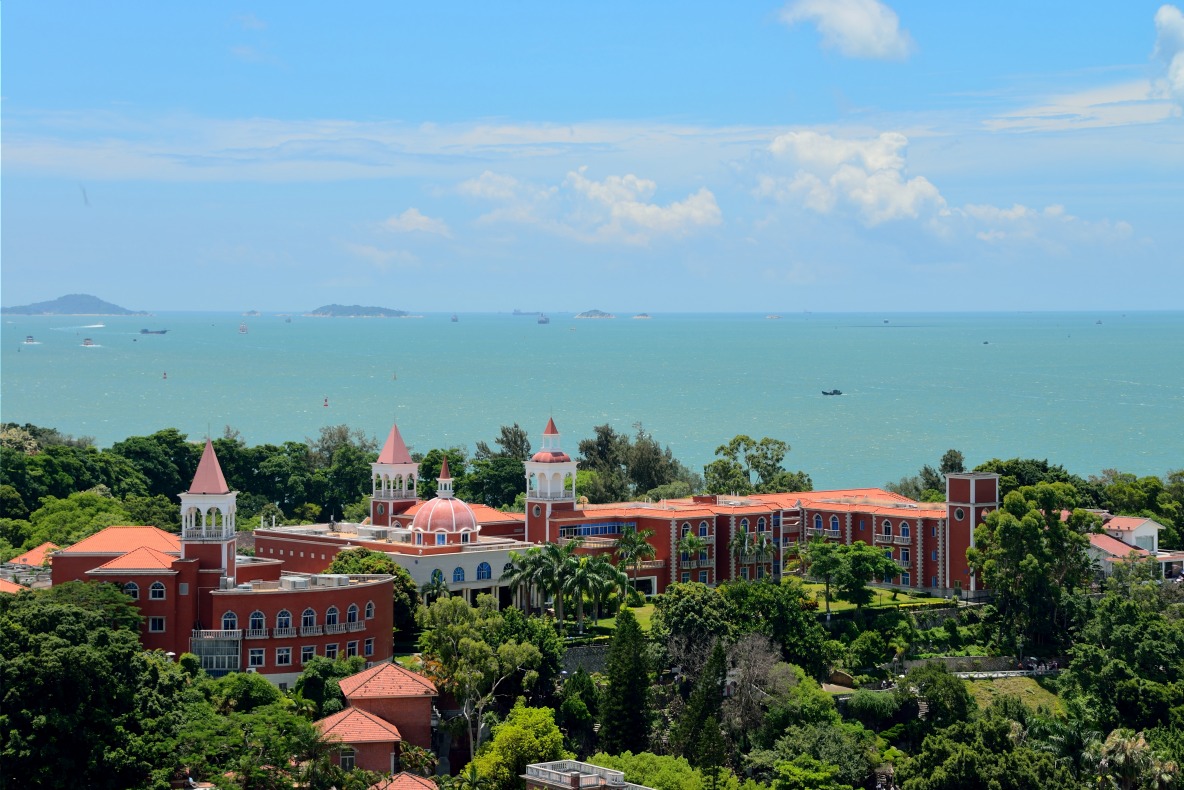
The climb via granite-carved stairs culminates at a narrow viewing platform. The 360-degree panorama encompasses Gulangyu's red-tiled roofs, the strait, and Xiamen's skyline beyond — a striking contrast between the car-free island and the bustling metropolis.
The Rock Inscriptions
Multiple generations have carved Chinese characters directly into the stone. These calligraphic inscriptions, some dating back centuries, are integral to the site and are protected.
Koxinga's Ruins
Midway up the path, the remains of the 17th-century garrison speak to the island's strategic importance. A small interpretive space contextualizes the figure of Koxinga, revered in Taiwan and Fujian.
Photography Tips
Morning light is most favorable: the sun rises behind Xiamen and illuminates the island's colonial facades. Late afternoon brings raking light that accentuates granite textures. From the summit, a telephoto lens isolates architectural details of Xiamen across the strait. Avoid hazy days common in winter and spring.
Location and Access
Sunlight Rock sits in the north-central part of Gulangyu. From the main ferry terminal, allow 15 to 20 minutes on foot. The entire island is car-free — no vehicles or scooters. Small electric transport vehicles serve mobility-restricted visitors on certain routes but do not reach the rock's base. Local English-speaking guides offer commentary tours from the ferry terminal.
Nearby Attractions
- Piano Museum of Gulangyu — Gulangyu houses one of Asia's largest collections of antique pianos, reflecting Western influence on the island.
- Shuzhuang Garden (菽庄花园) — a classical Chinese waterfront garden built in the early 20th century by a Taiwanese merchant.
- Longtou Street — the island's main commercial avenue, lined with colonial buildings and shops selling local specialties.
- Koxinga Memorial in Xiamen — on the mainland, this memorial deepens understanding of the general whose legacy appears on Sunlight Rock.
Interested in this visit?
We can include it in your personalised itinerary.