West Street (Xi Jie)
West Street (Xi Jie)
In the heart of Yangshuo, West Street (Xi Jie) unfolds 517 metres of marble paving and 1,400 years of history, lined with shops, cafés and a cosmopolitan buzz.
The West Street, called Xi Jie (西街) in Chinese, runs through the centre of Yangshuo, 63 km north of Guilin. Stretching 517 metres, paved with marble and lined with traditional buildings converted into cafés, shops and bars, it is the city's oldest thoroughfare and one of the essential passages through the karst region of Guangxi.
Why visit Xi Jie
Xi Jie is no ordinary commercial street. Its distinctive character lies in its historical role: known to the Chinese as the "Foreigners' Street" (洋人街), it was one of the earliest windows of exchange between China and the West from the 1980s onwards. Even today, shop signs are bilingual, restaurateurs serve both stir-fried rice noodles and pizzas, and it is common to find shopkeepers speaking to you in English—a marked contrast to other quarters of inland China.
The appeal of a visit lies equally in the street's dual character. By day, Xi Jie feels like a market street, inviting wandering and browsing local crafts. At night, it transforms into a lively, luminous scene dominated by bars and neon signs.
A history spanning over 1,400 years
The street was laid out in 590, during the Sui dynasty (581–618), alongside developments along the Li River. Its strategic position, immediately adjacent to the waterway, made it a passage used by several major Chinese political figures of the 20th century, notably Zhou Enlai, Chen Yun and Deng Xiaoping.
The modern turning point came in 1980. At a time when China was gradually opening to the West, Xi Jie became a privileged destination for foreign travellers and earned the nickname "Earth Village in China". This reputation endures: the street retains a cosmopolitan character that few Chinese cities of this size can claim.
What to see and do
Architecture and paving
Xi Jie traces an S-shaped path for 517 metres long and 8 metres wide. The paving is marble, adorned with betel-nut motifs, polished by centuries of foot traffic. The façades alternate between traditional Chinese buildings and Western-influenced designs, remnants of the opening phase of the 1980s.
Shops and crafts
The street remains primarily commercial. You'll find:
- craft shops, painting and calligraphy studios;
- hiking gear stores, useful for exploring the surrounding area;
- cafés and tea houses set in historic buildings;
- language schools and training centres, frequented by locals to practise English.
Local specialities to taste
On the culinary front, Xi Jie offers stir-fried rice noodles, rice dumplings and various Guangxi regional snacks. Restaurants catering to international visitors also offer Western menus (pizzas, burgers), convenient for travellers seeking variety after weeks of Chinese cuisine.
The night-time atmosphere
At dusk, the street transforms. Bars come alive, façades light up and the atmosphere becomes decidedly festive. For those seeking tranquillity, a visit in the morning or early afternoon is preferable.
When to visit
Xi Jie is worth visiting year-round. Spring (April–May) and autumn (September–October) remain the most pleasant seasons to combine a city stroll with the surrounding karst landscapes, when temperatures are mild and humidity more bearable. Summer is hot and crowded, while winter is quieter but cool and humid.
In terms of time of day, two atmospheres coexist: morning and early afternoon for peaceful wandering, late afternoon and evening for nightlife.
Practical information
- Duration of visit: allow 1 to 2 hours to walk the street, more if you take time to eat or browse.
- Access: free and open to all.
- Shop hours: most shops open in the morning and close late in the evening; bars stay open into the night.
- Language: English is widely spoken in shops, unlike much of rural Guangxi.
How to get there
Xi Jie is just a short walk from Yangshuo's bus station. From Guilin, direct buses run regularly throughout the day; the journey takes approximately 1 hour 15 minutes.
On site, cycling remains the most convenient way to combine a visit to the street with exploring villages, rice fields and the karst peaks of the surrounding area. Numerous bike rental shops are located in the district.
Nearby attractions
The Yangshuo region and beyond offer other major historical sites to include in your itinerary:
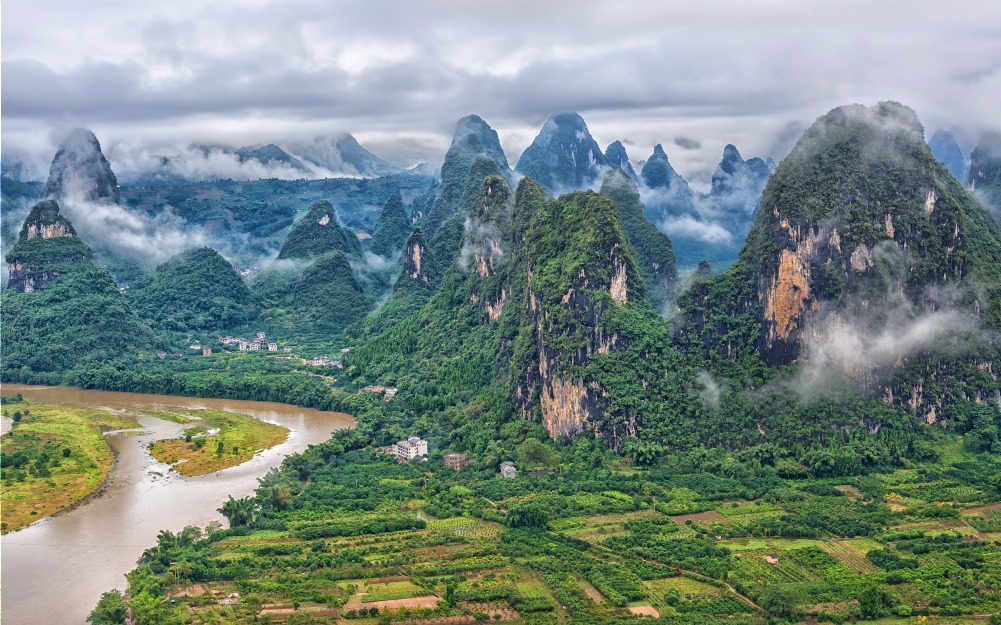
- Yangshuo and its karst landscapes along the Li River;
- Longgong Grotto, a remarkable karst formation;
- the Great Wild Goose Pagoda in Xi'an;
- the Great Wall at Juyongguan, near Beijing.
Organising your trip
Xi Jie works well as a 1 to 2-day stop as part of a larger circuit around Guilin and the karst landscapes of southern China. To plan a bespoke itinerary including Yangshuo and the country's major sites, explore our China tours.
Interested in this visit?
We can include it in your personalised itinerary.