Guyuan
Guyuan
In southern Ningxia, Guyuan reveals the Xumishan Grottoes, the Liupan Mountains and authentic Hui culture along the ancient Silk Road.
Name: Guyuan
Chinese name: 固原市
Province: Ningxia
Status: prefectural-level city
Population: 1,868,500 inhabitants
Area: 16,783 km²
Guyuan is a city located in the south of the Ningxia Autonomous Region, on the banks of the Qingshui River and north of the Liupan Mountain. The city is also bordered by Zhongwei and Wuzhong to the north. The majority of the city's population belongs to the Hui ethnic minority.
History
Guyuan is considered a historic city with over 1,500 years of history. The city was founded around 524 and reached its peak during the Ming Dynasty. It was known as the old Yuanzhou.
The city was also the former garrison post for the Gaoping and Anding counties. These two military units were established during the reign of Emperor Wu of the Han Dynasty. Based on numerous relics from the Han Dynasty found in the city's sewers, it was clearly a prosperous settlement.
In 1575, Guyuan was expanded and divided into an inner zone and a peripheral zone. During the Qing Dynasty, the city suffered from the ravages of wars and earthquakes.
Like other cities in the region, Guyuan was an important stop for trade along the Silk Road.
Today
Guyuan has become a major city that continues to expand day by day. With the Ping-Yin, Xi-Lan, and Lan-Yi roads and the Baoji to Zhongwei railway line, it is well-served and enjoys numerous commercial advantages.
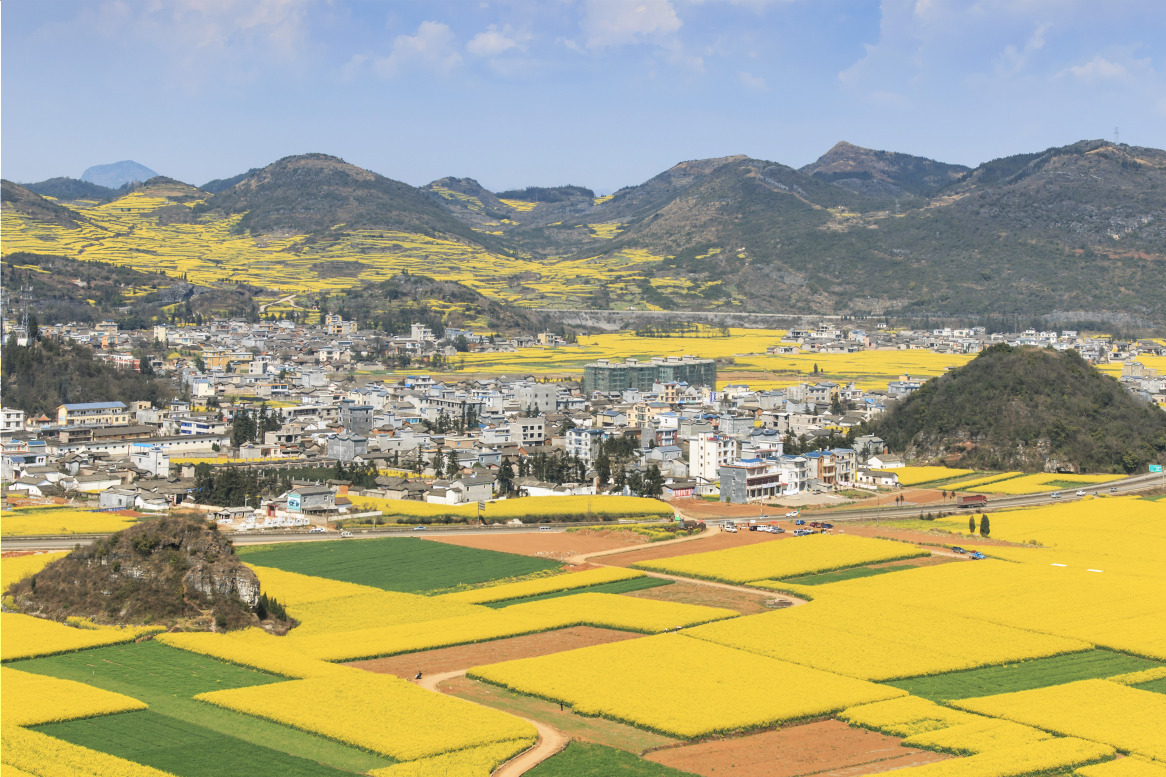
The city has also become one of the most sought-after tourist destinations in the Ningxia region. The environment and climate are conducive to harvests, offering well-preserved nature and magnificent landscapes that contribute to tourism development.
The city is also strengthening communication by collaborating with media outlets to promote the region's tourist sites.
Visiting Guyuan's historic and tourist sites
Guyuan offers spectacular landscapes and interesting historical sites. You can admire the ruins of the ancient city built during the Han Dynasty. You can also visit the Xumi Mountain Grotto, built during the Wei Dynasty. For hiking enthusiasts, venture into the Liupan Mountain Natural Reserve with its beautiful scenic sites such as Laolong Pond, Liangdian Gorge, and the Lotus Garden. Liupan Mountain also holds some artistic and cultural treasures of the Hui ethnic group.
Northwest of the city, you can visit the 150 caves of Mount Sumeru. They were built from the Wei Dynasty through the Tang Dynasty and house important Buddhist relics of the region.
Taste traditional dishes and visit the city's restaurants
Like other cities in Ningxia, Guyuan specializes in Muslim cuisine. With abundant harvests around the city, the cuisine incorporates buckwheat, oats, and other grains into its dishes.
Liupan Mountain is rich in wild herbs, so the city prepares dishes based on herbs and wild vegetables gathered from the mountains. Beyond these regional specialties, you'll find delicious dishes such as fried lamb, Hele (buckwheat noodles), and thistle salad at local restaurants.
Beyond the significant scenic and tourist sites, Guyuan holds some hidden gems not to miss during a stay in Guyuan.
Climate
Guyuan enjoys a temperate continental monsoon climate. As a result, it offers consistently low and varied temperatures throughout the year. The average annual temperature ranges between 5 to 7 degrees Celsius. Summers are dry and rainy, and spring is cold. However, the northern part of the city has high sunshine hours, while the south is relatively humid with lower sunshine levels. Therefore, it is best to visit Guyuan during the summer season, particularly in July.
The distances from Guyuan to Lanzhou and Yinchuan are nearly the same. Indeed, the city is located 300 kilometers from Lanzhou, about 6 hours by car. Yinchuan is approximately 330 kilometers from Guyuan, which takes about three and a half hours via expressway. However, you can reach Guyuan by air, rail, or road.
Air
Guyuan Airport opened in 2010. Flights are available to the following cities: Yinchuan, Xi'an, Beijing, Lanzhou, and Chengdu. It is located in the northwestern part of the city in Zhonghe, 13 kilometers away.
Train
A railway station serving Yinchuan, Lanzhou, Shanghai, Chengdu, and Urumqi is located in Guyuan. Train travel is quite convenient as there is a railway line running from Baotou to Lanzhou. To take the train, you can reach the station by taking Bus No. 1.
Bus
National roads No. 319 and No. 312 pass through Guyuan. There are also long-distance buses that can take you to all major cities across Ningxia.
You can take buses No. 1, 2, 3, 4, 5, 6, and 16 from the bus station on Qinghe Road in the Yuanzhou district.
During your visit to Guyuan, you can navigate the city by taxi.
What to do in Guyuan?
- Admire the ruins of the ancient city built during the Han Dynasty
- Visit the Xumi Mountain Grotto
- Go hiking in the Liupan Mountain Natural Park
- Visit the 150 caves of Mount Sumeru
Want to discover this destination?
Our local advisors design your tailor-made trip.