Putuoshan
Putuoshan
A sacred island devoted to Guanyin and one of China's four Buddhist mountains, Putuoshan reveals itself through ancient temples, lush forests, and pristine beaches.
Putuoshan Island, located south-east of Shanghai in Zhejiang province, is home to Mount Puto, one of China's four sacred Buddhist mountains.
This charming island offers the perfect setting for a peaceful weekend retreat, blending beach time with walks through luxuriant vegetation.
History
Mount Putuo has been a major pilgrimage destination for over a thousand years.
During the Tang Dynasty, with the flourishing of the Silk Road, Putuoshan became the centre of Chinese Buddhism devoted to Guanyin (the bodhisattva Avalokiteśvara), undoubtedly the most venerated and popular bodhisattva among Buddhist believers.
Many notable figures have visited this sacred site throughout the ages, including Ingen Ryuki (or Yinyuan Longqi in Chinese), a poet, calligrapher, and monk of the Linji school of Chan Buddhism.
Putuoshan Island
Putuoshan Island is part of the Zoushan Archipelago south of Shanghai. Among the hundreds of islands comprising it, Putuoshan, dominated by the sacred Mount Puto, remains the most compelling to visit.
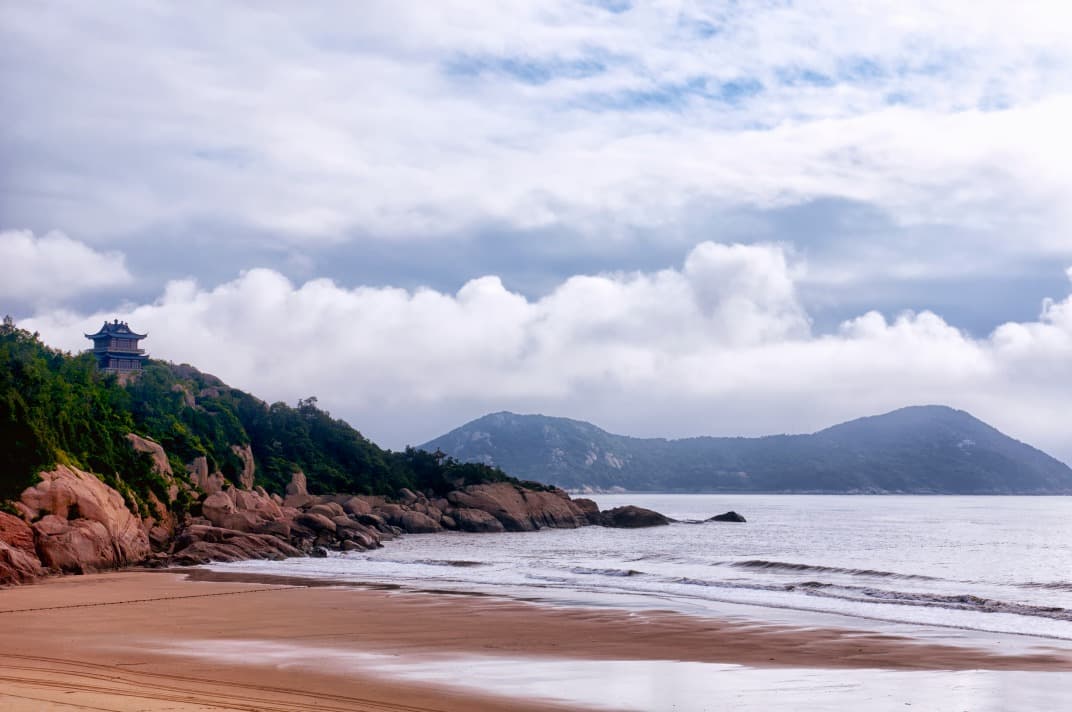
Mountain, temple, forest, and manicured beaches—the island perfectly embodies the little Chinese paradise every traveller seeks to discover. Its enchanting setting and laid-back atmosphere make it a perfect weekend escape.
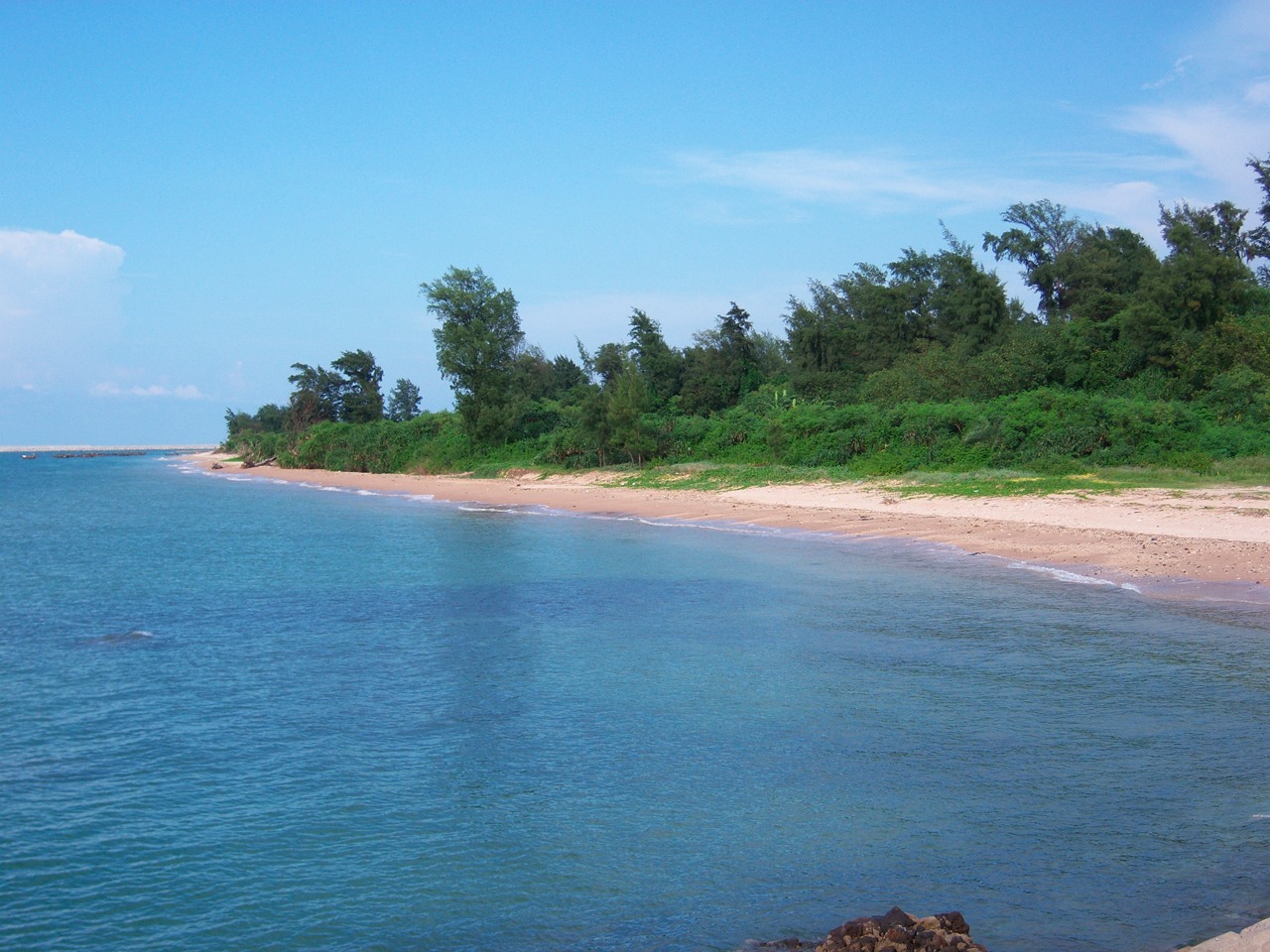
Recharge yourself on the fine sandy beaches after exploring the temples scattered across the island. The vistas from various viewpoints across the archipelago and its blue-water dotted islets will transport you to paradise.
Entirely dedicated to Guanyin, Putuoshan Island is a place where temples and structures devoted to the Buddhist goddess of Mercy flourish. The tone is set upon arrival with a 33-metre-tall statue of her towering above.
Puji Temple: This temple dates from the Song Dynasty (960–1279) and covers an area of 11,000 m². It stands at the centre of the village's Grand Square. This sanctuary is the most accessible and most celebrated temple on the island. A public ceremony conducted by monks takes place daily from 4:30 am to 7 am and consequently draws many visitors.
Huiji Temple: This monastery sits atop Mount Foding and offers a breathtaking panorama of the archipelago. The temple is accessible via cable car or can be reached on foot in approximately one hour for the more adventurous. The hiking trail is remarkably quiet, offering surprises such as anti-marine defence posts set into the cliff face.
Fayu Temple: Below Mount Foding, a series of stone steps leads down to the sea and Fayu Temple. The sanctuary stands amidst camphor trees and pines, and contains a large statue of the goddess Guanyin. Nearby, you can continue your exploration and rest at the charming Xiangyun Pavilion.
Fanyin Grotto: Located at the eastern tip of the island, Fanyin Grotto is perched between two cliffs overlooking the sea. It houses a small temple dedicated to the goddess Guanyin.
Northern Village: Putuoshan is composed of small fishing villages. Accessible on foot, the Northern Village appears frozen in time. Some fishermen still reside there, while others have chosen to settle in newer accommodation closer to the ferry terminals.
The island's interior is covered with forests and lush vegetation that create a tranquil setting befitting a place of religious contemplation.
The island's fine sandy beaches are equally cherished by travellers seeking to unwind after a refreshing swim. The sometimes turbulent sea with its powerful waves can prove hazardous. The "Hundred Paces" Bay stretching for 1.5 km promises a delightful seaside stroll. Tourist facilities have been developed along the beaches offering water sports and recreational activities.
This pedestrian-only island ensures a peaceful visit and a truly restful weekend.
When to Visit?
Putuoshan Island enjoys a temperate climate.
Winters are dry and mild, while summers are warm with gentle breezes often much appreciated. However, the island is occasionally swept by typhoons during the rainy season around July, August, and September.
Except during typhoon season, the island can be visited year-round.
Putuoshan Island is easily accessible from Ningbo or Shanghai.
From Ningbo
From Ningbo's South or North coach station, frequent buses depart for the speedboat terminals that regularly service Putuoshan. Combined tickets linking bus and boat are available.
New bridges now facilitate easy connections to the island via fast, comfortable coaches.
From Shanghai
From Shanghai, you can take coaches to Wusong Ferry Terminal. Overnight boats depart daily for the island.
From Luchaogang Port, accessible by bus from Longyang Road metro station, a fast ferry shuttles to Putuoshan.
Cars are prohibited on the island, but coaches operate to transport tourists between sites.
Bikes can be rented, though the island's terrain adds considerable difficulty, especially for the less athletic.
Walking allows you to discover the island from a different perspective and fully enjoy its laid-back atmosphere.
Prices
Island entry is subject to an admission fee:
140 RMB (1 December – 31 January)
160 RMB (1 February – 30 November)
200 RMB during Chinese holidays
These prices do not include admission to individual sites. Additional costs include:
5 RMB for Puji Temple
5 RMB for Fayu Temple
5 RMB for Huiji Temple
70 RMB for a round-trip cable car ticket to Mount Foding, or 40 RMB for a single journey
Tourist shuttle bus fares range between 5 and 10 RMB.
Want to discover this destination?
Our local advisors design your tailor-made trip.