Longhushan Mountain
Longhushan Mountain
Cradle of Taoism and UNESCO gem of Jiangxi, Longhushan Mountain unveils 99 peaks of red sandstone, ancient temples and breathtaking suspended tombs.
Longhushan Mountain, also known as the Mountain of the Tiger and the Dragon, is a sacred Taoist peak that captivates travelers with the beauty of its landscapes and natural setting.
Located in Jiangxi province, its distinctive features earned it a place among the Danxia landscapes of Chine.
History
Cradle of Taoism, Longhushan was formerly called Yunjin Mountain. During the Eastern Han dynasty (25 – 220), the first Taoist master Zhang Daoling settled in these mountains. Legend has it that when he created the pill of immortality, a tiger and a dragon appeared, giving the mountain its name: Longhushan (Mountain of the Tiger and the Dragon).
The mountain was a place of worship during the Spring and Autumn period (770 – 476 BCE) and the Warring States period (475 – 221 BCE). Suspended coffins, following local traditions, were indeed discovered on the Xianshuiyan cliff.
In 2010, Longhushan was inscribed as a UNESCO World Heritage site as one of Chine's Danxia landscapes.
Features of Longhushan Mountain
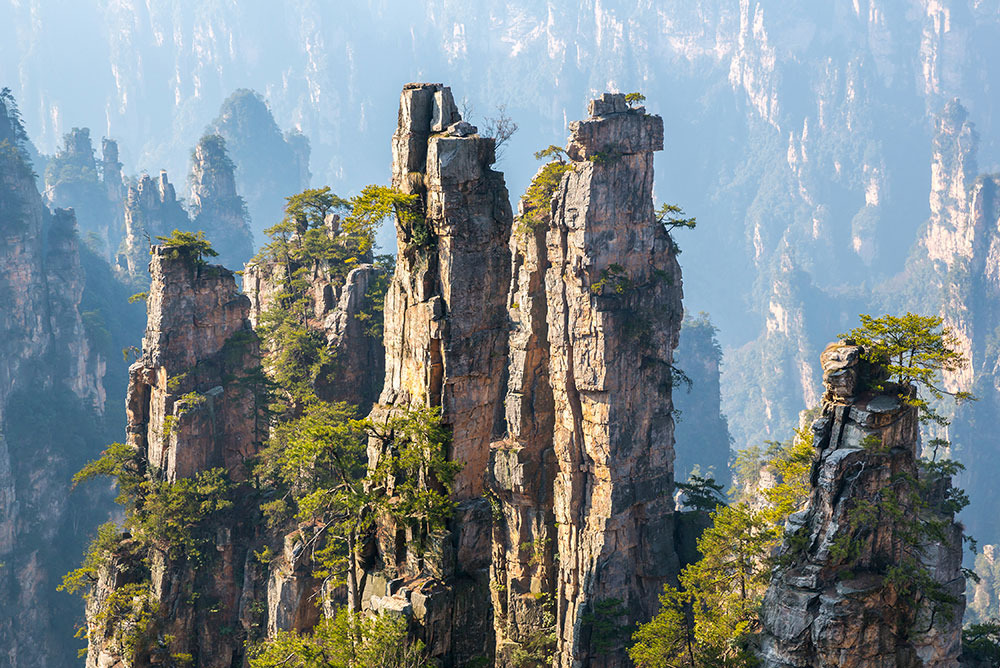
Cradle of Taoism, Longhushan Mountain hosts countless Taoist temples scattered among 99 peaks, 24 cliffs, hundreds of natural and cultural scenic sites, and over 20 legendary wells and natural pools. The picturesque landscapes of Longhushan sprawl across nearly 200 km² and are traversed by the Luxi River, which winds like a jade ribbon between the red sandstone rocks.
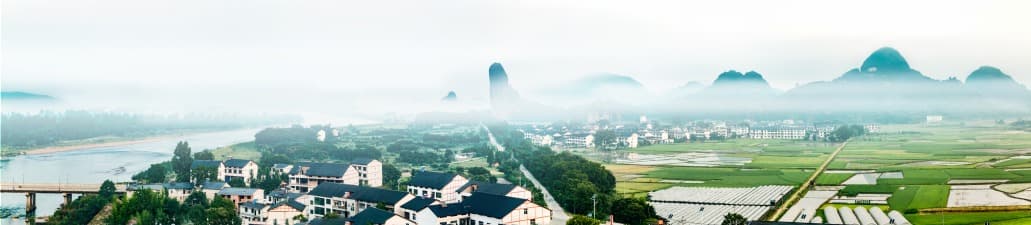
The river flows from north to south, connecting the picturesque village of Shangqing to all other sites of interest.
Exploring Longhushan Mountain
Surrounded by scenic hills and natural springs, the region reveals an enchanting landscape unlike any other.
During a journey through Jiangxi, allow yourself to spend a day or two in this magnificent, well-appointed natural park to discover the most stunning landscapes while immersing yourself in Taoist culture.
From the entrance, you can choose between a scenic train or bus ride. Each traverses magnificent nature to bring you to the main temples, legacies of a Taoist past.
Shangqing Village
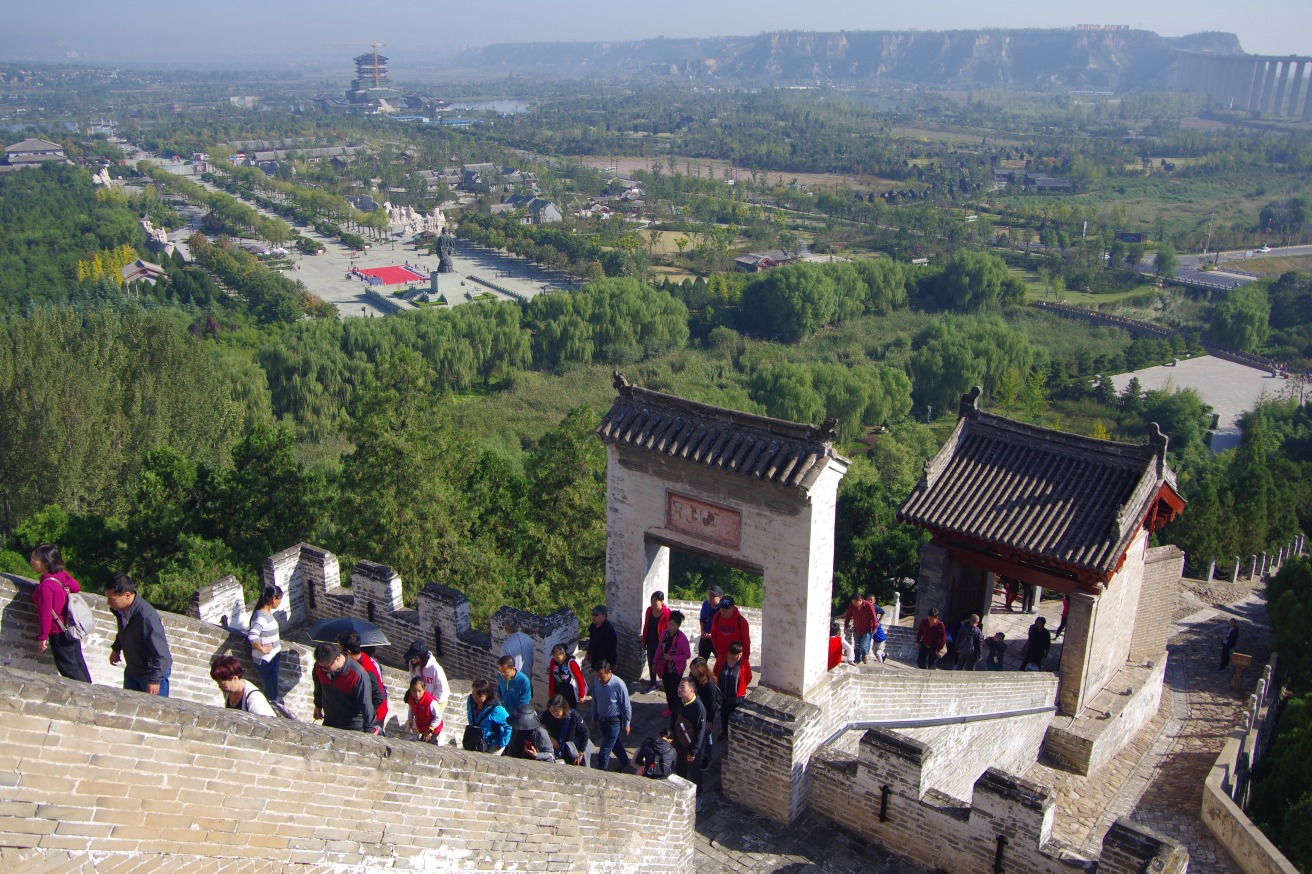
This ancient village is a must-see stop when visiting Longhushan. Surrounded by a remarkable setting, the village proudly displays its Taoist heritage and history. Traditional houses, small shops, and Taoist symbols carved at every corner evoke ancient and remote Chine beautifully. You'll encounter local residents and can rest in one of the village restaurants.
Shangqing Palace
This pavilion ranks among the most important sites. Nicknamed the Palace of Immortality, it is believed to have been where the great master came to conduct his readings. Located east of the village, the palace is surrounded by hills and lush vegetation.
A visit to this sacred site will immerse you directly in the Taoist atmosphere, saturated with incense and religious music.
Zhengyi Temple
Birthplace of Taoism, the Zhengyi Temple is said to be where Master Zhang Daoling created the Pill of Immortality of the Nine Heavens.
Today, this temple has been renovated but remains a focus of attention for Chine travelers and pilgrims.
Hanging Coffins of Longhushan Mountain
During a boat excursion on the Luxi River, you can stop at the hanging coffins. As in many riverine regions, coffins were suspended and placed in small caves on cliffsides to prevent them from being looted and washed away by rising waters.
Most are suspended 50 meters above water level, though some hang over 300 meters high. Hundreds of cultural artifacts have been found inside these tombs—musical instruments, pottery, and textiles. These tombs, veritable museums, offer a strange and surprising experience, revealing much about the local culture of Longhushan Mountain.
Beyond these sacred sites, Longhushan offers extraordinary landscapes. After visiting temples and other heritage sites, hiking trails lead to breathtaking viewpoints overlooking the peaks. Follow the path to Trunk Mountain, a wind-eroded cliff shaped like an elephant's head with its trunk, to discover the red sandstone cliffs. The trails crisscross the mountain and can sometimes be unconventional, only adding to the adventure.
When to Visit?
Winters in the region can be quite cold. While it's possible to visit Longhushan year-round, the best period to go is from May to September.
Head to the small city of Yingtan, located 16 km from the mountain entrance. Buses depart every 15 minutes daily for Longhushan.
Yingtan is accessible by train from Nanchang.
Admission Fee
Parc entrance ticket + bus + river cruise: 215 RMB per person per day
Want to discover this destination?
Our local advisors design your tailor-made trip.