Shuhe Old Village
Shuhe Old Village
Shuhe, a Naxi village designated as a World Heritage site near Lijiang, preserves its waterways, timber-framed houses and artisan workshops. Less crowded than Dayan, it offers an authentic immersion into Naxi culture and the history of the Tea Horse Road.
Shuhe is one of three Naxi villages designated as UNESCO World Heritage sites in the Lijiang region of Yunnan. Quieter than Lijiang's old town, it retains traditional timber and stone architecture, willow-lined waterways, and the atmosphere of a merchant town from the era of the Tea Horse Road. This is where caravans once halted before continuing onward to Tibet.
Practical Information at a Glance
- Admission: paid entry (included in Lijiang's heritage pass for certain packages—check with your local English-speaking travel agency)
- Recommended duration: 2 to 3 hours for a leisurely visit
- Dress code: no specific clothing restrictions
- Wheelchair accessibility: the pebbled alleyways are challenging for wheelchairs
What to See
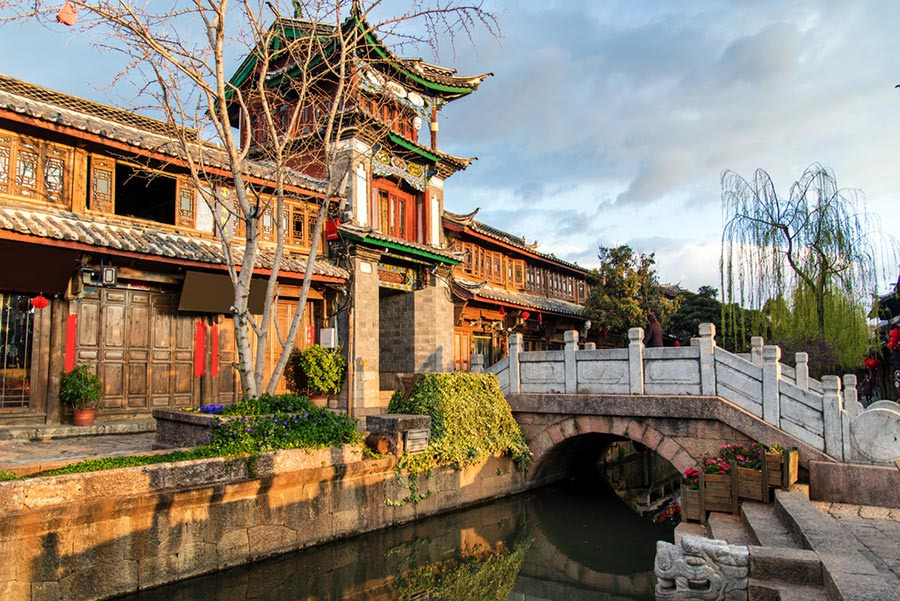
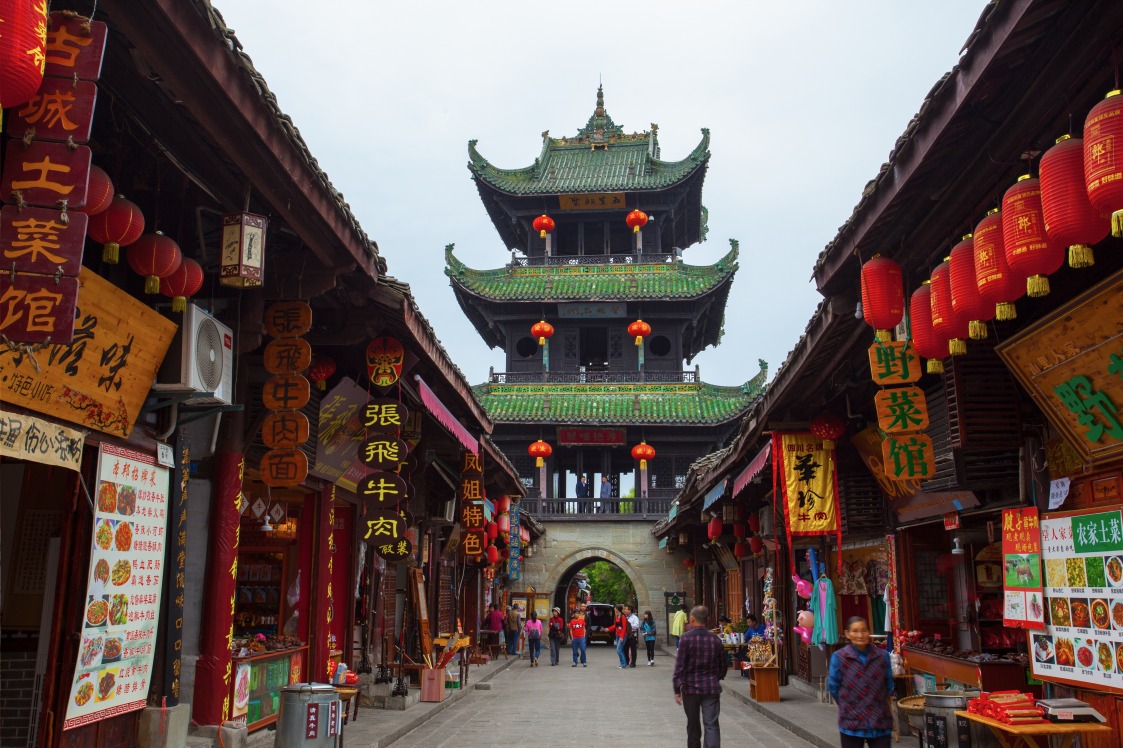
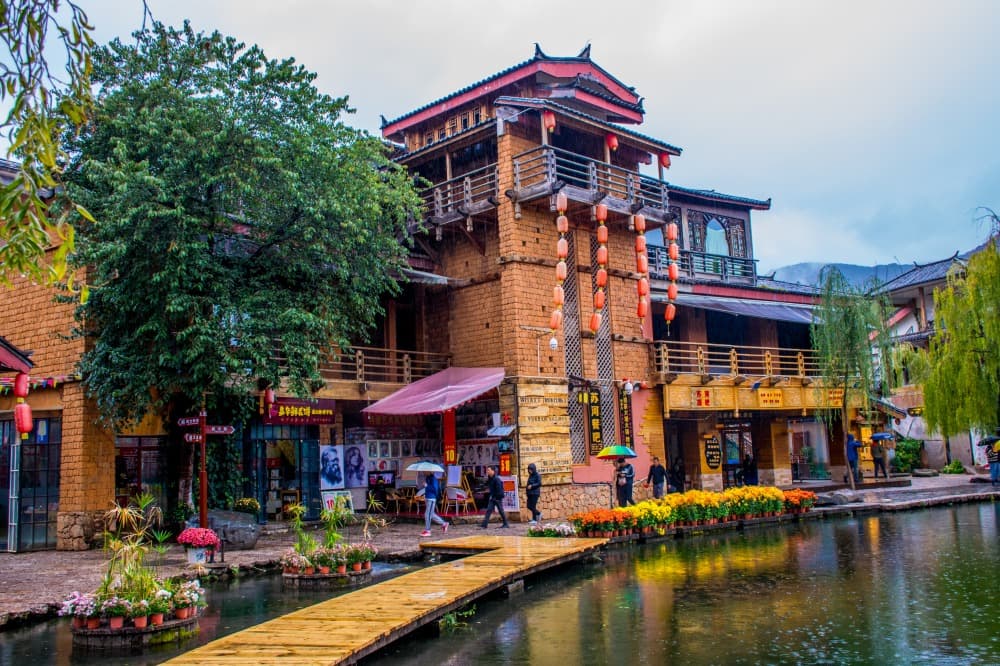
The village is organized around Sihe Square, a historic crossroads surrounded by Naxi timber-framed houses. Irrigation channels run between the paved alleyways, fed by springs from Yulong Mountain. Artisan workshops—weavers, painters, woodcarvers—occupy the ground floors of ancestral homes. Several Naxi temples punctuate the walk.
History and Context
Shuhe, whose Naxi name means "village by the water," was a key stop on the Tea Horse Road (茶马古道) connecting Yunnan to Tibet. Founded over a thousand years ago, the village prospered through caravan commerce. Designated a UNESCO World Heritage site in 1997 alongside Lijiang and Baisha, it has been less affected by reconstruction than its better-known neighbor.
Highlights of Your Visit
Sihe Square
The historic heart of the village, this square was a gathering point for caravan merchants. The two-story houses surrounding it now host cafés and craft shops, yet retain their original structure and character.
The Waterways and Springs
A network of channels flows through the village from Longquan Springs (Dragon Springs). The clear water, visible from the stone bridges, gives Shuhe a rare freshness. Ancient willows and walnut trees line the banks.
Naxi Artisan Workshops
Several families continue traditional crafts: Naxi embroidery, yak-leather painting, woodcarving. Some workshops welcome visitors and offer brief demonstrations of their work.
The Temples
The Sanjing Temple and various Dongba sanctuaries are scattered throughout the village. They bear witness to Dongba religion, a belief system unique to the Naxi people, blending animism with Tibetan influences.
Photography Tips
Morning light, before the flow of visitors, is ideal for photographing the paved alleyways and reflections in the waterways. Dark timber facades stand out best in slightly overcast conditions. The snow-capped Yulong Mountain appears as a backdrop from certain vantage points in the village—seek open angles facing north.
Location and Access
Shuhe lies about 4 km northwest of Lijiang's old town (Dayan). It's easily reached by taxi, bicycle, or shuttle from Lijiang. The village is also close to the Baisha old village, another Naxi heritage site that can be combined in the same half-day. Lijiang's old town remains the natural base for exploring the region.
Nearby Attractions
- Lijiang Old Town (Dayan) — the heritage heart of Lijiang, more lively, with its waterways and Naxi houses.
- Baisha Village — the oldest of the three Naxi villages, renowned for its 15th-century wall murals.
- Yulong Mountain (Jade Dragon Snow Mountain) — snow-capped massif dominating the region, accessible by cable car from Lijiang.
- Tiger Leaping Gorge — spectacular canyon of the Jinsha River, roughly two hours' drive north.
Frequently asked questions
Spring (March–May) and autumn (September–November) offer pleasant weather and favorable light. Summer is peak tourist season in Yunnan; winter remains mild in Lijiang but nights are cool.
Yes, Shuhe attracts significantly fewer visitors than Dayan. Weekday mornings are particularly quiet, making it an excellent choice for those seeking a more authentic atmosphere.
Absolutely. The two villages are close to each other and modest in size. A half-day is enough to visit both, by taxi or bicycle from Lijiang.
Photography is generally tolerated in outdoor temple spaces. Inside sanctuaries, it is best to ask permission before taking pictures.
The alleyways are paved with irregular cobblestones, making wheelchair circulation difficult. Some main paths are more passable, but assistance is recommended.
The village is easily explored on your own. An English-speaking local guide adds genuine value in understanding Naxi history, Dongba religion, and spotting architectural details often invisible without context.
Photos
Want to discover this destination?
Our local advisors design your tailor-made trip.