Dahejia Village
Dahejia Village
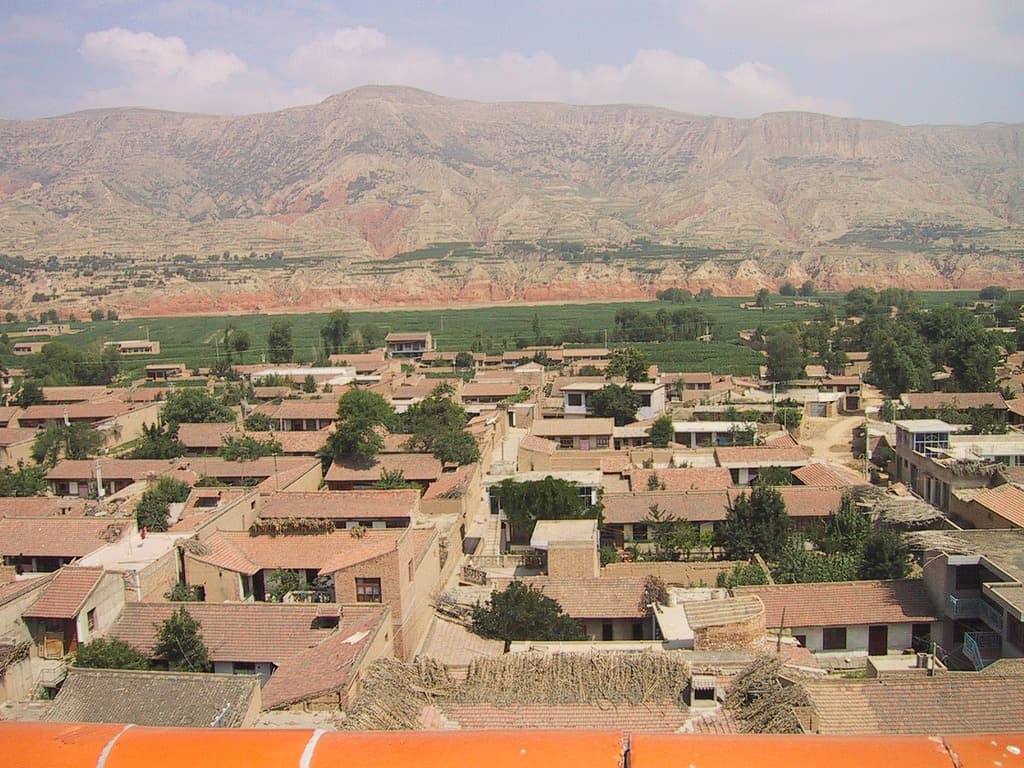
A Bonan Muslim village in the western part of Linxia County, Dahejia is renowned for its minority ethnicity and over a century of artisanal knife-making.
Dahejia village lies to the east of Mount Jishi, south of the Yellow River, in the western part of Linxia County. This Muslim community is inhabited predominantly by the Bonans, one of the smallest officially recognised ethnic minorities in Chine. The artisanal craft of knife-making has flourished here as a living tradition for more than a century.
Why visit Dahejia
Dahejia offers direct access to the culture of a little-known minority, set within a rural landscape defined by the Yellow River and the foothills of Mount Jishi. Three main reasons make it worth the detour:
- A rare ethnic minority: the Bonans number around 16,000 people, making them the 7th smallest group among the 56 officially recognised ethnic groups identified by the People's Republic of Chine.
- Recognised craftsmanship: Bonan knives have been crafted here for over 130 years, with around thirty documented varieties.
- An authentic rural setting: village alleyways, traditional dress, cereal and subsistence farming.
History and settlement
The Bonan ethnic group originally lived in Xuanhua, before gradually migrating along the Yellow River until settling in Dahejia. The Bonan dialect belongs to the Mongolic language branch, closely related to Tu and Dongxiang, with numerous loanwords from Han Chinese.
Historical census records give insight into the local settlement pattern: in 1982, Dahejia had around 9,200 inhabitants, while neighbouring villages such as Dadun, Ganhetan and Meipo were home to 17,000 to 18,000 Bonans. The population has shifted since, yet the concentration of the ethnic group around Dahejia remains a stable geographical fact.
What to see and do
The village and its people
Walking through the alleyways, you'll encounter men wearing the chéchia (cap) and the long kami, the traditional Bonan garment. The atmosphere is that of an agricultural Muslim township in northwest Chine, where religious practice coexists with daily life. The region benefits from a relatively temperate and humid climate, favourable to growing maize and potatoes, the main local crops.
The knife-making workshops
Visiting the knife-making workshops remains the most characteristic activity in Dahejia. Artisans here work with around thirty knife varieties, the most famous of which are:
- the Shiyangjin, or "fancy knife";
- the Shuangdao, literally "double blade".
Handles are crafted from wood or coloured horn, and blades adorned with copper or silver ornaments. Recurring motifs include two dragons, the hand, the leaf, the seven stars, the five plum blossoms and the Islamic symbol. Several shops allow you to observe the craft in action and, if you wish, acquire a piece.
Practical information
- Duration of visit: allow half a day to explore the village and visit one or two knife-making workshops.
- Season: spring and autumn offer the most pleasant conditions, with the continental climate making winters cold and dry.
- Dress code: as Dahejia is a Muslim village, covering clothing is appreciated, particularly around places of worship.
- Purchasing knives: their transportation in cabin baggage is prohibited; arrange postal delivery or place them in checked luggage, and verify regulations upon entry to your destination country.
In the surrounding area
Dahejia is best visited as part of a broader stay around Linxia, a stopover town known for its Hui Muslim heritage and mosques. The Gansu region, traversed by the ancient Silk Road, then provides access to several major sites such as the Bezeklik Thousand Buddha caves or the Great Wild Goose Pagoda in Xi'an, the classic starting point for exploring western Chine.
How to get there
The simplest access is from Linxia, by bus, departing from the coach station located to the west of the city. The journey takes approximately two hours depending on traffic conditions. Linxia itself is connected by bus to Lanzhou, the capital of Gansu Province and the main gateway to the region.
Frequently asked questions
Frequently asked questions
Plan your journey
Dahejia fits into a broader itinerary across Gansu and western Chine. To build a coherent trip that brings together Bonan villages, Linxia mosques and Silk Road landmarks, explore our journeys through Chine.
Interested in this visit?
We can include it in your personalised itinerary.