Emei Shan
Emei Shan
Mount Emei, a Buddhist sacred mountain in Sichuan, blends thousand-year-old temples, misty forests and sunrise views from the Golden Summit at 3,099 meters.
Mount Emei, also called Emeishan, is one of the four sacred Buddhist mountains in Chine, located near Leshan in Sichuan. Mount Emei was inscribed on UNESCO's list of natural and cultural world heritage sites on December 6, 1996, for the beauty of its landscape and its cultural significance.
History
Mount Emei holds exceptional cultural importance as the birthplace of Buddhism in Chine, before the religion flourished throughout East Asia. It was here, at its summit, that the first Buddhist temple on Chinese soil was erected.
A devastating fire completely destroyed the magnificent Jinding temple, whose copper tiles bore Tibetan inscriptions. Many other temples and pavilions on the mountain suffered the same fate, while others were later pillaged and destroyed by Japanese invaders and the Red Guards.
Mount Emei
A true haven of peace, Mount Emei rises above the humid Sichuan basin, reaching 3,099 meters in height. Just 130 km southwest of Chengdu, amid swirling mist, you'll encounter a rich diversity of wildlife and vegetation.
You'll discover tea plantations adorning the hillsides, forests still cloaked in moisture, and the company of macaques eager to follow you in hopes of snacks.
Hiking trails wind through lush forest, leading past temples in varying states of preservation. On certain afternoons, a rainbow forms above the summit through the refraction of water particles—a phenomenon known as the "Buddha's Halo."
With early rising and a touch of fortune, you may witness the sunrise, casting the mountain into an almost supernatural atmosphere.
During peak season, streams of tourists and street vendors crowd the area, leaving little room for solitude. Yet you can escape the crowds by venturing away from the monasteries and exploring the numerous small trails scattered throughout the mountain.
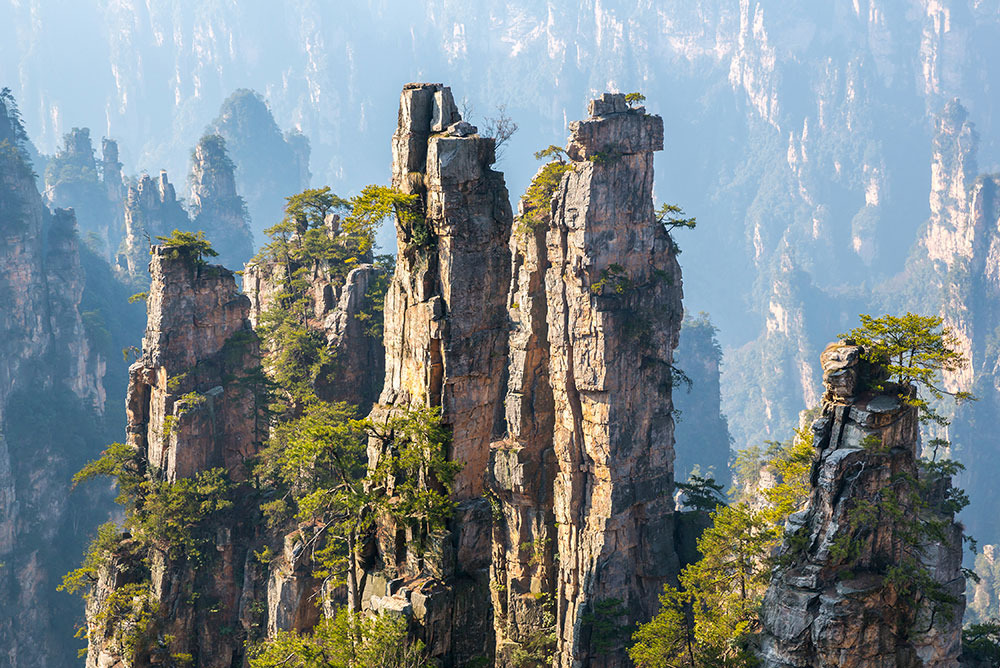
The landscape, dotted with steep rocks and dizzying precipices, will leave you breathless.
Hiking Mount Emei
The most popular route up the mountain passes through the Monastery of Longevity, Chu temple, and the Elephant Bath pool before reaching the summit. On the descent, the trail leads past the Magical Peak Monastery, then the Platform of Venerable Trees and the Pure Sound Pavilion. Throughout the hike, magnificent scenery unfolds at every turn, rewarding the trekker with unforgettable views.
For less experienced hikers, buses shuttle to various strategic points from the bus station in Baoguo village.
Some buses depart around 3:30 a.m. to get you up the mountain in time for the spectacular sunrise. However, since this option is extremely popular with Chinese tourists, arriving in time to witness the spectacle is rare.
Trek duration varies depending on fitness level, but it's wise to budget 3 days of hiking to reach the summit from the Monastery of Longevity and return to the Temple of National Proclamation.
Each trail is marked with small signs displaying distances in meters or kilometers, giving you a good estimate of remaining hiking time.
When to Go?
The best time to explore Mount Emei is May through October. The climate is generally pleasant and temperatures manageable.
The more adventurous may attempt a winter ascent, though this requires preparation and experience. It's possible to rent crampons for climbing through snow and ice.
In summer, bring a large umbrella, as despite temperatures around 26°C, humidity and rainfall reach their peak.
Weather is often unpredictable and temperatures can drop rapidly with altitude. Pack a rain jacket and warm clothing without overloading yourself.
Also invest in sturdy hiking boots, as the rain and moisture that batter the mountain can make trails and steps treacherously slippery.
Temples and Monasteries of Mount Emei

As a sacred Buddhist mountain, Emeishan hosts numerous temples, monasteries and pavilions. You'll encounter many along your route, though not all warrant equal attention.
Here's a list of must-see structures:
Temple of National Proclamation: Built in the 16th century, this temple houses a 3.50-meter-tall porcelain Buddha and rare plants.
Crouching Tiger Temple: Hidden deep within the forest, it shelters a 7-meter-high copper pagoda covered with Buddhist paintings.
Pure Sound Pavilion: Named for the crystalline sound of waterfalls cascading over surrounding rocks. Perched on a promontory amid swift currents, you can admire the water or even take a dip in summer.
Monastery of Longevity: Mount Emei's oldest temple, dedicated to Bodhisattva Puxian, the mountain's protector who rides a white elephant.
Magical Peak Monastery: Backed against a cliff face, this monument offers a spectacular vista.
Golden Summit Temple: Crowning the golden peak, this magnificent temple has become the destination of choice for all hikers. It's Mount Emei's most sought-after shrine.
Access to Mount Emei begins in the small Emei village, situated 6.5 km east of the mountain. Buses depart every 20 minutes from the Xinnanmen bus station in Chengdu.
Visiting Hours and Admission Fees
The entrance ticket to Mount Emei costs 120 RMB.
To access the Temple of National Proclamation and the Crouching Tiger Monastery, you'll need an additional entrance ticket. Discover all the attractions near Leshan.
Photos
Want to discover this destination?
Our local advisors design your tailor-made trip.