Litang
Litang
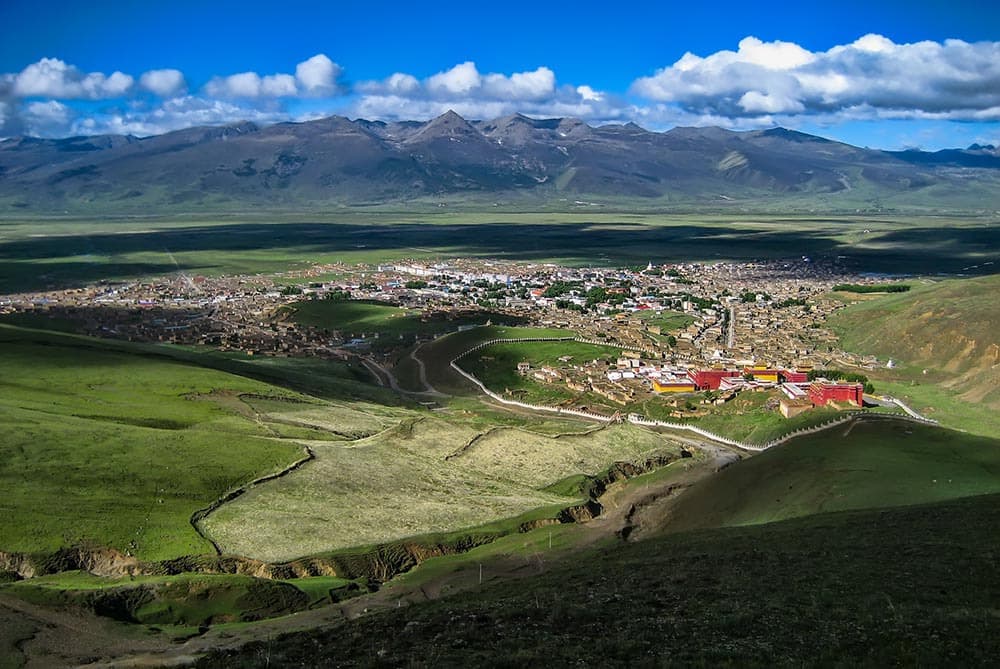
Perched at 4,000m on the high plateaus of Sichuan, Litang reveals the nomadic spirit of Tibetan Kham: Gelugpa monasteries, yak-filled grasslands, and a legendary equestrian festival.
Name: Litang
Chinese name: 高城镇
Province: Sichuan
Status: county-level city administrative center
Population: 47,500 inhabitants
The city of Litang serves as the administrative center of Litang County in southwestern Garzê Tibetan Autonomous Prefecture in Sichuan province. Within this administrative arrangement linking Sichuan province and the Garzê Tibetan Autonomous Prefecture, the city functions as a cultural and political intersection point for Chine and Tibet.
History
Under the guidance of the Gelugpa sect, Litang was once one of the five principal kingdoms of the Kham region, an ancient Tibetan province. Today, it falls under the jurisdiction of the Garzê Tibetan Autonomous Prefecture. This city was an important center for disseminating Tibetan culture. Several prominent Buddhist figures were born here and lived in local monasteries, including the 4th Dalai Lama, Kelzang Gyatso, in 1708, and the 5th Dalai Lama, Tsultrim Gyatso, in 1816. Its history is marked by the beginning of the Tibetan resistance to Chine occupation. Tibetan peoples began their demonstrations in Litang in 1956. To this day, it remains at the center of this conflict. In December 2002, Tenzin Delek Rimpoché, a member of Lobsang Dondhup's family, was sentenced to death. He was designated as one of the perpetrators of a series of explosions in Chengdu. In 2008, during the celebration of the horse festival, a violent riot was sparked by Tibetan pilgrims demanding the return of the Dalai Lama and the liberation of Gedhun Choekyi and Tenzin Delek Rimpoché. This incident led to the prohibition of the festival celebration, transforming what began as a simple demonstration into a violent clash between Chine security forces and Tibetan pilgrims.
Discovering Litang
Litang is the true representation of Tibet in Chine. Although administered by Chine, it has retained an authentic Tibetan spirit through its architecture, festivities, and population. It is therefore easy to notice characteristic Tibetan features when visiting traditional houses, prayer wheels, local temples, restaurants, and antique shops throughout the city. Litang's landscape is divided between grasslands and verdant or snow-capped hills. It is indeed one of the key landmarks for nomadic herders. Litang is a high-altitude city offering incredible trekking opportunities through plains populated by yak herds and the white tents of nomads. The population is formed primarily of Tibetans and nomads. Despite its new administrative status, its inhabitants have preserved their cultures and ways of life. Thus, a visit to Litang promises a rich and, above all, authentic experience. The city of Litang is home to several religious institutions that showcase Tibetan architecture and culture. After Chine's military intervention in Tibet in 1950, most of these buildings have become ruins or secular institutions. Those still active serve as windows for tourists to observe local culture. Built in 1580 north of the city by Dalai Lama Sonam Gyatso, Litang Monastery is one of the few still-active monasteries of the Gelugpa sect of Tibetan Buddhism in the region. Currently undergoing renovation, almost all of the monastery's decorations are handmade. It is therefore recognized as part of Tibetan cultural heritage, given its architecture, decoration, and ancestral relics. Located 18 km from the city, on the road to Daocheng, Jiage Shenshan is a Tibetan lamasery. During religious festivities, this location is adorned with small colorful flags that create a very authentic ancestral atmosphere around it. During your visit to Litang, you must also not miss the great white stupa, Chorten Karpa, which stands at the center of the village. Its architecture and the large prayer wheel beside it clearly reflect the city's Tibetan influence. The prayer wheel considered the largest in the world will surprise you with its 5-meter diameter and 8-meter height.
The Litang Horse Festival
Although banned since the Tibetan riots of 2008, the annual horse festival is still celebrated by nomadic peoples. Organized annually between July and August on the city's grasslands, this celebration brings together nearly the entire population of Litang, residents of nearby villages, and monks and lamas from local monasteries. The horse festival generally allows residents to demonstrate equestrian prowess and compete in horse races. Various Buddhist prayer ceremonies as well as folk dance and song competitions are also organized. You can also witness archery competitions, yak races, and dog races. Tibetans consider this festival an occasion to wear traditional costumes and jewelry. You will then discover the inhabitants at their finest.
Climate
At 4,000m elevation, Litang is one of the highest cities in Chine. It thus enjoys a subarctic alpine climate. It has a long, very cold winter and a short summer with frequent rains. Litang's average temperature is −5.8°C in winter and 10.6°C in summer.
Bus
From Ganzi, you can take the public bus heading to Xinlong departing daily from 09:00 to 14:00. The bus to Xiangcheng departs early morning from Kangding and generally passes through Litang between 16:00 and 17:00.
Litang has several private and shared minibuses that follow tourist itineraries and circuits. To best enjoy the surrounding scenery, renting one of these minibuses is very practical. You can stop them at any moment to enjoy a view or an event.
What to do in Litang
- Attend the grand equestrian festival.
- Visit Litang Monastery to discover Tibetan cultural heritage.
- Trek through the grasslands surrounding the city to observe the daily life of nomads.
- Admire the great white stupa and visit the giant prayer wheel.
Want to discover this destination?
Our local advisors design your tailor-made trip.