Gesar Monastery (Gompa Sertri / Sertri Gompa), Langmusi
Gesar Monastery (Gompa Sertri / Sertri Gompa), Langmusi
In Langmusi, Sertri Gompa is an active Gelugpa Buddhist complex perched at 3,400 meters between nomadic grasslands and red cliffs. Ceremonies, monk debates, and authentic Tibetan landscapes await.
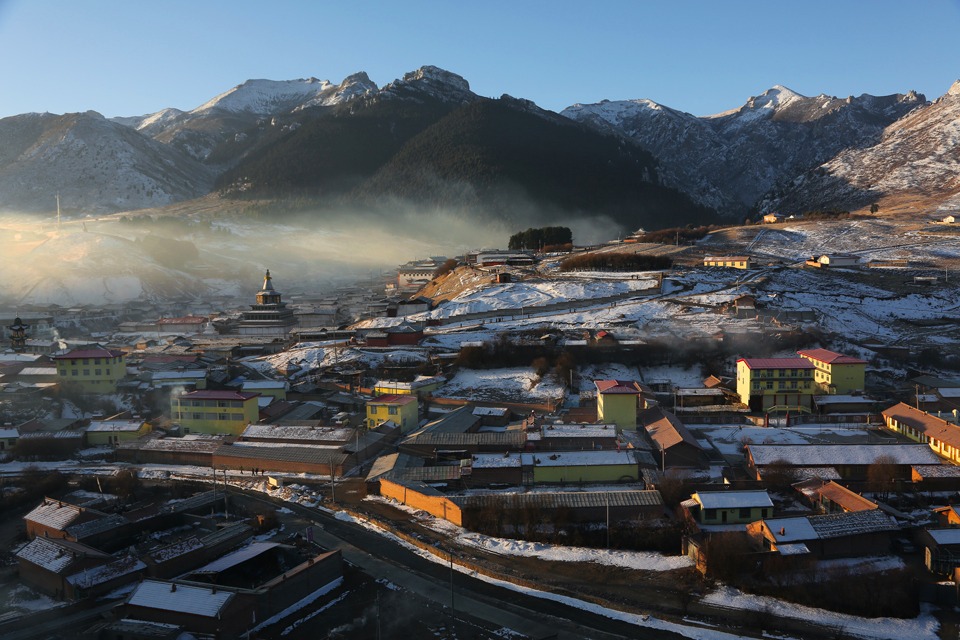
Langmusi is a Tibetan town straddling the border between Gansu and Sichuan provinces, at over 3,400 meters altitude. Sertri Gompa — on the Gansu side — is one of two major Tibetan Buddhist complexes that define the village. Founded in the Gelugpa tradition, it overlooks a valley of alpine meadows and red cliffs. Its modest scale, contemplative atmosphere, and active monastic community make it a place of living practice, far from mainstream tourist circuits.
Practical information at a glance
- Admission: paid entry required to access the monastic site
- Dress code: shoulders and knees must be covered; remove your shoes before entering prayer halls
- Recommended duration: 1.5 to 2 hours for the monastery and immediate surroundings
- Altitude: approximately 3,400 m — allow time for acclimatization if arriving from lower elevations
- Access: on foot from Langmusi center; the monastery is visible from the main street
What to see
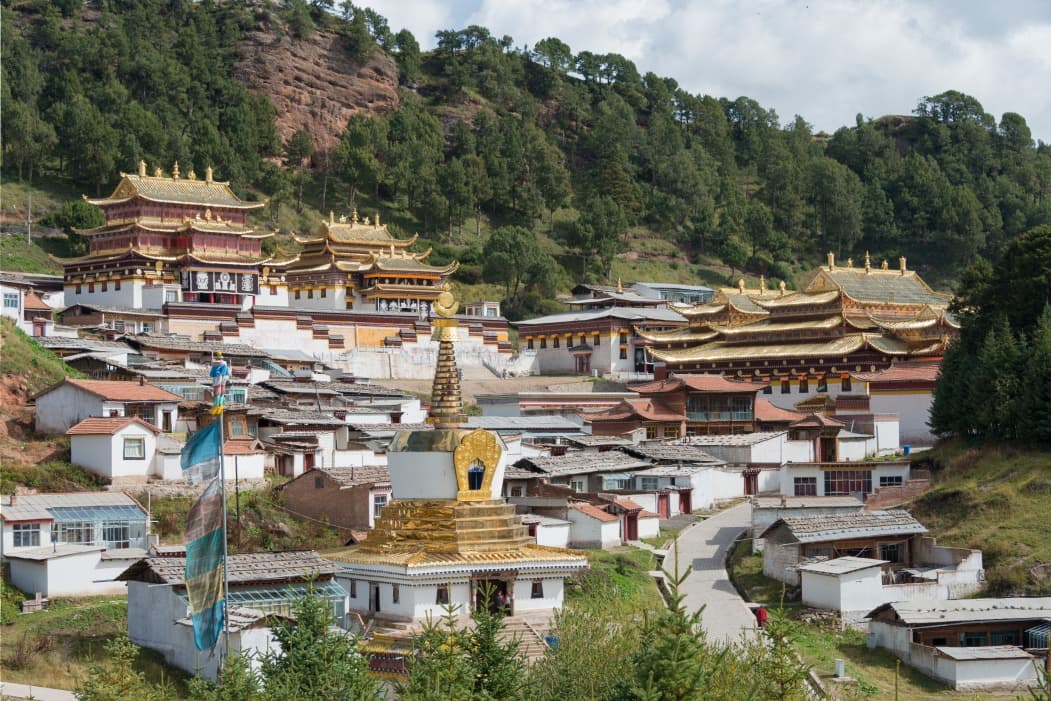
The complex comprises several prayer buildings with gilded roofs, rows of prayer wheels, white stupas, and prayer flags fluttering in the wind. Inside the halls are thangkas, Buddha statues, and yak butter lamps burning continuously. Monks in maroon robes move between buildings throughout the day.
History and context
Sertri Gompa belongs to the Gelugpa school, the same tradition as the Dalai Lama. Langmusi is home to two distinct monasteries: Sertri on the Gansu side and Kirti Gompa on the Sichuan side — a provincial boundary literally runs through the village. The region is populated by Tibetan nomadic and semi-nomadic communities; the monastery remains an active spiritual and educational center for the local population.
Highlights of your visit
Monastic debates
Late afternoons see young monks engaged in philosophical debate in the courtyard — animated exchanges punctuated by ritual hand-clapping. This moment, open to discreet visitors, offers an authentic glimpse of Tibetan monastic training.
The main assembly hall
The dukhang (central prayer hall) showcases the most elaborate murals and impressive statues. Morning ceremonies, accompanied by deep chanting and cymbals, are accessible to respectful visitors.
The surrounding meadows and cliffs
Behind the monastery, a path climbs toward red cliffs striped with geological layers. Views over the valley, nomadic tents, and yak herds complement exploration of the built site.
Etiquette and visiting rules
- Circumambulate stupas and prayer wheels clockwise.
- Do not photograph monks without explicit permission.
- Keep your voice low inside prayer halls; turn off your camera flash.
- Never point your feet toward altars or statues.
- Ask permission before entering a closed building.
Photography tips
Golden morning light illuminates the gilded roofs and prayer flags from the east. In late afternoon, the red cliffs behind the monastery glow warmly — ideal for photography. Avoid flash indoors; yak butter lamps provide sufficient ambient light for long-exposure shots.
Location and access
Langmusi sits on the Gansu-Sichuan border in the northeastern Tibetan plateau. The town is reachable by bus from Hezuo (Gansu side) or Zoigê (Sichuan side). The road is long and winding; budget a full day of travel from major cities. Sertri Gompa is just a few minutes' walk from Langmusi's main street.
Nearby
- Kirti Gompa monastery — the other major Buddhist complex in the village, on the Sichuan side, a few hundred meters away.
- Langmusi Gorge (Namo Gorge) — narrow red-walled canyon with sacred springs and conifer forest, accessible on foot from the village.
- Zoigê Grasslands (Ruoergai) — vast wetland and nomadic pasture, a few hours south on the Sichuan plateau.
Frequently asked questions
May to October, when meadows are green and roads passable. Winters are harsh at 3,400 m and snow can close some access routes.
The area is generally accessible to foreigners with a standard passport, but regulations in Tibetan regions can change. Check access conditions with a local English-speaking agency before traveling.
Yes, morning ceremonies are typically open to discreet visitors. Stay back, do not disrupt proceedings, and ask before photographing.
The two monasteries are just a few minutes' walk apart. Half a day is enough to visit both sites and explore the neighboring gorge.
At 3,400 m, altitude sickness is possible if you arrive quickly from lower elevations. Allow a night for acclimatization and avoid strenuous activity during your first hours.
Photos
Interested in this visit?
We can include it in your personalised itinerary.