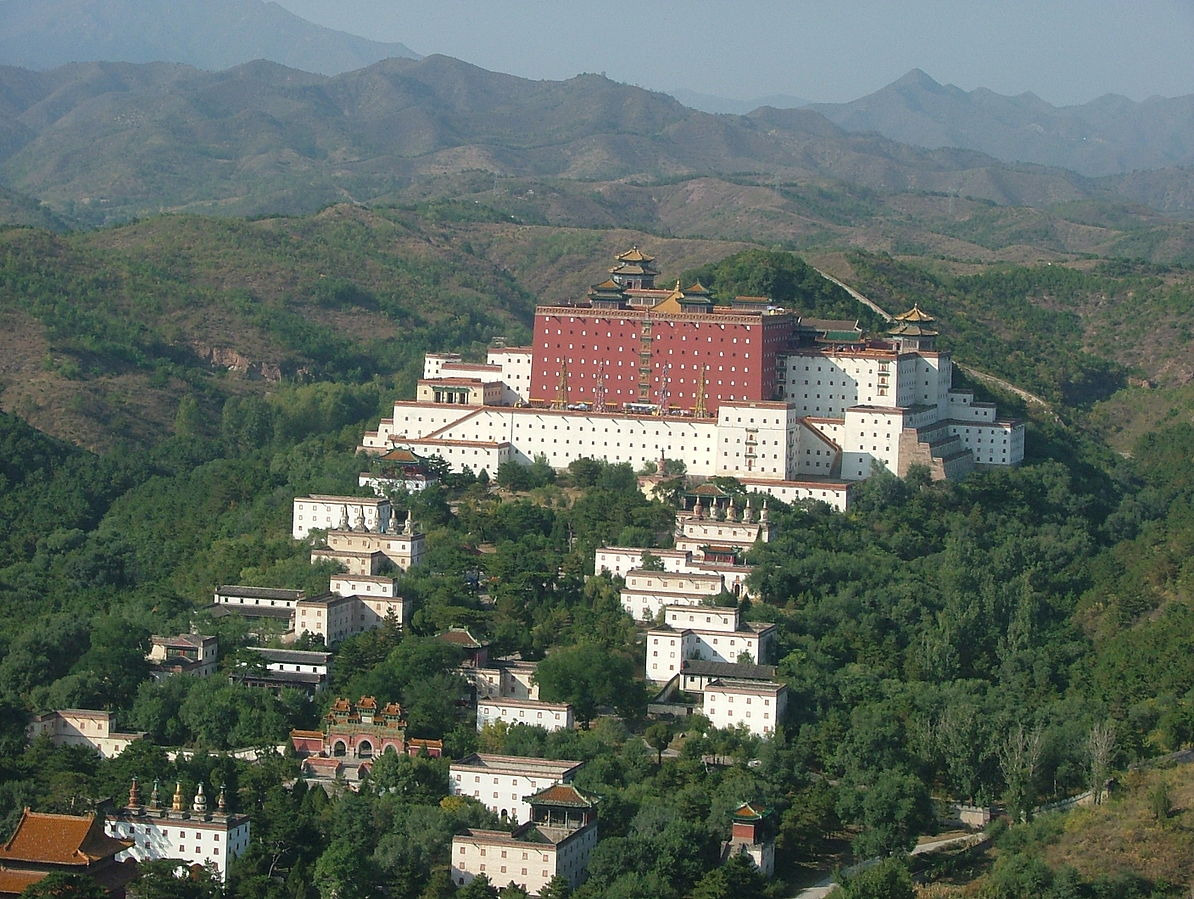
Golden Temple Park (Jindian Park)
Northeast of Kunming, Golden Temple Park is home to a pavilion entirely cast in bronze dating from the Qing dynasty, surrounded by centuries-old camellias and pine forests.
Golden Temple Park (金殿公园, Jīndiàn Gōngyuán) stretches across forested hillsides northeast of Kunming. Its central attraction is a pavilion entirely constructed from cast bronze, originally erected during the Ming dynasty and later reconstructed under the Qing. The site blends Taoist architecture, camellia gardens, and pine forests, just a few kilometres from the city centre.
Practical information at a glance
- Entrance: paid admission (discounted rates for students and seniors)
- Access: city buses from central Kunming; cable car available on-site
- Recommended duration: 2 to 3 hours
- Dress code: no strict restrictions, but the site is Taoist — respectful attire recommended
What to see
The bronze pavilion is the park's centrepiece: walls, columns, roof tiles, altars, and statues are all cast from the same metal, earning it its distinctive name. Surrounding it, the park houses a remarkable collection of ancient camellias, some specimens dating back several centuries. Shaded pathways lined with pines traverse the grounds, leading to secondary pavilions and Taoist courtyards.
History and context
An original bronze temple was constructed here in the late 16th century under the Ming dynasty, then relocated to Jizu Shan. The current structure dates from the reign of Emperor Kangxi (Qing, 17th century). General Wu Sangui, who controlled Yunnan at the time, oversaw its reconstruction. The site is listed among the province's protected monuments.
Highlights of your visit
The bronze pavilion
Weighing several tens of tonnes, the pavilion faithfully reproduces the forms of traditional wooden architecture — framework, consoles, roofline — but entirely in metal. The effect is striking: the golden patina shifts to verdigris in places, depending on exposure.
The camellia collection
Yunnan is one of the camellia's native regions. The park preserves centuries-old trees; peak bloom occurs from January to March, a period when the site is particularly lively.
The cable car and panoramic views
A cable car connects different parts of the park and offers views over the pine canopy and, on clear days, the distant Dian Lake.
Etiquette and visiting rules
- The temple remains an active Taoist place of worship: adopt discreet behaviour inside prayer halls.
- Do not touch statues or altars.
- Offerings and incense are reserved for practitioners.
Photography tips
Morning light, before crowds arrive, is ideal for photographing the pavilion without throngs of visitors. Frame from the lower courtyard to include the pines in the background. During camellia bloom (January–March), the pathways offer colourful compositions. Photography is permitted in outdoor spaces; check restrictions inside the pavilion.
Location and access
The park is located in Panlong District, about ten kilometres northeast of central Kunming. Several city bus lines serve the main entrance. The site is not easily accessible for wheelchair users due to elevation changes and stairs.
Nearby attractions
- Yuantong Temple — Kunming's principal Buddhist temple, in the city centre.
- Dian Lake (Kunming Lake) — large lake south of the city, accessible by bus or boat.
- Stone Forest (Shilin) — UNESCO-listed karst formations, approximately 90 km southeast.
- Western Hills (Xi Shan) — panoramic site overlooking Dian Lake, with temples carved into the cliff face.
Frequently asked questions
January to March for camellia bloom. Spring and autumn offer pleasant weather in Kunming. Summer is the rainy season but remains mild.
No strict obligation, but respectful dress is appropriate in Taoist worship halls. Covering shoulders and knees is advised.
Yes. Yuantong Temple and the historic centre are best visited in the morning; Golden Temple Park in the afternoon. The Western Hills require a separate half-day.
Outdoor spaces are freely photographable. Inside the pavilion, restrictions may apply; check signage on-site.
Elevation changes and numerous stairs make wheelchair access difficult. The cable car can facilitate some routes, but overall accessibility remains limited.
Interested in this visit?
We can include it in your personalised itinerary.