Tianlong Village
Tianlong Village
Located 30 km from Anshun in Guizhou, Tianlong is an ancient Ming military outpost built entirely in stone, where the Tunbao community preserves Ming-era costumes and dixi opera.
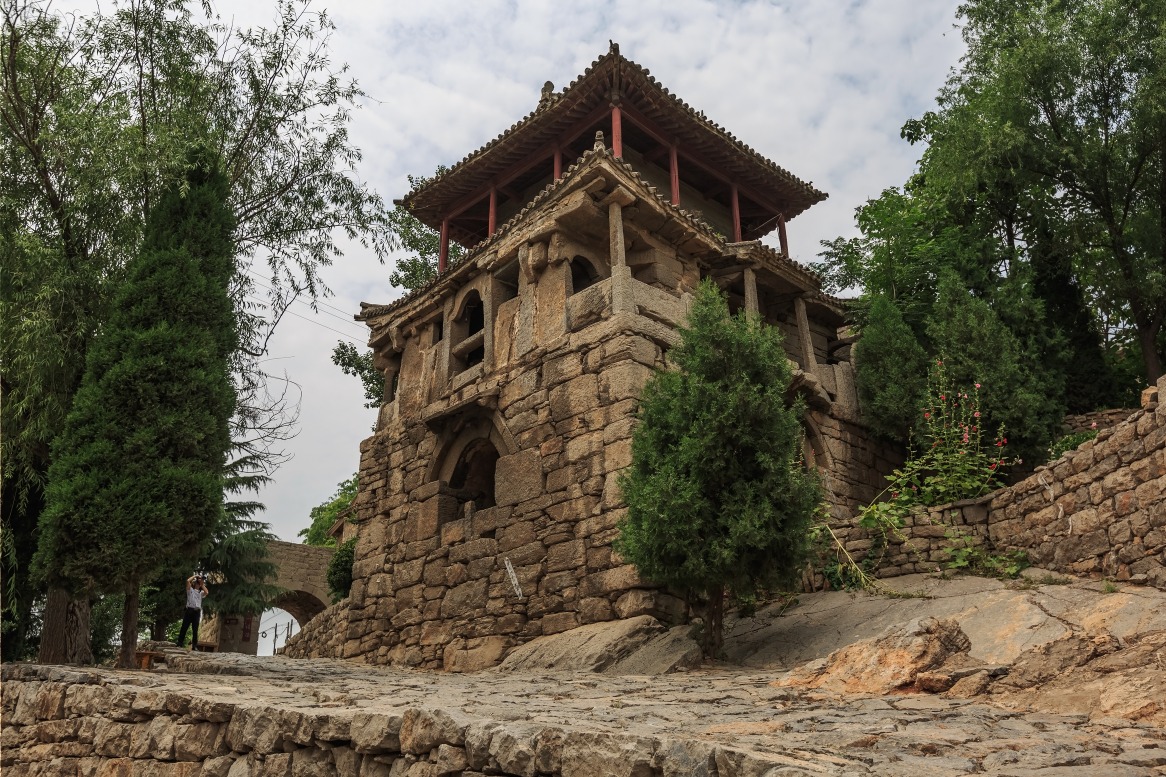
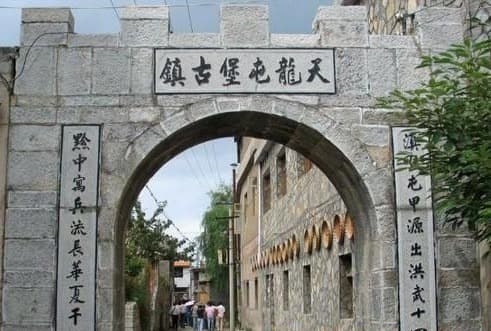
Tianlong village, an ancient fortress built during the Ming dynasty, sits some thirty kilometers from Anshun in Guizhou province. Built entirely of stone, it is home to the Tunbao community—descendants of Han soldiers sent by Emperor Zhu Yuanzhang in the 14th century—who preserve costumes, language, and traditions stretching back more than six centuries.
Why Visit Tianlong
Tianlong holds appeal on several counts. It ranks among Guizhou's best-preserved tunpu villages, where military stone architecture remains largely original. It is also a singular cultural case: its inhabitants are Han Chinese, not an ethnic minority, yet geographical isolation has allowed them to preserve Ming customs abandoned elsewhere in Chine. The village also provides access to dixi opera, a masked theater form inscribed on China's intangible cultural heritage list.
History: A Military Outpost Becomes Village
Tianlong was founded during the Ming dynasty (1368–1644), when Emperor Zhu Yuanzhang sought to pacify the southwestern margins of Chine. The site functioned as a military outpost (tunpu) constructed entirely of stone, serving as a refuge for the imperial garrison.
To ensure their livelihood between campaigns, soldiers were assigned to farm the surrounding valleys. Their families settled on site, and the garrison outpost gradually transformed into a permanent village. Cut off from major urban centers for centuries, the community developed its own culture, dialect, and female costume, distinctly different from Han peoples of the plains.
What to See in Tianlong
Stone Architecture
Walls, roofs, alleys, ramparts: nearly everything in Tianlong is built from local limestone flagstones. The houses, low and sturdy, line their flat stone roofs along narrow lanes that trace a defensive plan rather difficult to discern on first passage. Much of the original fabric dates to the Ming period, with periodic restorations.
Tunbao Costumes
Tunbao women still wear daily the long embroidered blue robe, wrapped headdress, and small cloth slippers inherited from the Ming court. This attire, considered a vestiges of ancient dress, is one of the primary reasons to visit.
Tunpu Dixi Opera
The village preserves an old open-air stage where dixi opera performances are held. Actors wear carved wooden masks and traditional costumes, singing warrior tales drawn from China's great chronicles. This is one of the few places where this ritual theater continues in its original setting.
Ramparts and Alleys
The enclosing walls and stone pathways climbing toward the neighboring hill offer a panoramic view of the village and Guizhou's karst countryside.
Practical Information
- Duration of visit: allow 2 to 3 hours for the village, longer if you climb the hill and attend an opera performance.
- Admission: entry is ticketed at a modest price. A combined ticket allows inclusion of the neighboring mountain.
- Hours: open during daylight hours, year-round. Verify opera performance times on-site, as they are not daily.
- What to bring: comfortable shoes (the alleys are paved and slippery in humid weather).
When to Go
Guizhou has a humid subtropical climate, with hot, rainy summers and mild but misty winters. The best times to visit Tianlong are spring (April–May) and autumn (September–October), when temperatures are pleasant and visibility is better.
If you wish to see the village in celebration, aim for key dates on the Tunbao calendar: Chinese New Year (January–February) and the Lantern Festival feature costume processions and more frequent opera performances.
How to Get There
Tianlong is accessible from Anshun, which itself connects to Guiyang by high-speed train in under an hour. From Anshun's bus station, regular services run to Tianlong with stops in the village. Journey time is roughly 45 minutes. A taxi or private vehicle is also an option, especially if combining the visit with other tunpu sites in the region.
Combine in the Region
Tianlong naturally pairs with other attractions in central Guizhou:
- Anshun, the logical base for exploring tunpu villages and surrounding karst landscapes.
- Longgong Cave, an underground network explored by boat near Anshun.
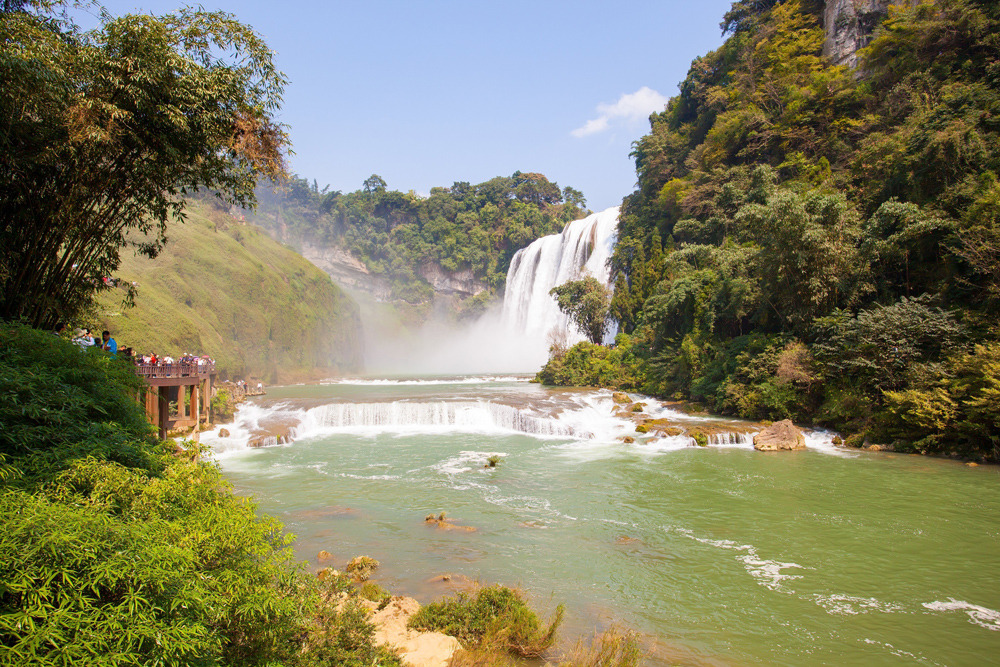
- Huangguoshu Falls, among Asia's largest, reachable in a half-day from Anshun.
Frequently Asked Questions
Frequently asked questions
No. The Tunbao are Han Chinese, descendants of soldiers sent to Guizhou under the Ming dynasty. Their geographical isolation for several centuries allowed them to preserve Ming-era costumes, dialect, and customs that Han peoples of the plains gradually abandoned.
Two to three hours suffice to walk the alleys, ramparts, and main houses. Allow a half-day if you attend a dixi opera performance or climb the neighboring hill.
Not necessarily. Dixi opera performances are more frequent on weekends, during traditional festivals, and in high season. It's best to inquire at the village entrance.
The village integrates well into a circuit around Anshun, with Longgong Cave, Huangguoshu Falls, and other tunpu villages like Yunshan and Benzhai, which form a coherent cultural cluster.
Plan Your Trip
Tianlong village fits naturally into an itinerary exploring Guizhou and southwest Chine. To build a journey combining tunpu villages, karst landscapes, and Guizhou's ethnic minorities, consult our circuit ideas on Chine.
Interested in this visit?
We can include it in your personalised itinerary.