Yunshuiyao Tulou Cluster
Yunshuiyao Tulou Cluster
Yunshuiyao brings together Hakka tulou, centuries-old banyan trees and a peaceful river in Nanjing County (Fujian). A UNESCO-listed ensemble still inhabited by local residents, best paired with Tianluokeng.
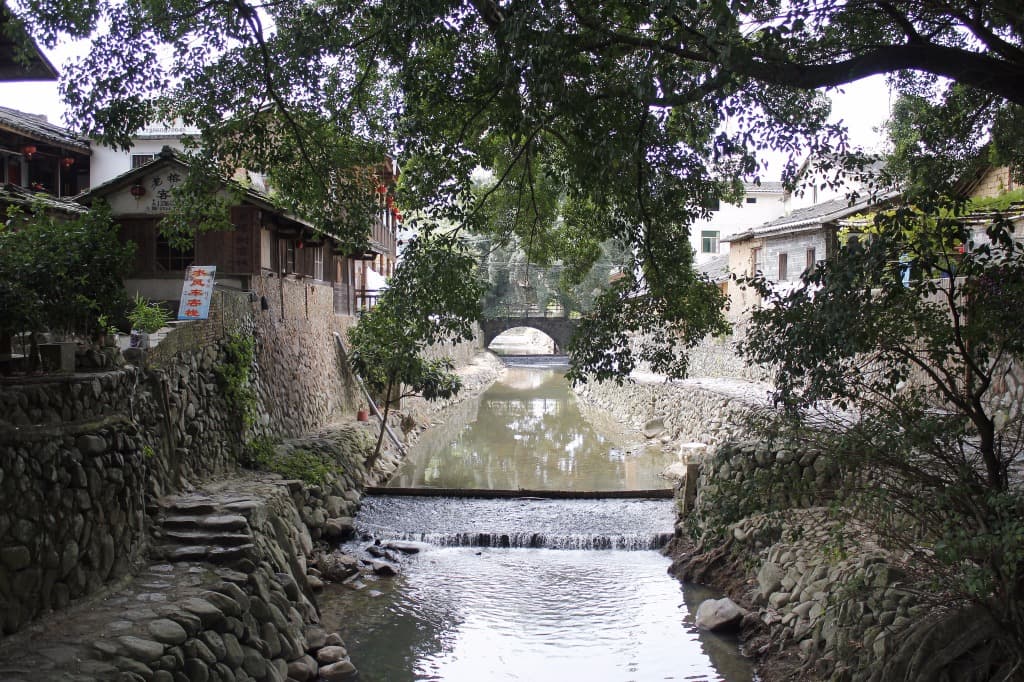
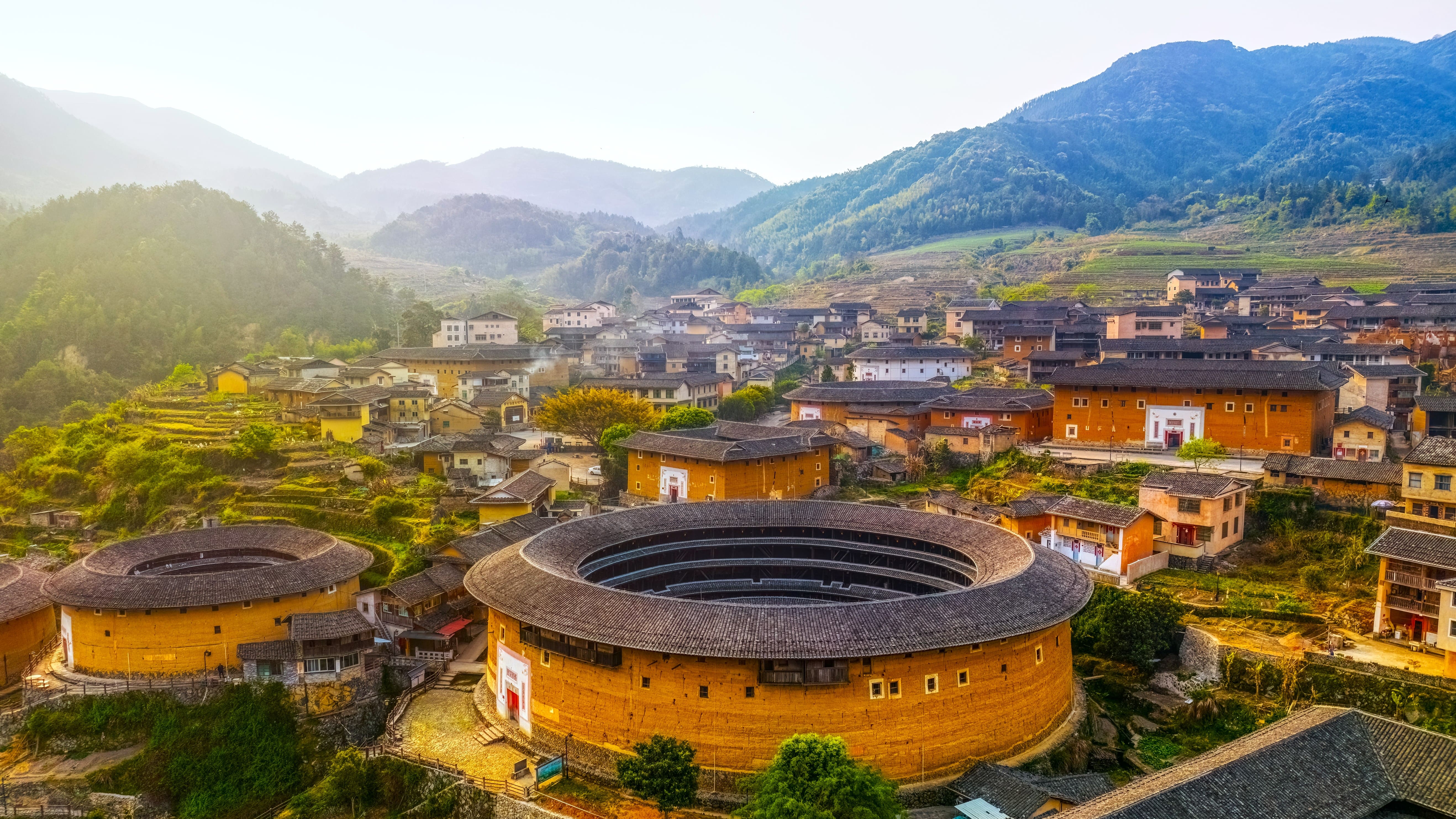
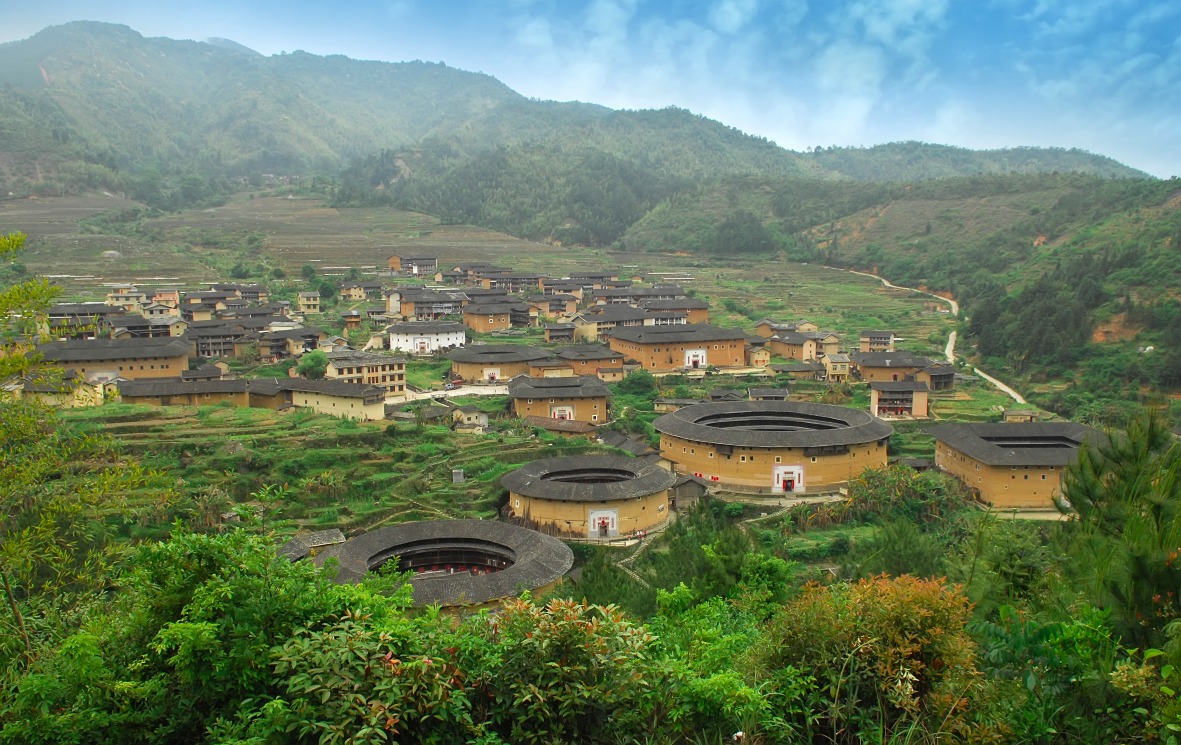
Yunshuiyao is an ancient village in Nanjing County, Fujian Province, inscribed on the UNESCO World Heritage list in 2008 alongside other groups of Hakka tulou. Along a river lined with century-old banyan trees, several round and square tulou coexist with traditional wooden houses, forming a living and vibrant ensemble, far removed from museum-like reconstructions.
Practical Information at a Glance
- Entrance: paid site (grouped ticket with other tulou in Nanjing County)
- Recommended duration: 2 to 3 hours for the village and its main tulou
- Dress code: no particular clothing restrictions
- Access: from Zhangzhou or Xiamen by long-distance bus to Nanjing, then local minibus to Yunshuiyao
What You'll See
The village centers around a peaceful river and an avenue of banyan trees, some of which are several centuries old. The most remarkable tulou include Hekeng Lou, a cluster of several round and square towers grouped together, and Huaiyuan Lou, a round tulou renowned for the quality of its interior wooden timber framework. More modest Hakka houses complete the urban fabric.
History and Context
The Hakka tulou of Fujian were built between the 13th and 20th centuries by the Hakkas, a Han ethnic group that migrated southward. These collective fortress-residences could shelter several hundred people from the same clan. Their architecture of rammed earth gives them remarkable resistance to earthquakes and attacks. Yunshuiyao owes its name to the river and the clouds reflected in it.
Highlights of the Visit
The Banyan Tree Avenue
The village entrance runs along a row of centuries-old banyan trees with spectacular aerial roots. This shaded promenade sets the tone: Yunshuiyao is first and foremost a place of daily life, not a theme park.
Huaiyuan Lou
This four-story round tulou is often cited for the finesse of its interior wooden structure. The central courtyard, superimposed galleries and central well perfectly illustrate Hakka communal organization.
Hekeng Lou
This cluster groups several tulou of different shapes on a single site, allowing you to compare in a single view the architectural variations of round and square forms.
The River and Village Life
Residents still wash laundry by the water's edge, children play under the banyan trees. This living dimension sets Yunshuiyao apart from purely touristic sites in the county.
Photography Tips
Morning light is ideal along the river, when morning mist still envelops the banyan trees. For the tulou, climb to the upper levels (if access is permitted) to capture the symmetry of interior courtyards. Avoid midday in summer: the light is harsh and crowds are heavy.
Location and Access
Yunshuiyao is located in Nanjing County, approximately 70 km northwest of Zhangzhou and about 150 km from Xiamen. The nearest rail station is Zhangzhou or Nanjing (high-speed rail line). From Nanjing, minibuses regularly serve the village. The site is partially accessible to people with reduced mobility on the main paths, but the tulou themselves have steep stairs.
Local English-speaking agencies like Nomadays offer circuits combining Yunshuiyao with other tulou groups in the county, notably the Tianluokeng cluster and the Hegui group.
Nearby
- Tianluokeng Cluster — the group of five tulou in "four round, one square" formation is the emblematic image of Fujian's tulou.
- Hegui Group — UNESCO-listed cluster, less frequented, in a preserved rural setting.
- Zhangzhou Old Town — Ming and Qing architecture, lively markets, less than an hour's drive away.
Frequently asked questions
Spring (March-April) and autumn (October-November) offer pleasant temperatures and lush vegetation around the river. Summer is hot and humid; winter remains mild in Fujian but can be misty.
Yes, both sites are in the same Nanjing County and often covered by a grouped ticket. A full day is sufficient for both, provided you set out early from Nanjing or Zhangzhou.
Yes, some Hakka residents still live in the tulou of Yunshuiyao. Respect their privacy, particularly in shared spaces and interior courtyards.
Photography is generally tolerated in shared spaces. Always ask permission from residents before photographing them directly.
From Xiamen, take a high-speed train to Zhangzhou or Nanjing, then a local bus or minibus to Yunshuiyao. The total journey takes approximately 2 to 3 hours depending on connections.
Interested in this visit?
We can include it in your personalised itinerary.