Wudang Shan
Wudang Shan
Birthplace of tai chi and sacred center of Taoism, Wudang Shan spreads its UNESCO sanctuaries and misty pathways across the heart of Hubei province.
Wudang Shan, or the Wudang Mountains, is a mountain range in Hubei province. These sacred mountains, inscribed as a UNESCO World Heritage Site, harbor numerous Taoist temples and monasteries as well as several tai chi schools.
History
For centuries, the Wudang Mountains have been recognized as a major center of Taoism and its martial art, tai chi.
In the early Tang Dynasty (618–907), the first Taoist structure was erected and named the Hall of the Five Dragons. Other buildings followed, including the Taiyi, Yanchang, and Weiwu Gong temples. In 1018, the Hall of the Five Dragons was transformed into the Temple of the Five Dragons under Emperor Song Zhenzong of the Song Dynasty.
In 1994, the monasteries were designated UNESCO World Heritage Sites.
Today
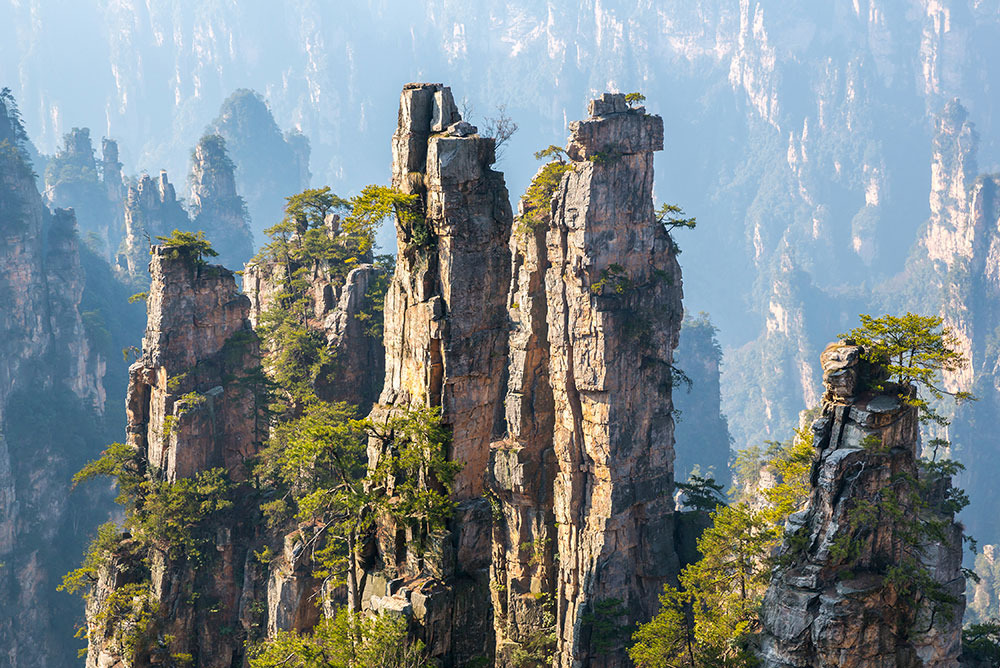
A sacred center of Taoism and the birthplace of tai chi, the Wudang Mountains host numerous Taoist sanctuaries, temples, and monasteries.
The mountain range extends across 400 kilometers at the boundary between the Yellow River basin and the Yangtze River basin.
A pilgrimage destination of growing renown, Wudang Shan increasingly attracts both Chinese and international travelers seeking spiritual contemplation.
A paved road now provides access to the various temples and monasteries hidden throughout the mountains. Winding along the slopes through dense vegetation, the road offers stunning vistas. Buses navigate the mountain roads to deliver you directly to the finest temples, while hiking trails promise equally rewarding explorations.
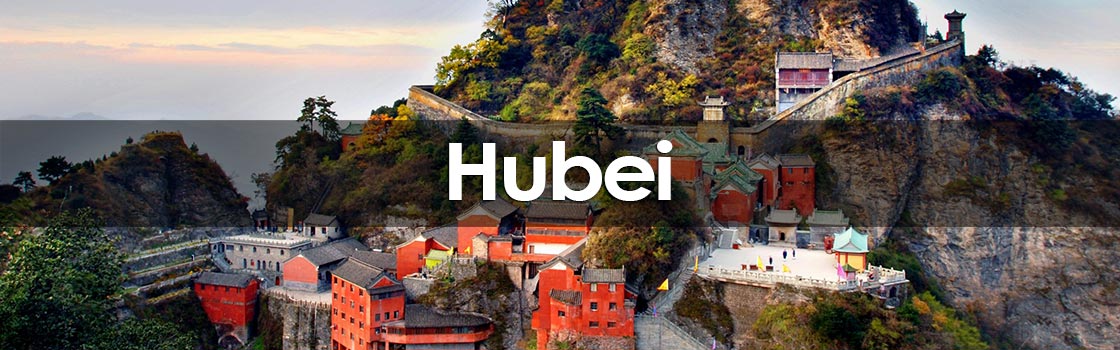
53 ancient structures and 9 architectural sites have survived to the present day and await discovery. Among the most compelling sites, visit the Golden Sanctuary and the Ancient Bronze Sanctuary, prefabricated bronze buildings completed in 1307. The Forbidden City, enclosed by a stone wall dating to 1419, the Purple Heaven Palace, the Nanyang Palace, the Fuzhen Temple, and the Zhishi-Xuanyue Gate, built in 1522 to mark the entrance to Wudang, are unmissable on your ascent. Beyond their historical significance, many of these complexes offer breathtaking views over the Wudang Shan peaks.
Some climbs can prove quite challenging, yet reward you with wonderful encounters among locals. Women, children, and elders, laden with goods, traverse these paths and will inspire your perseverance. You may also encounter monks in their purple robes. Pause at temples sometimes left in ruins to absorb the wisdom imbued in these sacred spaces.
Film enthusiasts may recognize locations from the celebrated film Crouching Tiger, Hidden Dragon, shot in these mountains.
A sacred place for tai chi, you may observe young disciples performing sequences in measured rhythm amidst the mountain's tranquility. For the more curious, it is possible to take lessons and try your hand at some movements of this majestic martial dance.
By bus or on foot, ascending the Wudang Mountains is well worth the effort and offers a perfect opportunity for a contemplative retreat in an exceptional landscape of wilderness, history, and cultural significance.
Climate
The climate is highly changeable throughout the year. Pack warm clothing and rain gear as precautions.
Humidity is very high in the mountains; an umbrella is also advisable.
The Wudang Shan town, at the foot of the mountain range, is equipped with a railway station on the Wuhan–Chongqing line.
Buses also serve the town from Wuhan, Shiyan, and Xiangfan.
Admission Prices
Entrance fee: 140 RMB. A map costs 3 RMB and insurance 2 RMB.
Golden Sanctuary: 20 RMB Purple Heaven Palace: 15 RMB Cable car: Ascent 80 RMB – Descent 70 RMB Bus: 70 RMB
Want to discover this destination?
Our local advisors design your tailor-made trip.