Yujiacun Stone Village
Yujiacun Stone Village
Founded in 1468 by the Yu family near Taihang Mountain, Yujiacun preserves 4,000 stone houses and rare architectural heritage of Hebei.
Yujiacun village, nicknamed the "stone village," lies near Taihang Mountain, 15 km from Jingjing County seat and 60 km southwest of Shijiazhuang, in Hebei province. Inhabited by descendants of the Yu family since the Ming dynasty, this hamlet of roughly 1,600 residents preserves a built heritage entirely crafted from local stone.
Why visit Yujiacun
Yujiacun offers a rare testament to 15th-century Chinese rural architecture, largely untouched by modern transformation. Within just 0.25 km², the village contains nearly 4,000 stone houses, 3,700 meters of paved alleyways, approximately 1,000 wells and basins, as well as 200 inscriptions carved into rock. Residents still use stone furniture today—stools, tables, mills—inherited from a tradition spanning five centuries.
The site's appeal lies as much in its architectural coherence as in its human continuity: nearly all villagers bear the Yu surname and descend from the founder.
Village history
The village was founded during the 9th year of Ming emperor Wanli's reign by the Yu family. Yu Youdao, grandson of Yu Qiang—an important politician and Ming dynasty courtier—built the first stone houses in 1468 on barren land to lodge himself while hunting deer in the region. His descendants gradually settled there, and approximately 24 generations succeeded one another over roughly 500 years, forming the village as it exists today.
This lineage explains the nickname "Yu village": virtually all inhabitants share the same family name and claim common ancestry.
What to see in Yujiacun
The Qingliangge pavilion
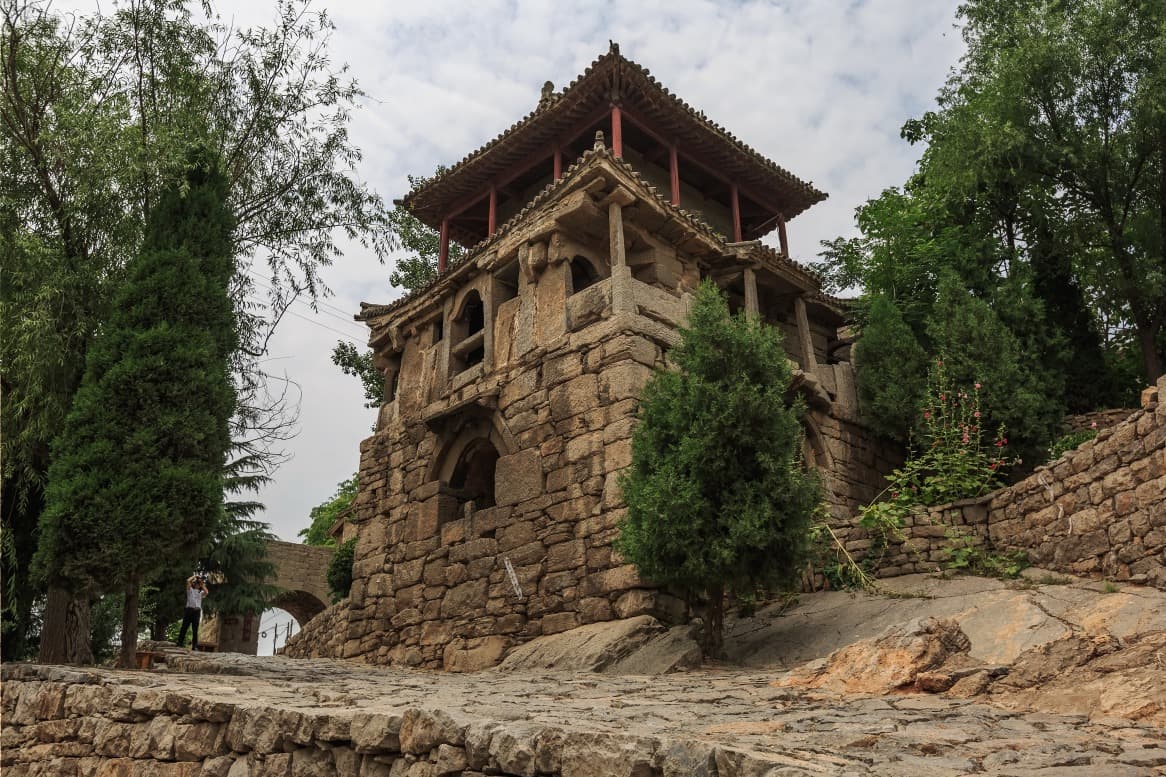
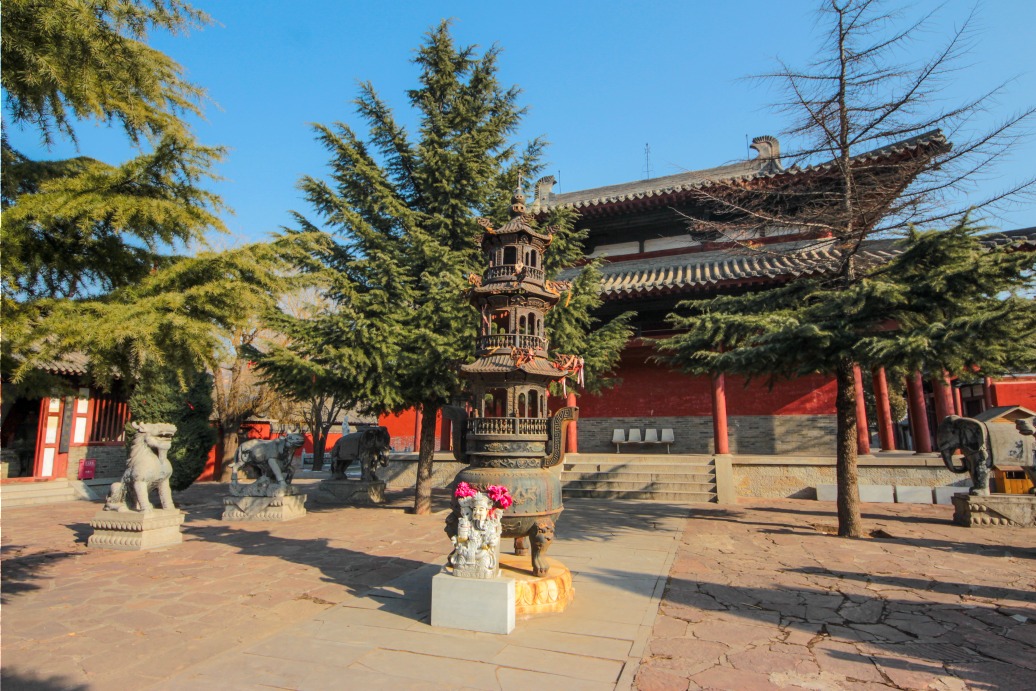
Also called Shenxiange, this small Taoist temple was designed in 1581. Its singularity lies in its construction technique: it was built without foundation, by simply stacking large hewn stones. A local legend links its construction to a young man who wanted to build a nine-story tower single-handedly. Inside, sculptures and statuettes trace the history of the Yu family and illustrate local Taoist culture.
The Sihelouyuan tower
Built at the end of the Ming dynasty, Sihelouyuan is the village's most important stone house. Spanning nearly 1,000 m², it contains around a hundred rooms and housed, under the Ming and Qing dynasties, twelve families practicing the cobbler's trade. Its interior courtyard and floors testify to the domestic organization of a large rural household in northern Chine.
The Hutong alley
This narrow alley is lined with traditional houses whose shared walls exceed 3 meters in height. The walk offers a precise sense of the village's tight urban fabric and how dwellings interlock with one another.
Stone heritage
Beyond remarkable structures, the entire village unfolds like an open-air museum: staircases, thresholds, troughs, millstones, commemorative inscriptions. Allow time to wander without a fixed itinerary and observe sculpted details.
Practical information
- Duration of visit: plan 2 to 3 hours to tour the main sites on foot.
- Entrance fee: paid entry at a modest rate, with discounts for students. Prices vary; check on-site.
- Best season: spring and autumn offer the most pleasant walking conditions; winters in Hebei are harsh.
- What to bring: suitable footwear; the paved alleyways are uneven.
How to get there
From Shijiazhuang, take bus line 203 from the intercity bus station, then transfer at the Jingxing stop to reach Yujia. The entire journey takes several hours; depart early in the morning if you wish to visit within the day. A taxi or private vehicle from Jingxing remains the simplest option for the final leg.
What to see in the region
Yujiacun combines well with other cultural and natural stops in northern Chine:
- Shijiazhuang, capital of Hebei and the logical starting point toward the village.
- The Great Wall at Juyongguan, one of the best-preserved passes in the Beijing section.
- Hexigten Geopark, for contrast with Inner Mongolian landscapes.
Planning your trip
Yujiacun fits into a cultural itinerary off the beaten path. To build a bespoke stay including this type of stop, consult our suggestions for trips to Chine.
Interested in this visit?
We can include it in your personalised itinerary.