Anyang
Anyang
A forgotten capital of the Shang dynasty and birthplace of Chinese writing, Anyang is home to Yinxu, a major UNESCO site in Henan. Our complete guide to visiting.
Name: Anyang
Chinese name: 安阳市
Province: Henan
Status: Prefecture-level city
Population: 5,172,834
Area: 7,355 km²
Anyang is a prefecture-level city in Henan province, situated south of the Yellow River at the border of Hebei and Shanxi. Anyang is an essential stop for archaeology enthusiasts, with its abundance of ruins and historical remains.
History
Anyang was an important city for the development of ancient Chinese culture. The prehistoric caves of Xiaonanhai on the western side of the city were a significant site where stone tools and fossilized animal bones used by humans 25,000 years ago were discovered. This excavated zone became known as the "Xiaonanhai Culture."
Anyang was the capital of the Shang dynasty under King Pangeng's reign. Called Yin, the city was one of China's first stable capitals. Anyang saw twelve emperors succeed one another over eight generations.
Excavations, begun in 1928 by archaeologist Li Chi, revealed a rich collection of Shang dynasty artifacts. These archaeological works uncovered the ruins of a royal palace dating to the 16th century BC, several tombs, and an extensive collection of oracle bones that helped trace China's history.
Today
Anyang is a city with a rich past that will enchant all travelers passionate about history and archaeology.
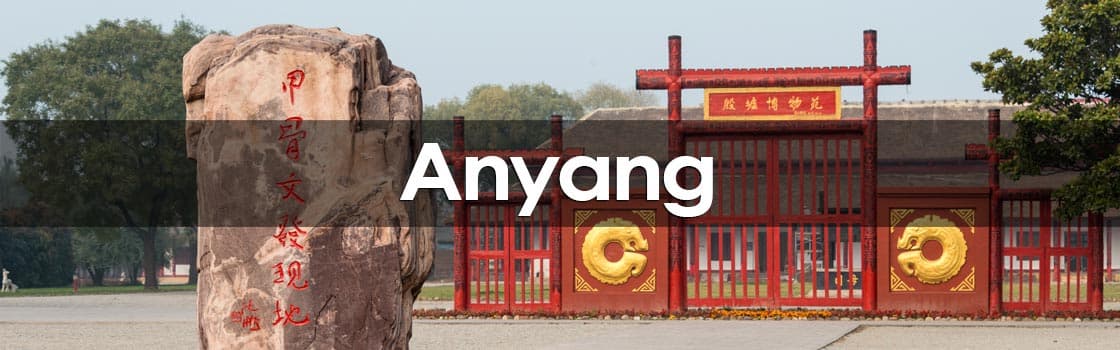
The Yin Xu archaeological site, situated along the Huan River, was designated a UNESCO World Heritage Site. The site and museum present archaeological discoveries dating from the Stone Age. Pottery, oracle bone fragments, bronze and jade objects, and tombs are displayed here. The ruins of the ancient Shang historical capital are perfectly preserved and bear witness to its glorious past.
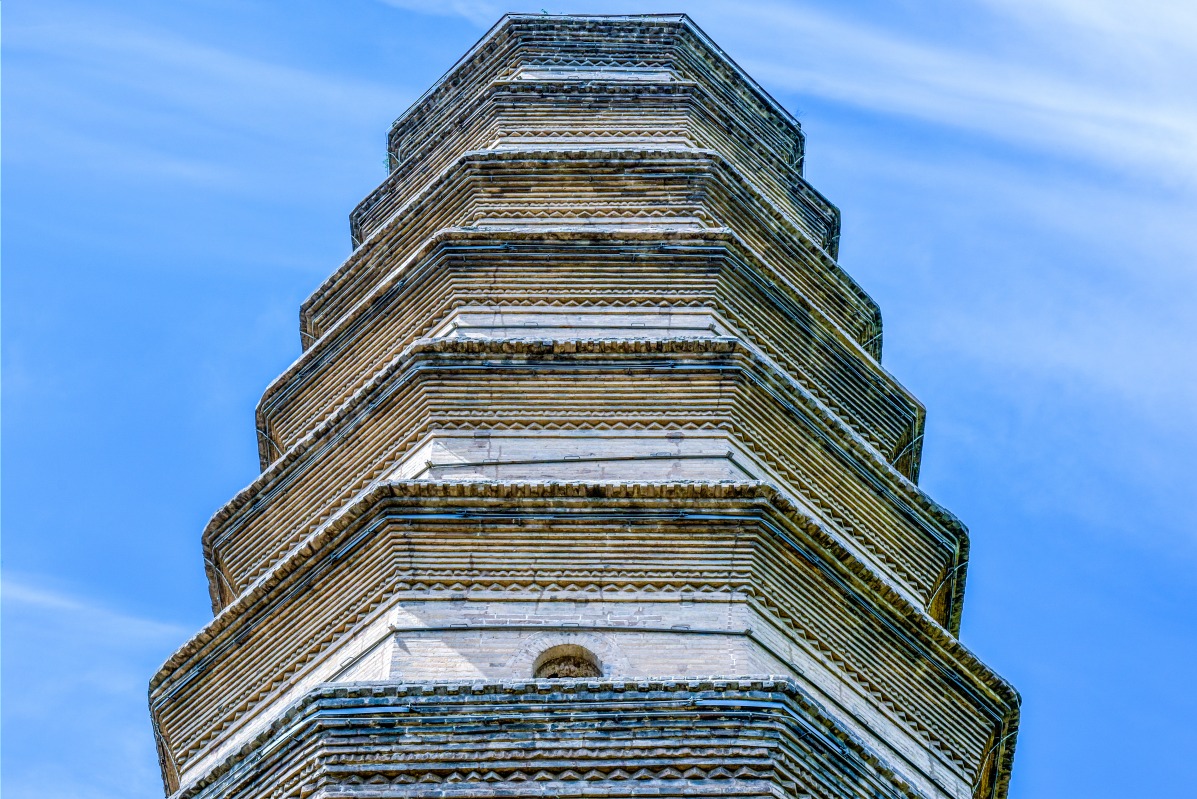
Beyond the Yinxu ruins, which are Anyang's main attraction, the city boasts other assets to charm visitors. The Wenfeng Pagoda, adorned with five upturned eaves, features splendid Buddhist sculptures. You can climb it and appreciate the interior paintings and panoramic views of the city and its surroundings.
The Tomb of Yuan Shikai, a high-ranking Qing military officer, is also worth visiting. Other small historical sites such as the Yue Fei Temple and Tianning Temple are equally impressive structures to discover.
Anyang also benefits from being situated at the base of the Taihang Mountains, offering splendid landscapes formed by mountains, plains, and rivers. For the more adventurous, paragliding above the Taihang Grand Canyon is possible.
Climate
Anyang sits at the frontier between China's steppes and northern plains. Its semi-arid climate is influenced by monsoons. The four seasons are distinctly marked in this region, with cold and very dry winters averaging −0.9°C in January. Summers are hot and humid, with an average temperature of 27°C in July.
Most precipitation occurs in July and August.
The best seasons to visit Anyang are spring, from March to May, and autumn, from September to October. Temperatures are mild and days are sunny.
Train
The Beijing-Guangzhou railway line runs through the city.
It is therefore easy to reach Anyang by train from Zhengzhou, Xinxiang, Guangzhou, Beijing, or Shijiazhuang.
Long-distance buses
Long-distance buses serve Anyang from Zhengzhou, Luoyang, Xinxiang, and Kaifeng.
Buses, taxis, and tuk-tuks allow for easy travel between sites.
What to do in Anyang?
- Immerse yourself in ancient China at the Yin Xu ruins and museum, one of China's most significant archaeological sites.
- Climb the Wenfeng Pagoda.
- Visit the Tianning Temple and the Tomb of Yuan Shikai.
- Try paragliding over the Taihang plains.
Want to discover this destination?
Our local advisors design your tailor-made trip.