Jianshui
Jianshui
Jianshui, in southern Yunnan, preserves one of Chine's best-preserved Confucius temples, a Ming gate tower, a seventeen-arch bridge, and renowned stoneware pottery craftsmanship. An ancient city still very much alive.
Jianshui is an ancient city in southern Yunnan, approximately 220 km from Kunming. Founded during the Tang dynasty, it preserves remarkably intact Confucian and Ming architectural heritage: temples, towers, bridges, and scholar residences coexist within a historic center that remains inhabited today. The city is also renowned for its black stoneware pottery and local cuisine, notably grilled tofu sold in the narrow lanes.
Practical information at a glance
- Access: buses from Kunming (South Bus Station) or from Mengzi; Jianshui railway station is served by regional trains.
- Recommended duration: a full day for the historic center; two days to include surrounding areas.
- Dress code: respectful attire recommended in temples and the Confucius Temple.
- Accessibility: the historic center is largely paved but not well-suited for wheelchairs.
What to see
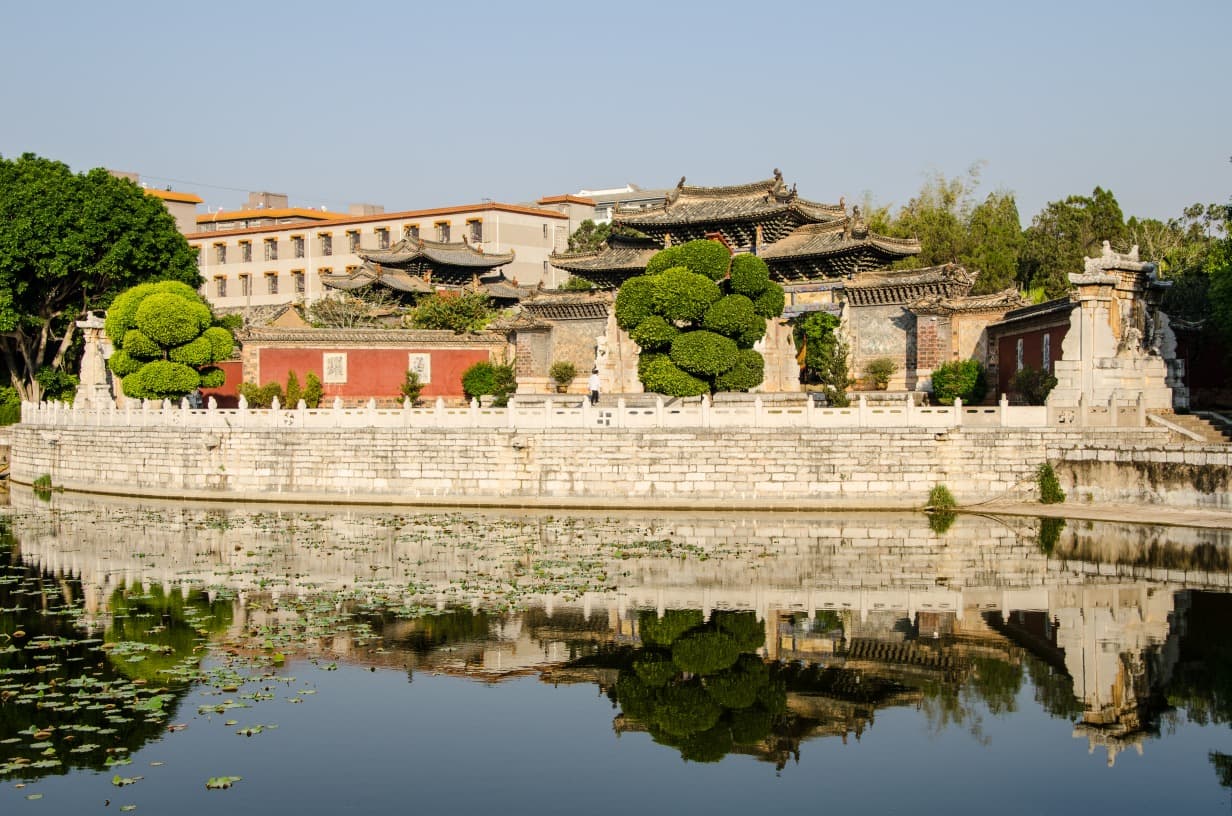
The Confucius Temple (Wenmiao) is one of the largest and best-preserved in Chine outside of Qufu. The Chaoyang Tower, the city's east gate dating from the 14th century, dominates the main axis. The Shuanglong Bridge, with seventeen arches, spans the confluence of two rivers at the city's edge. Scholar residences from the Ming and Qing dynasties dot the lanes of the old quarter.
History and context
Founded in the 7th century, Jianshui became a major administrative and cultural center of Yunnan under the Ming dynasty. The presence of a Confucius Temple as early as 1285 attests to the influence of Confucian orthodoxy in this frontier region. The city produced generations of scholars who passed the imperial examinations, earning it the nickname "city of Yunnan's scholars."
Highlights of your visit
The Confucius Temple
Built in 1285 and expanded during the Ming period, this complex spans several hectares. Its pavilions, ponds, and cypress-lined avenues form a cohesive ensemble. Paid entry grants access to nearly the entire site; allow at least ninety minutes.
Chaoyang Tower
This three-tiered gate tower, erected in 1389, is often compared to Wuhan's Yellow Crane Tower for its elegance. You can climb inside for views across the gray-tiled roofs of the historic center.
Shuanglong Bridge
Built in the 19th century, this seventeen-arch stone bridge stretches over 100 meters. Two octagonal pavilions punctuate it. It is particularly photogenic at sunrise, when mist blankets the surrounding rice paddies.
The lanes and pottery
The Xijie district concentrates black stoneware pottery workshops and grilled tofu shops. Jianshui pottery, fired without glaze, is recognized as national craftwork. Several workshops welcome visitors.
Etiquette and visiting rules
- Remove shoes in certain halls of the Confucius Temple if signage indicates.
- Speak quietly in active worship spaces.
- Ask permission before photographing residents in private courtyards.
Photography tips
The Shuanglong Bridge photographs best early in the morning, facing east, with raking light across the arches. The Chaoyang Tower is best framed from the pedestrian street in late afternoon. In the lanes, the soft light of day's end reveals the textures of gray brick walls. Drones are subject to local regulations; verify permissions on site.
Location and access
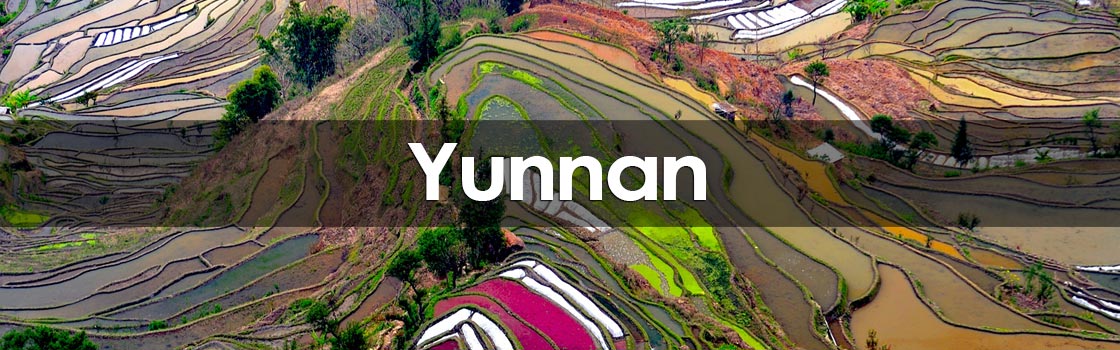
Jianshui sits in Honghe Prefecture, approximately 220 km south of Kunming. The city is accessible by long-distance bus or train from Kunming and Mengzi. The historic center can be explored on foot or by cycle-rickshaw. The city of Yuanyang and its terraced rice paddies lies about two hours' drive to the southeast, allowing you to combine both destinations.
Nearby
- Yuanyang terraced rice paddies — UNESCO-listed, spectacular at sunrise in winter and spring.
- Mengzi — nearby city, birthplace of the famous "mixian" noodle dish and starting point of the historic French-Yunnan railway.
- Tonghai — lakeside city to the north, known for Qilu Lake and Hui Muslim communities.
Frequently asked questions
Spring (March–April) and autumn (October–November) offer pleasant weather and lush rice paddies. Winter is mild and less crowded. Summer corresponds to the rainy season.
Yes, this is the classic itinerary in southern Yunnan. Spend one day in Jianshui, then two nights in Yuanyang for sunrise over the terraces.
Respectful dress is expected: shoulders and knees should be covered. While not an active place of worship in the strict sense, respect for the site is essential.
It is generally permitted in outdoor spaces. Certain halls of the Confucius Temple may prohibit it; respect signage on site.
One day is sufficient for the main sites. Two days allow you to explore the lanes, pottery workshops, and Shuanglong Bridge at sunrise.
Jianshui's grilled tofu is a local specialty sold in the lanes of the old quarter. Rice noodles (mixian) and dishes from Hani and Yi cuisine are also found in local restaurants.
Want to discover this destination?
Our local advisors design your tailor-made trip.