Macao
Macao
Between Portuguese UNESCO heritage, sprawling casinos, and fishing villages, Macao reveals itself in 2 to 3 days after Hong Kong. Complete practical guide.
Chinese name : 中華人民共和國澳門特別行政區
Status : Special Administrative Region
Population : 552,503 (2010)
Area : 29.5 km²
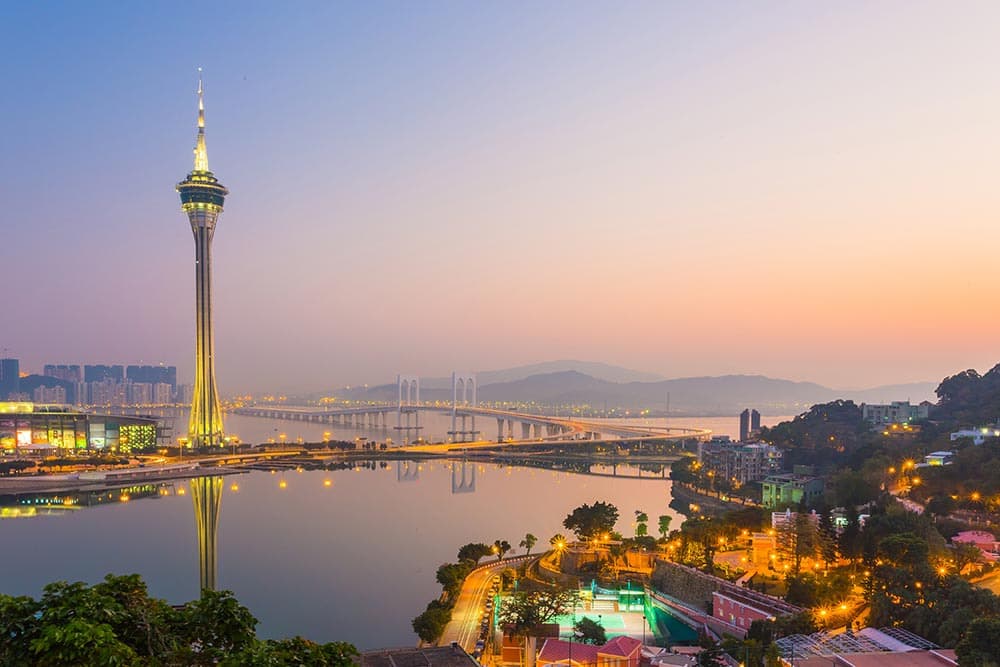
Macao, nicknamed China's Las Vegas, is recognized worldwide for its numerous casinos and luxury hotels. Colonized by Portugal, this small peninsula offers travelers an atmosphere blending modernity and history with its charming cobblestone streets, architecture with Portuguese charm, and baroque-style churches that stand in striking contrast to conventional perceptions of China.
History
Portuguese galleons first arrived in Macao for trade in the early 16th century. Then, in 1557, China authorized the Portuguese to establish a small enclave as thanks for clearing the region of pirates. Increased trade with China led to the development of Macao, which became the main meeting point between the Middle Kingdom and the West.
However, following the Opium Wars between China and Great Britain and the cession of Hong Kong to the British, Macao's activities and commerce experienced a long decline.
The Cultural Revolution reached the territory in 1966-1967. The government reportedly proposed Portugal's definitive departure, but the Chinese, fearing repercussions on international trade, allegedly refused.
In 1999, in accordance with the Sino-Portuguese agreement, Macao was returned to China and received the status of Special Administrative Region (SAR).
Like Hong Kong, the agreement guarantees Macao a high degree of autonomy for 50 years in all domains except defense and foreign affairs.
Today
The Oriental Las Vegas, Macao is also a Mediterranean enclave on the Chinese coast thanks to its fortresses, churches, and gastronomy inherited from the former Portuguese colonial power.
Once sleepy, this legendary territory has recently experienced growth comparable to that which transformed cities like Shanghai. However, rather than skyscrapers and office towers, Macao has seen the rise of gigantic hotels and casinos reminiscent of its Nevada counterpart, Las Vegas. The reason is that casinos, forbidden in China and Hong Kong, are permitted here and represent a lucrative market.
Macao's appeal, however, extends far beyond gambling. The pastel tones and orderly vegetation characterizing the peninsula and the islands of Coloane and Taipa delight travelers' eyes. Portuguese influence, omnipresent, is evident through cobbled alleyways, baroque churches, stone fortresses, Art Deco buildings, and peaceful parks and gardens. This exceptional fusion of East and West caught UNESCO's attention, and in 2005 it inscribed Macao's historic center on the World Heritage List. Several world-class museums complete this premier tourist destination.
Macao's singularity is particularly striking after a prolonged stay in China. Though nearly 95% of residents are Chinese, the remaining 5% are mostly Portuguese or Macanese (people of mixed Portuguese, Chinese, and/or African descent). This blend of peoples, lifestyles, temperaments, and Mediterranean and Asian cuisines constitutes one of Macao's principal charms.
Climate
Macao experiences a humid subtropical climate with hot, humid summers and cool, dry winters.
In summer, May through October, Macao endures heavy rainfall and violent storms occasionally including tropical typhoons. Temperatures are elevated, averaging 31°C in July and August.
A cold snap affects the area in January and February but still leaves relatively bearable temperatures just below 10°C.
The best time to visit Macao is autumn around mid-October when temperatures are mild and the sky is clear.
Spring should be avoided, from March to April, as rising temperatures and humidity plunge Macao into a thick daily fog.
Macao is relatively easy to access from China or Hong Kong.
Boat
A ferry operates daily between Macao and Shekou port in Shenzhen. There are 3 departures daily for approximately 80 minutes. Tickets can be purchased up to 3 days in advance at the dock. Other boats cross the inner harbor hourly to reach Wanzai on the mainland.
From Hong Kong, ferries serve Macao daily. Crossings take between 50 and 70 minutes depending on the operator. Tickets can be purchased the same day at the docks. Departures from Hong Kong are from the Macao ferry terminal at Shun Tak Centre or from the China ferry terminal.
Macao is also directly connected to Hong Kong International Airport by the TurboJet Sea Express.
Plane
Macao has an international airport served by numerous flights from China and Asia.
Bus
From China, it is very easy to reach Macao by bus. Many buses stop at the border checkpoint which you must then cross on foot.
At the border, many agencies offer buses to major cities like Shenzhen or Guangzhou.
Bus
Local buses shuttle between the port, airport, and central Macao. It is very simple to take a bus and get off at various hotels and casinos. The local bus can be an excellent way to visit Macao quickly and stop at key points.
Bicycle
You can rent a bike and explore the city's alleyways. However, remain vigilant on the road with the many scooters and cars you'll encounter. Don't hesitate to dismount and continue on foot—some streets can be quite steep.
Taxi
Taxis are still very affordable in Macao. Ensure the meter is running and you can take a ride for €2. An extra charge will be requested to travel from Taipa to Coloane.
Languages
Cantonese and Portuguese are the two official languages of Macao, though today few residents still speak Portuguese.
English, while less widely spoken than in Hong Kong, allows for easier communication, particularly in hotels, restaurants, and tourist attractions.
Although Mandarin is reasonably well understood, it is not used in Macao. Written Chinese uses traditional characters and not the simplified characters found in mainland China.
Money
Macao has its own currency. The pataca ($MOP) is pegged to the Hong Kong dollar. Normally, you can settle expenses in Hong Kong dollars and receive change in patacas. It is also possible to pay in Chinese RMB at certain restaurants and shops.
Unlike in China, credit cards are accepted at some establishments.
The pataca can only be used in Macao.
Visa
Most travelers, including residents of the European Union and Canada, can stay in Macao between 30 and 90 days without a visa. Other visitors often receive a 30-day visa on arrival.
If you arrive from China and wish to return, you will need a multiple-entry visa. If your visa has expired, you can obtain a single extension of 7 days to one month from Macao's Immigration Department.
What to Do in Macao?
- Indulge in gambling at the opulent Grand Lisboa or Sands casinos.
- Discover the sublime ruins of St. Paul's Church, Macao's emblematic symbol.
- Follow the trail of the Portuguese colony through authentic Macao alleyways and enjoy sea views at the Guia Fortress
- Stop at the Macao Museum to discover its history and understand its culture.
- Attend one of the many performances at one of the numerous casinos.
- Taste the culinary specialties testifying to Portuguese influence.
Discover all the attractions in Macao !
Attractions in Macao
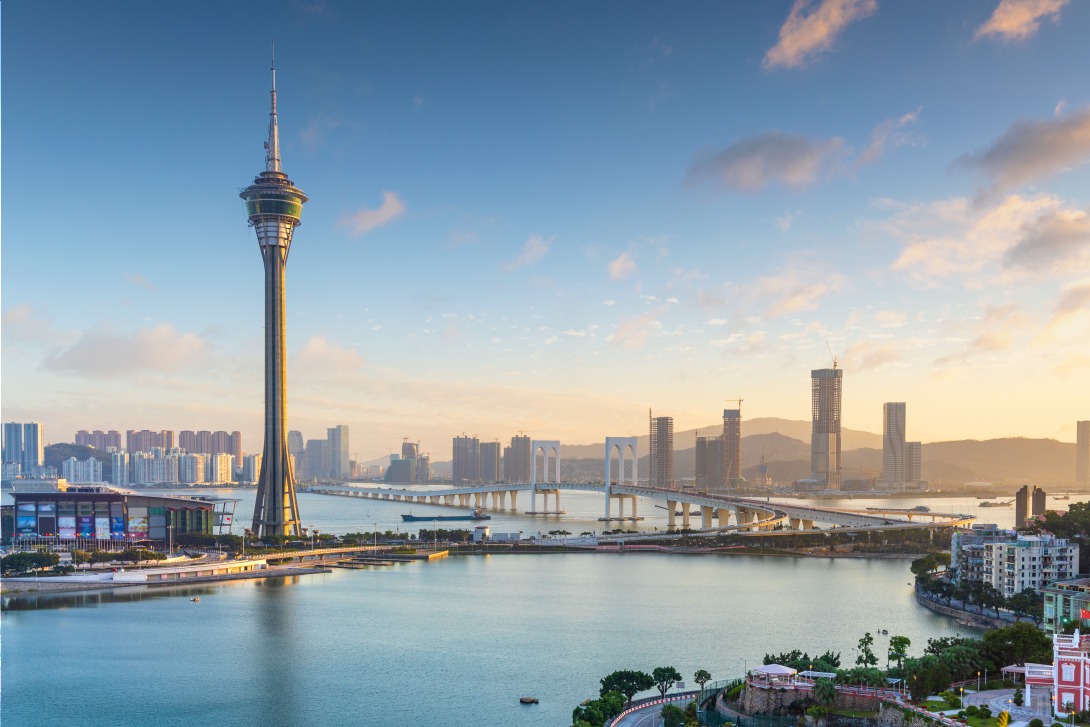
Tour de Macao
Observatoire à 223 m, Skywalk extérieur et saut à l'élastique record du monde : guide pratique pour visiter la Tour de Macao, à 338 m au-dessus de la rivière des Perles.
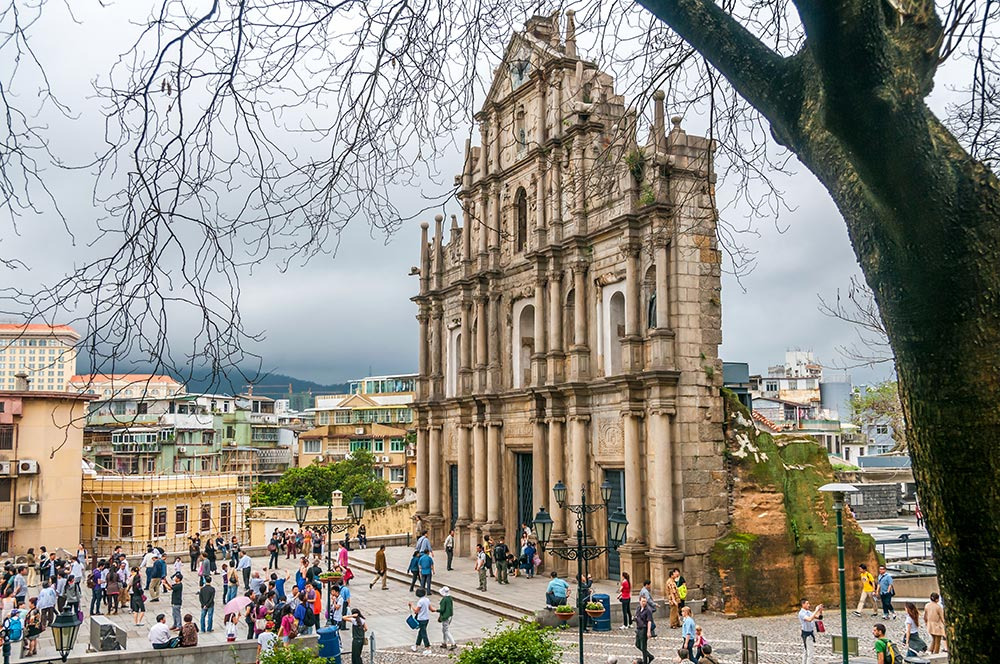
Ruines de l’église Saint
Vestige d'une église jésuite du XVIIᵉ siècle, la façade des ruines de Saint-Paul est le symbole de Macao et un site classé UNESCO depuis 2005.
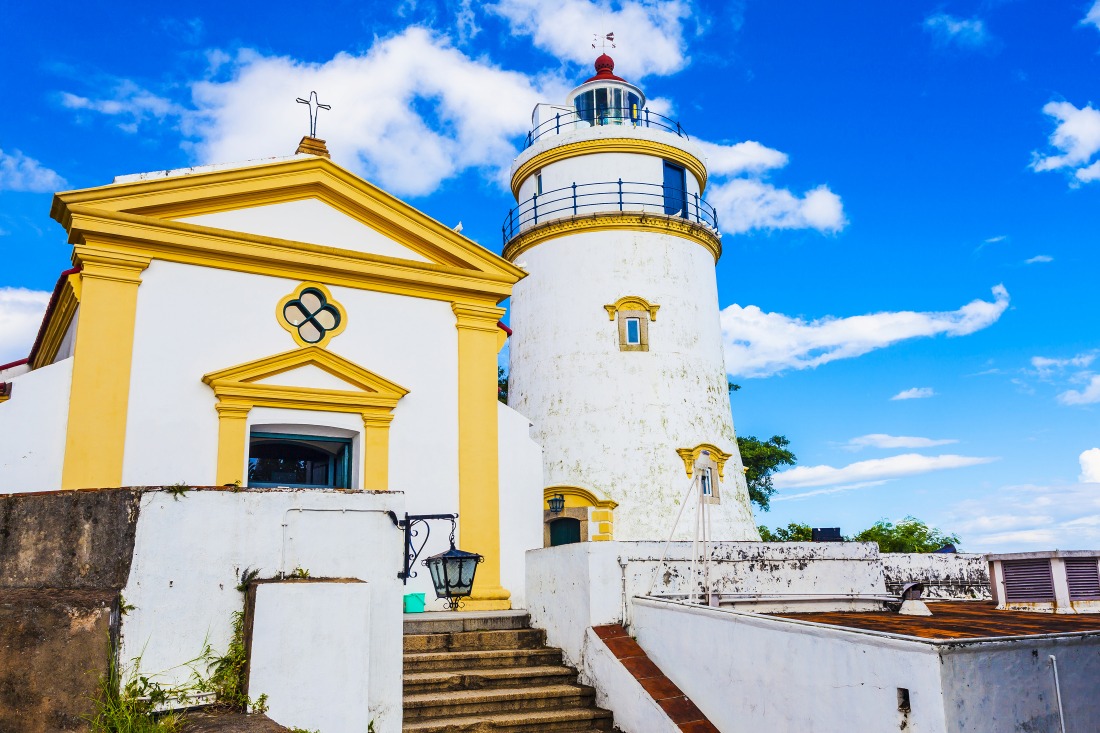
Forteresse de la Guia
Forteresse portugaise de 1622 au sommet de la colline Guia, à Macao : phare historique, chapelle aux fresques et tunnel-exposition, classés UNESCO.
Want to discover this destination?
Our local advisors design your tailor-made trip.