Pingliang
Pingliang
Nestled at the foot of the Liupanshan Mountains, Pingliang safeguards memories of the Silk Road and is home to Kongtong Shan, one of the birthplaces of Chinese Taoism.
Name: Pingliang
Chinese name: 平凉市
Province: Gansu
Status: prefecture-level city
Population: 2,330,000 inhabitants
Area: 11,325 km²
Located in the eastern part of Gansu province, at the foot of the Liupanshan Mountains, along the upper course of the Jinghe River, Pingliang occupies a strategic position on the Silk Road. Positioned at the geographical intersection of the Ningxia Hui Autonomous Region, Xi'an, Lanzhou, and Shaanxi province, the city draws from an exceptionally rich and diverse Chinese heritage. This makes a detour to Pingliang a worthwhile endeavor for immersing yourself in the history of Chinese civilization.
History
Since the archaeological discovery of a human ancestor dating back 200,000 to 300,000 years, Pingliang has become the birthplace of the ancestors of the Chinese peoples. This finding confirms that for millennia, Chinese ancestors have lived and thrived in this region.
Due to its location at a strategic crossroads controlling ancient Shaanxi—known as Sanqin—and Inner Mongolia, Pingliang served as a collection and distribution center for local products throughout Gansu. At that time, the city was already regarded as a vital hub along the Silk Road.
Nearly 3,000 years ago, during the Zhou Dynasty, the city's inhabitants pioneered agro-pastoral techniques in the Jinghe River valley, establishing Pingliang as a cradle of Chinese agricultural civilization. Through farmers and herders who traveled the Silk Road, these techniques rapidly influenced agricultural and pastoral practices across the entire region the road traversed.
Today
Although the city is divided into six counties—notably Jingning, Jingchuan, Lingtai, Chongxin, Huating, and Zhuanglang—grouped within Kongtong District, Pingliang's population is dominated by several ethnic groups, the most significant being the Han. The city is home to over 20 ethnic minorities.
Pingliang sits on the Loess Plateau, crisscrossed by more than 15 rivers. This geography gifts the city with remarkable natural wealth: verdant valleys, rivers, mountains, plains, and plateaus. Kongtong Mountain stands out as one of the region's jewels, renowned throughout Chine for its history (legendary ancestor Fuxi is said to have been born here) and the stunning beauty of its landscapes.
Thanks to this natural abundance, Pingliang is also Gansu's most important agricultural production base. It produces wheat, corn, cereals, buckwheat, rapeseed, flax, and air-dried tobacco. The city is regarded as Gansu's granary.
The city is also home to several national forest parks and five provincial forest parks covering 61,690 hectares, of which 37,920 hectares are natural forest. Over 254 plant varieties and 31 rare animal species inhabit the region.
Highly renowned for its folk culture, the city presents spectacles of singing, dance, martial arts, and performances by sword swallowers. These events attract both locals and tourists.
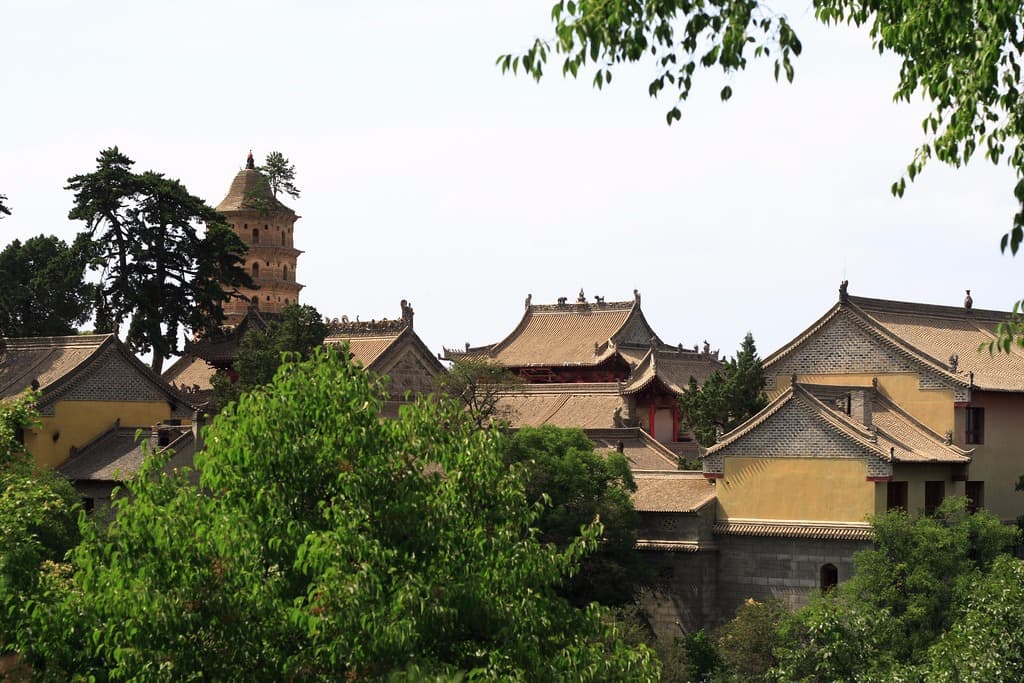
With a rich history spanning 25 protected sites, the city houses over 2,257 cultural and religious relics and more than 30,000 antique objects marking the reigns of Chinese dynasties. Unearthed during archaeological excavations in the region, historical relics have been dispersed among various nationally and provincially protected sites. You can discover some of the region's treasures at the famous Queen Mother Palace or at the ancient sacrificial altar in Jinshan Forest Park. Due to this rich cultural heritage and the proliferation of tourist sites, the city now holds a 5A scenic tourist zone classification.
Economically, Pingliang is today one of Gansu's most prosperous regions. The city has undergone development, and several modernization projects have taken root. Schools, performing arts groups, public libraries, museums, and health-related projects have flourished.
Visiting Pingliang is not only a journey through time but also a wonderful opportunity to experience the region's gastronomy and awaken your palate. The city is renowned for local specialties such as Mutton Paomo, a lamb soup accompanied by flatbread. You can also taste Guokui and potato noodles.
Climate
Pingliang's climate is influenced by gentle easterly winds, creating a semi-continental, semi-humid monsoon climate with an average temperature of 8.5°C.
December, due to very low precipitation levels, is one of the ideal months to visit Pingliang. Conversely, it's best to avoid the rainy season from July to September, which records up to 511.9mm of rainfall.
Air
The nearest airports to Pingliang are Xi'an Airport and Lanzhou Zhongchuan Airport.
Train
Connecting Lanzhou, Shanghai, and Yinchuan, the Baozhen Railway passes through Pingliang.
Bus
On a 350km route, multiple long-distance buses connect Lanzhou to Pingliang daily.
The city has two major bus stations: the West Bus Station on Gonglu Street and the East Station on the north side of Jiefang Street.
Serving the entire city, National Highway 312, which links Shanghai to Yining, and Provincial Road 203 allow visitors to reach all of the city's attractions.
What to Do in Pingliang?
- Venture onto the famous Kongtong Mountain and admire elegant landscapes while visiting its historical attractions.
- Visit the Queen Mother Palace for a journey through time and discover China's rich Taoist heritage.
- Explore the Longquan Temple and the Yunya Forest Park Temple.
- Discover the region's ecological centers such as Tianjiagou in Jingchuan, Nanchan in Kongtong, and Mijiagou in Huating.
- Head to Lingtai to visit the ancient sacrificial altar at Jinshan Forest Park.
Want to discover this destination?
Our local advisors design your tailor-made trip.