Sichuan and the Tibetan Marches
From the fertile Chengdu basin to the Tibetan Kham grasslands above 4,000 metres, a journey through ecosystems and cultures spanning 800 kilometres.
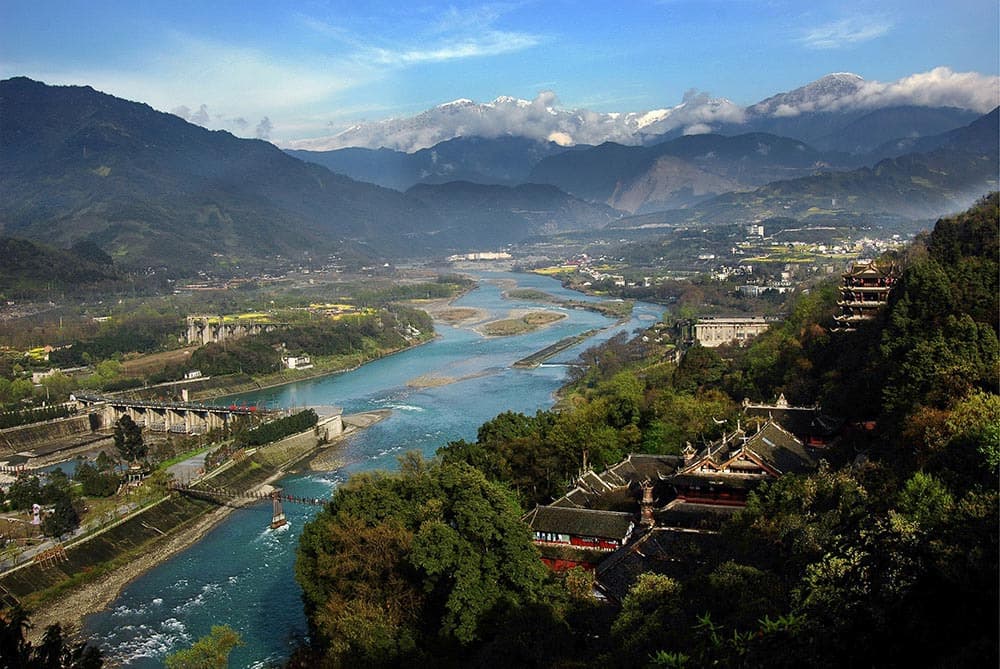
Sichuan occupies a pivotal position in China's geography: to the east, the red basin of Chengdu, a fertile plain at 500 metres elevation covered in rice paddies and bamboo groves, concentrates the majority of the province's 80 million inhabitants. To the west, the landscape shifts abruptly onto the Tibetan plateau, with mountain passes at 4,200 metres and peaks exceeding 7,000 metres in the Gongga Shan range. This geographical duality translates into a rare human diversity in Chine: Han Chinese from the basin, Khampa Tibetans from the western marches, Qiang from the northern valleys around Wenchuan, and Yi from the south.
Chengdu, the provincial capital of 16 million people, retains a character of its own despite modernisation. The teahouses in People's Park, where you pay 15 yuan for a jasmine tea you can nurse for an entire afternoon, remain frequented by neighbourhood retirees. Jinli Street and Wenshu Monastery offer fragments of ancient architecture in a city otherwise largely rebuilt. The Giant Panda Research Base, twenty minutes from the centre, houses around thirty individuals in wooded enclosures; morning feeding times between 8:30 and 10am are the best moments for observation.
Sichuan cuisine deserves several days of exploration. Sichuan pepper, or huajiao, produces the characteristic numbing sensation called ma, which combines with chilli la to form the ma-la pairing, the province's signature. Dishes to know: mapo doufu (chilli and minced beef tofu), hui guo rou (twice-cooked pork), dan dan mian (sesame noodles), and of course huoguo, Sichuan hotpot where ingredients are dipped into broth covered with a layer of chilli oil. Chengdu's markets, particularly Qingshiqiao, showcase the vast array of spices.
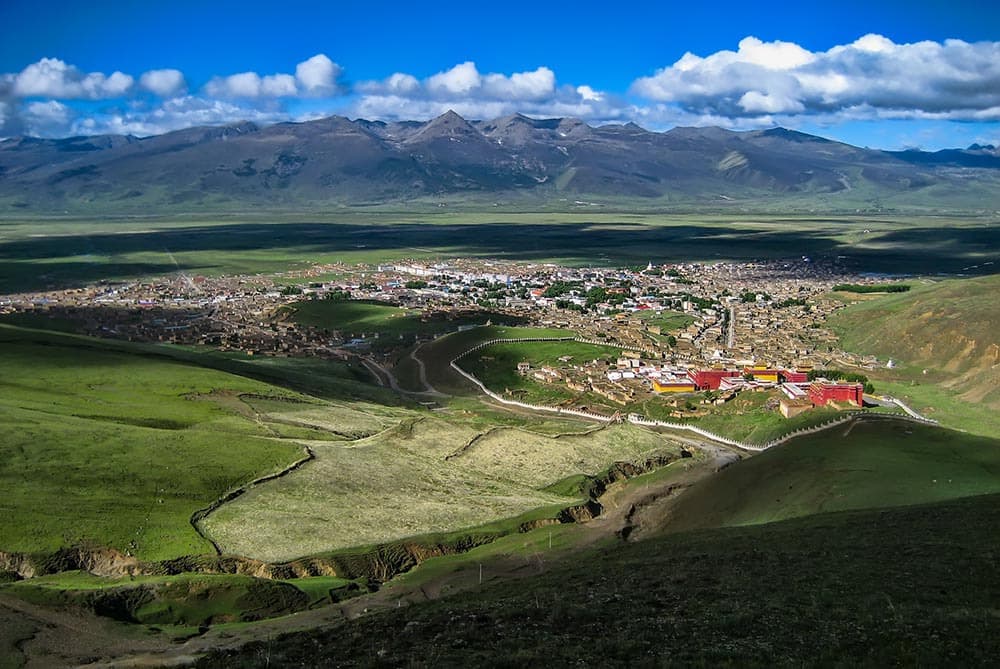
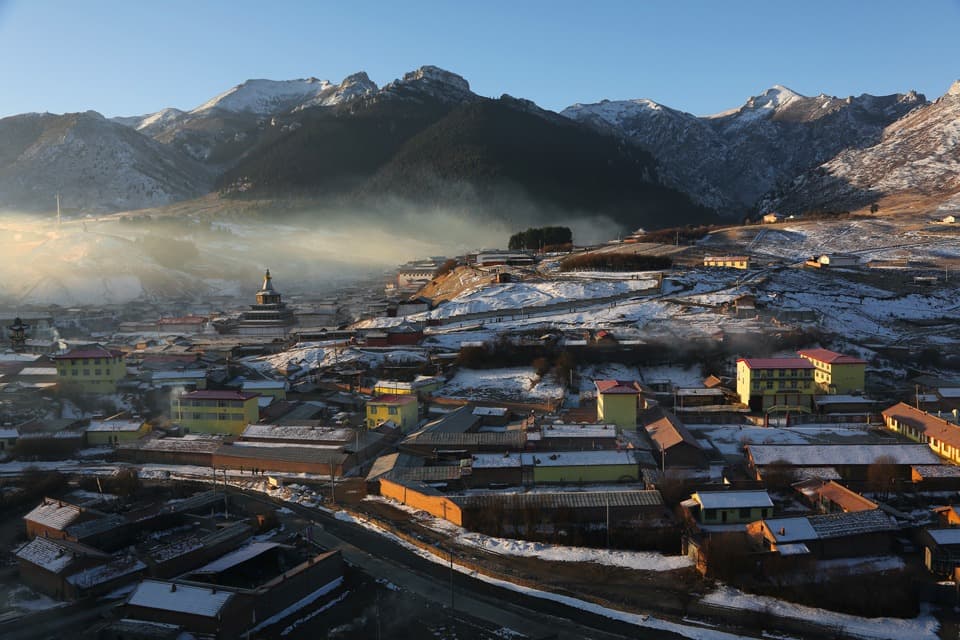
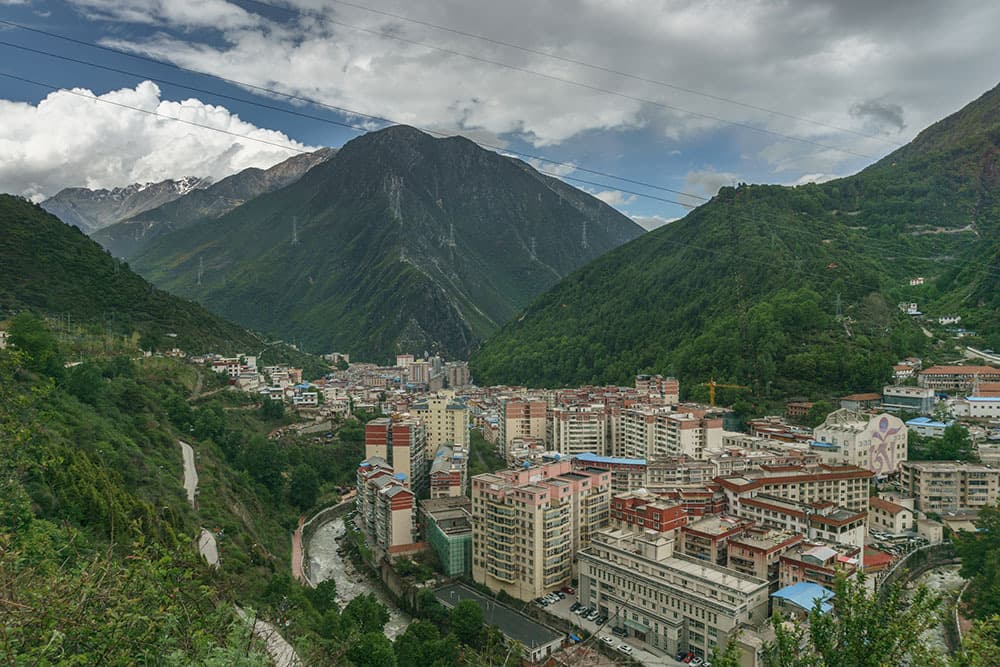
Heading west, the G318 road climbs towards the plateau. A day's journey from Chengdu brings you to Kangding, an ancient frontier town between the Han and Tibetan worlds, then Tagong at 3,700 metres, where a Gelugpa monastery overlooks grasslands grazed by yak herds of Khampa nomads in summer. Further west still, Litang peaks at 4,014 metres; its horse festival in late July and early August attracts several thousand Tibetan horsemen. These territories, administratively Chinese, function culturally as an extension of historical Kham Tibet. Tibetan Buddhism is openly practised here, with monasteries at Garze, Dzogchen and Yarchen Gar still housing thousands of monks and nuns.
In northern Sichuan, in the Min mountains, the valleys of Jiuzhaigou and Huanglong offer another landscape type. Jiuzhaigou lines up 108 tiered lakes between 2,000 and 3,100 metres, their turquoise and emerald colours arising from calcium carbonate concentration. Huanglong presents limestone terrace basins comparable to those of Pamukkale, at 3,500 metres altitude. Both sites reopened progressively after the 2017 earthquake and now operate with daily visitor quotas.
Climatically and logistically, the permanent humidity of the Chengdu basin and frequently grey skies contrast with the dry light of the plateau. Distances are considerable: Chengdu to Litang represents 800 kilometres and two days of driving. It is this journey through ecosystems, from subtropical moisture to high-altitude grasslands, that gives the region its appeal far more than any isolated site.
Highlights
Teahouses of People's Park in Chengdu. An afternoon seated on bamboo chairs, watching mahjong players and roaming ear cleaners. The city's rhythm reveals itself here.
G318 Road towards Tagong and Litang. Two days' driving from Chengdu, crossing the Zheduo Pass at 4,298 metres, yak grasslands and Khampa monasteries above 3,700 metres.
Tiered lakes of Jiuzhaigou. 108 turquoise water bodies spread across three Y-shaped valleys, between 2,000 and 3,100 metres. October offers striking contrast with the russet foliage of birches.
Sichuan hotpot in old Chengdu. An evening around the ma-la broth, with tripe, silk tofu, lotus root and mushrooms. A Snow beer or chrysanthemum tea to soothe the palate.
Dzogchen Monastery and Yarchen Gar. Monastic communities of several thousand monks and nuns in remote Tibetan valleys, above 4,000 metres. Access subject to current regulations.
When to go
Climate windows are narrow and vary by altitude. For the Chengdu basin, March–April and September–October bring temperatures of 15 to 22 °C and moderate rainfall. Summer (June to August) combines heavy heat (32–35 °C), humidity and monsoon rains that regularly close western roads through landslides. Winter (December to February) remains passable in Chengdu but grey, around 5–10 °C, with very little sun.
On the western Tibetan plateau, conditions reverse: June to September are the only fully open months, with green grasslands, daytime temperatures of 18–22 °C and cool nights around 5 °C even in July. Outside this season, passes close due to snow from November onwards. For Jiuzhaigou and Huanglong, October offers autumn colours but also the weeks of heaviest Chinese tourism (National Day, 1–7 October, best avoided). Our recommendation for combining basin and plateau: second half of May to mid-June, or second half of September.
Practical advice
Plan ten to twelve days for a loop including Chengdu (3 days), a route westward to Tagong or Litang (4 to 5 days with acclimatisation), then north to Jiuzhaigou (3 days). Chengdu Tianfu International Airport, opened in 2021, has direct flights from Paris and connections via several Asian hubs. Internal distances require private vehicle with driver on plateau roads; high-speed trains are available only between Chengdu and basin cities.
The region combines well with Yunnan to the south, by road or a Chengdu–Lijiang flight extending the Tibetan theme towards Shangri-La and Deqin. It links less naturally with Xi'an or Beijing, which belong to a different Chinese narrative. Hotel comfort is reasonable in Chengdu and main stopover towns, more basic in Tibetan settlements (simple rooms, limited heating). This region suits curious travellers interested in marginal cultures, prepared for long driving days, and tolerant of altitude. For trekkers, 2 to 5-day treks around Minya Konka or in the Yading valley can be arranged with a local guide. Families with young children: we recommend limiting to Chengdu and Jiuzhaigou, staying below 3,000 metres.