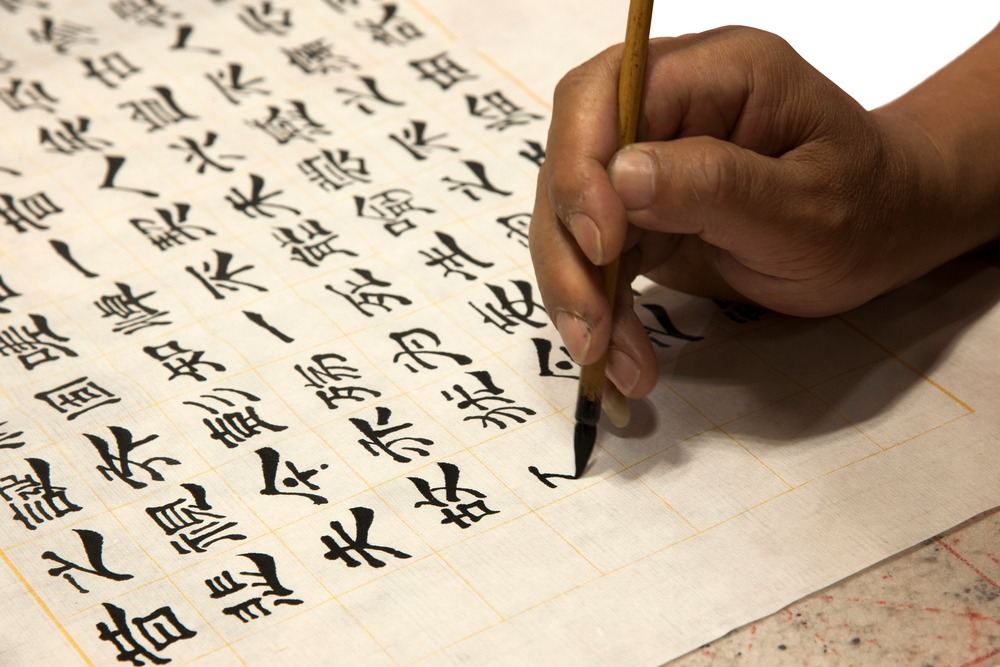
Confucius, the Father of Chinese Humanism
In ancient times, Confucius was called the "first of the sages"—his doctrine and proverbs have transcended centuries and borders. A scholar of ancient Chine and the contemporary world, Confucius
In ancient times, Confucius was called the "first of the sages"—his doctrine and proverbs have transcended centuries and borders. A scholar of ancient Chine and the modern world, Confucius shaped his era with a philosophy that would echo through millennia.
Confucius Pinyin: Kǒng Fūzǐ (or simply Kǒngzǐ) Chinese characters: 孔夫子
Born in 551 in Qufu (Chine, Shandong province) Note: his Chinese name, Kong Fuzi or Kongzi, means Master Kong. It was the Jesuits who gave him a Latinized name. Though he never claimed to invent but merely to draw upon ancient wisdom, many experts credit Confucius as the originator of Chinese humanism. While a cult was devoted to him after his death, he never considered himself the founder of a new religion.
Did You Know?
Confucius Institutes are centers dedicated to teaching Mandarin, the official Chinese language (pǔ tōng huà 普通话), and to spreading Chine's culture. Established by the Chinese government, they regularly open in countries maintaining diplomatic relations with Chine.
The Life of a Wise Man
Born in 551 BCE, Kong Fu Zi—known by his Latin name, Confucius—lived a life devoted to study. His passion for classical texts, music, calligraphy, mathematics, conduct, history, poetry, and the mastery of rituals propelled him toward a life of learning and contemplation. When he was three years old, his father, the governor of Lu province, died, leaving him and his family destitute.
Despite this hardship, Confucius received an exceptional education. At twenty-four, he married and became the father of a son and two daughters. To support his family, he took on modest administrative posts in service of the provincial chief. In 527 BCE, after his mother's death and a period of mourning, he began teaching his disciples the wisdom contained in ancient texts.
His Entry into Politics
Rising through the ranks, he became Minister of Justice around age forty, a position that allowed him to share his wisdom and insights with an ever-widening audience. This status took him throughout the land—to Wei, Cao, Song, Chen, and beyond. The humble administrator evolved into a figure of increasing influence with age. After brokering a peace treaty between Ji Huanxi and the state of Qi, Confucius was appointed Prime Minister at fifty under Ji Huanxi's rule. However, when his patron succumbed to corruption, the sage Kongzi chose to resign.
The Birth of a Philosophy
His exile led him to wander for fourteen years, accompanied by his most devoted disciples. Throughout the principalities of Chine, he taught the wisdom of ancient texts and his vision of society and governance. This was an era marked by power struggles between feudal lords, and to restore stability, Kong Zi advocated for the restoration of the Mandate of Heaven—to a virtuous Emperor who would establish order.
Upon returning to Qufu, his disciples committed Confucius's teachings to writing to ensure their dissemination. These teachings bear no resemblance to religion in the Western sense, for they place humanity at the center of all inquiry, making no reference to the spirit realm or the afterlife.
A humanist, Confucius believed that human nature was inherently good. He held that those in power must be virtuous and respectful of ritual and social order. The sovereign's duty was to create harmony between humans and their environment. His teaching was more philosophical than practical—rooted in morality, ethics, virtue, and sincerity. It presented a way of life aimed at harmonizing human relationships, with the understanding that man was not made to live as beasts do.
Thus, the study of traditional texts was strongly encouraged. Until Mao Zedong's Cultural Revolution, Kongzi embodied the perfect educator: he did not seek to position himself as an arbiter of thought but rather to cultivate critical thinking and reflection in his disciples.
Another revolutionary shift brought about by Master Kong concerned the concept of "junzi" (君子)—comparable to the English word "gentleman." Before him, it denoted noble birth; with Confucius, it came to mean nobility of character. Thus, though his teachings were primarily directed at the powerful and those destined to govern, Kongzi's original doctrine was open to all—even the poorest peasant could theoretically demonstrate merit and virtue.
Confucianism became the state religion during the Han Dynasty (206 BCE to 220 CE) under the reign of Han Wudi, remaining so until the proclamation of the Republic of Chine in 1912 by Puyi, the last emperor of Chine.
The Collections of His Teaching
Confucius did not write the works attributed to him; rather, his disciples recorded them after listening to him for many years. There are four principal books: the Great Learning (大學 Dà Xué), the Doctrine of the Mean (中庸 Zhōng Yóng), the Analects of Confucius (論語 Lùn Yǔ), and the Mencius (孟子 Mèng Zǐ).
The Analects remain, even today, the finest source for understanding Kongzi's original teachings. In this work, the Master engages his disciples in debate about the challenges of his time.
Confucius drew primarily from China's great classics: the Canon of Poetry, the Canon of History (書經 Shū Jīng), the Book of Changes (易經 Yì Jīng), the Book of Rites (禮記 Lǐ Jì), and the Spring and Autumn Annals (春秋 Chūn Qiū, also known as 麟經 Lín Jīng). The Canon of Music (Yuejing, 樂經, in simplified characters 乐经)—considered the sixth great classic—has since been lost.
Confucius in Legacy
Dead at seventy-two, Confucius remains an emblematic figure of Chine's civilization. For this reason, his body rests in Qufu within the necropolis of his clan, known as the "Forest of Confucius." This necropolis is a magnificent structure built in the sixteenth century, housing ancient calligraphy, artworks, garments, and countless archives.
Many philosophers—principally in Chine but throughout East Asia—continued Confucius's work. This gave rise to Confucian doctrine, which was adopted as state philosophy under the Han Dynasty. Mencius (Mengzi) and Xun Zi are the two most celebrated thinkers who developed Kongzi's philosophy. Later, Zhu Xi became instrumental in founding Neo-Confucianism during the Song Dynasty.
While Chine has produced many great philosophers, Confucius remains the one who most profoundly shaped Chinese society. His teachings, though no longer the state religion, continue to form one of the foundational bases of ethical principles throughout the Middle Kingdom.