Chinese Society
Today's Chine overflows with creative energy and commercial vitality. Yet the determination and modernity of a people eager for constant evolution also conceals a desire to reconcile
Today's Chine overflows with creative energy and commercial vitality. Yet the determination and modernity of a people eager for constant evolution also conceals a desire to reconcile with its past. By asserting itself directly as a major world power in the 21st century, Chine indeed claims a preponderant place in the international community without compromising the richness of its cultural heritage. The humiliation experienced by Chine under Western and Japanese occupation in the 19th and early 20th centuries still weighs on minds. Despite a country in ruins and an economy in complete chaos, the Chinese people rose again with the arrival of communism. Chine rebuilt itself gradually and the Communist Party eased its restrictions. From that point on, the country's GDP experienced an incredible upturn. Today, the Chinese honor their country for its history, its wars, and its achievements. Yet the evolution of growth compels them to open to the outside world by adopting the ideas of Western society. In order to better immerse themselves in Western culture and its evolution in terms of business, the Chinese people are learning English through evening classes. These behavioral changes lead some to question the loss of the core values of traditional Chinese culture, while others, more revolutionary, wish to quickly forget the isolation Chine has suffered for many years. A growing number of Chinese now wish to embrace new ideas and be respected as global citizens. That said, modernization will bring about significant transformations. Indeed, the country is experiencing strong growth in pollution, crime, and unemployment. As for the recent wave of wealth creation, it leaves millions of the disadvantaged in its wake. 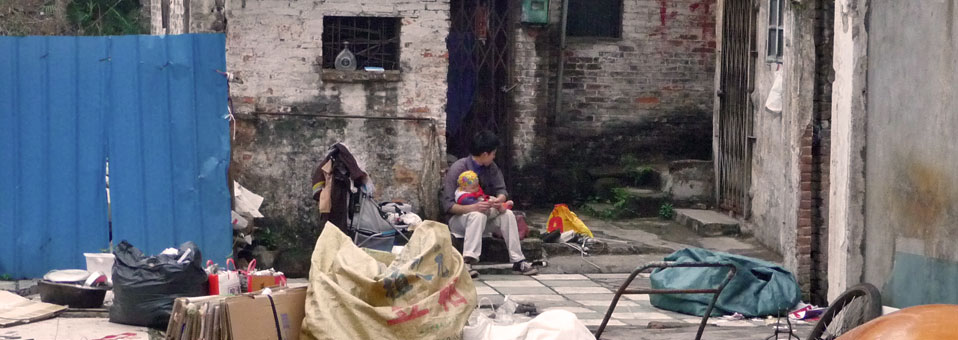 Today, the disparities between rich and poor are increasingly striking. Social inequalities grow more pronounced each day and are particularly noticeable between residents of major cities and those in rural areas. Certain regions with limited resources quickly find themselves unable to develop their productivity and suffer the full brunt of rural exodus. Chine today accounts for the largest migration it has ever known, with millions of rural dwellers heading to urban areas in search of work, reflecting the arrival of environmental, health, and unemployment concerns. Despite this crisis, Chine, which imports more than half of its food productivity, has become the world's third-largest food supplier. Though Chine gains confidence and asserts itself on the international stage, the virtues of traditional Chinese culture persist. The Chinese people cling to family values and place great importance on morality and the valorization of work. The culture of sharing is nonetheless compromised in part because of birth control and the one-child policy, which has made some more self-centered. Attitudes regarding sex and marriage are also evolving. Many young Chinese exclude the idea of marriage and think more about their studies and professional careers. They prefer to secure stable employment before starting a family. Divorce, poorly perceived by Chinese society, is being reconsidered by these youth with more Westernized values. A phenomenon synonymous with the inevitable collapse of traditional values, and which is today experiencing strong growth particularly in the country's megacities.
The Chinese government, for its part, has made this country a major economic and military power. However, their primary concern remains the fight against inequality and poverty. The measures taken—reduction of property taxes and partial allocations for education—have not slowed rural exodus. Rural unrest is growing, and the government understands it must act quickly to prevent more serious disturbances. Chine thus reveals very distinct aspects. Whether viewed from the countryside or the city, geographical contrasts and population diversity accentuate and multiply inequalities. Despite censorship remaining ever-present and its governmental problems, Chinese society is increasingly open and exposed to the outside world. The Chinese earnestly hope that their country progresses in the direction of a modern nation, accepted and respected throughout the entire world.