Forbidden City and Tiananmen Square
Ah Beijing... This city had not left us with the most memorable impression during our brief visit in March. This final week in China will be an opportunity to remedy that...
Ah Beijing... This city had not left us with the most memorable impression during our brief visit in March. This final week in China will be an opportunity to remedy that, and it must be said that there is no shortage of sites to visit! It is no secret that Beijing is a city of superlatives. With an area of 16,800 km² and its 19 million inhabitants, it would make Paris or even London look like mere villages! Suffice to say the transition from Wulingyuan to here is radical! A city of such vastness inevitably means a wealth of sites to explore, especially since Beijing (literally meaning Northern Capital) stands out for its particularly rich history. Beginning of course with the Forbidden City, which we had merely glimpsed in March and which will be the subject of a thorough visit on this first day.
Mission Forbidden City
The crowds are even more present than in March in front of the Gate of Heavenly Peace (Tianan Men), on which the giant portrait of Mao Zedong is still displayed.
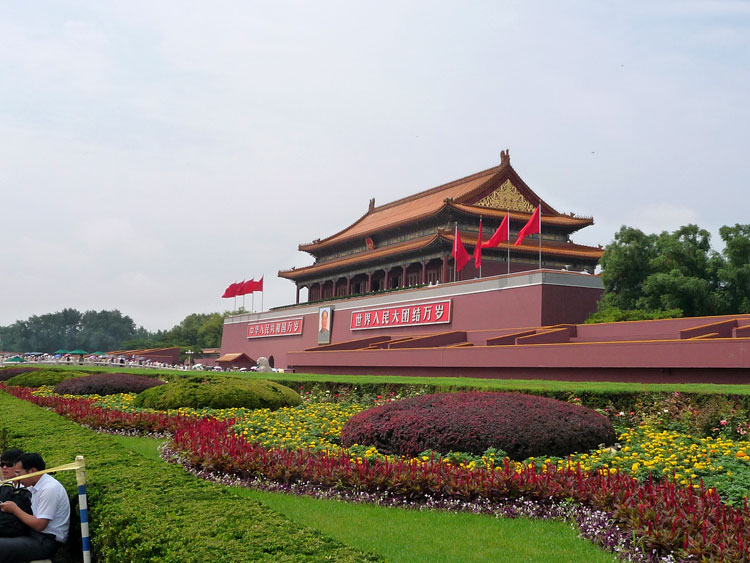
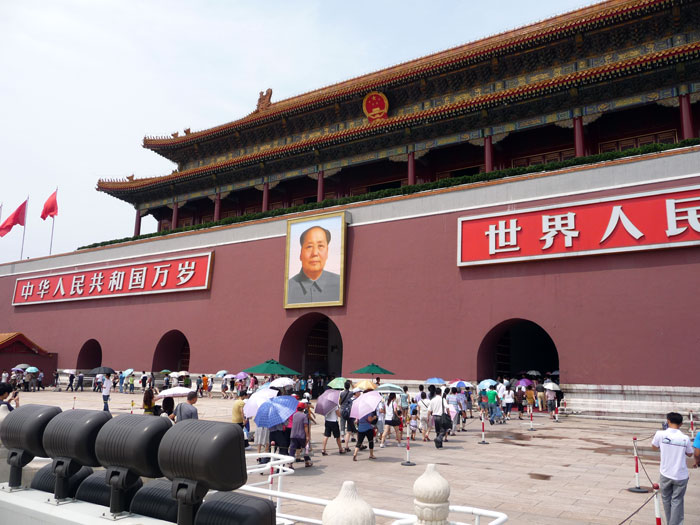
We enter the enclosure which is open free to the general public, crossing another gate—the Gate of Rectitude (Duan Gate: Duan Men)—to arrive at the Meridian Gate (Wu Men) which marks the entrance to the Forbidden City proper.
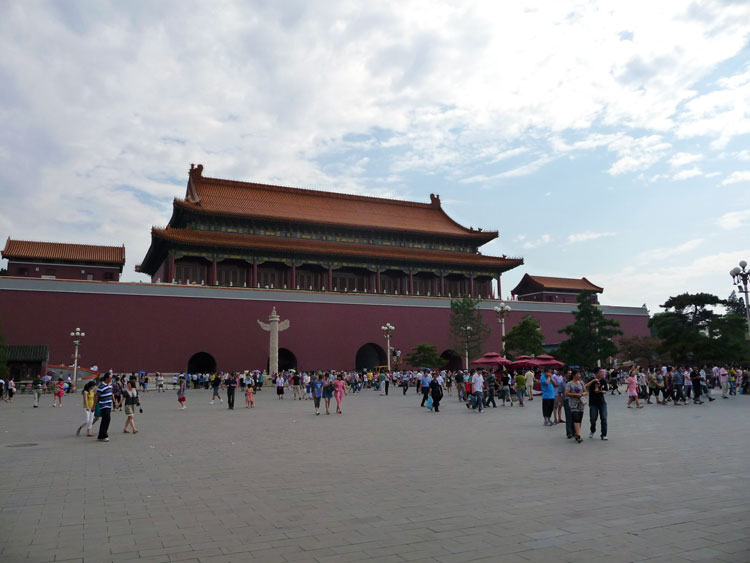
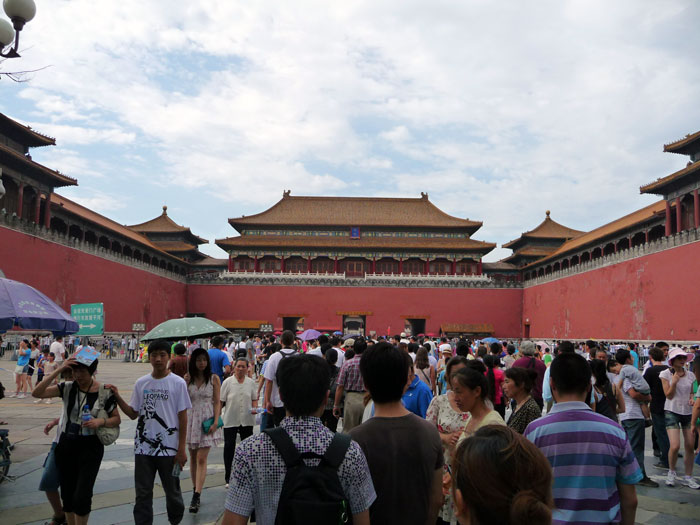
The entry fee is 60 yuan to visit all the halls, to which you can add 40 yuan for an audio guide. The Forbidden City is actually the imperial palace built in the 15th century within the Imperial City of Beijing. It is one of the oldest and best-preserved palaces in Chine, spanning a phenomenal area of 72 hectares. In short, you can truly speak of a City within a City! It was only opened to the general public in 1924, hence its name which recalls that no one but the emperor and his court had the right to approach it or even look at it for 500 years. The Forbidden City is divided into two parts :
The Outer Court corresponding to the South section, which served the Emperor for welcoming delegations and presiding over official ceremonies.
The Inner Court corresponding to the North section, which represented the sovereign's private quarters and workplace.
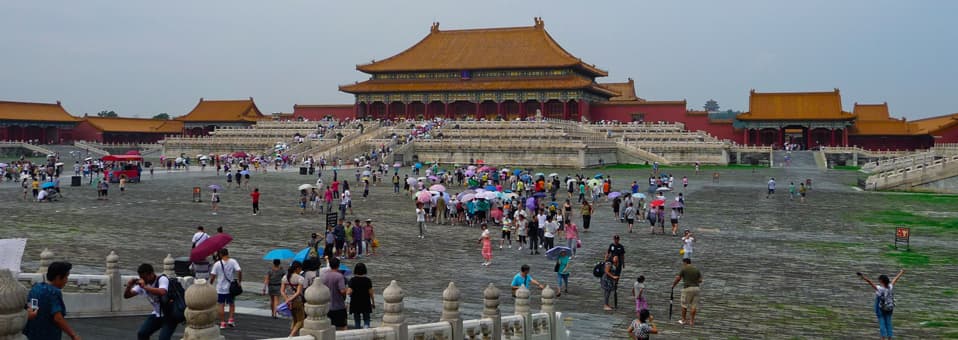
We of course begin with the outer court after passing through the Gate of Supreme Harmony (Taihe-men).
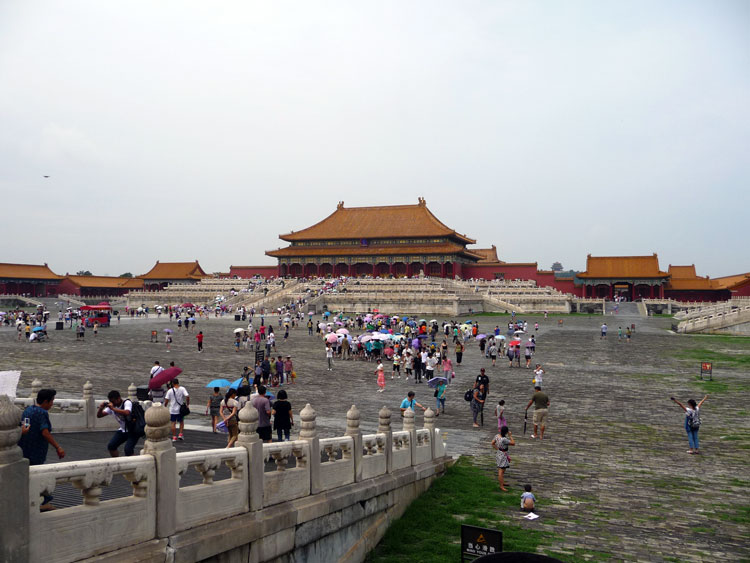
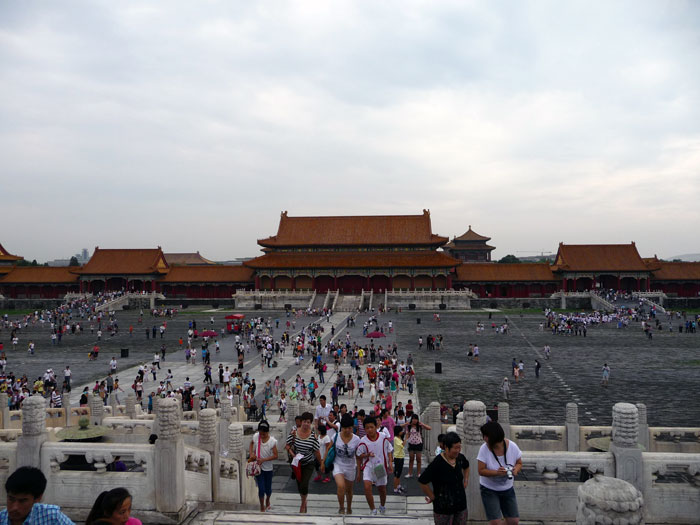
This courtyard houses the Three Great Halls of the City, accessible via marble staircases: the Hall of Supreme Harmony (Taihe Dian) containing the thrones, the Hall of Central Harmony (Zhonghe Dian) and the Hall of Preserved Harmony (Baohe Dian).
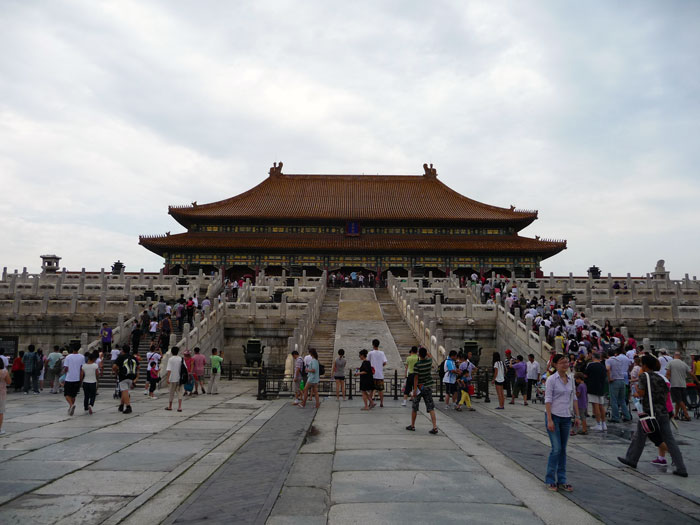


We take the opportunity to admire the architecture of the buildings, topped with the classic pagoda roof. The dominant colors are red and yellow, highly prized by the Chinese for their noble and warm qualities, and we note here and there representations of dragons, lions, phoenixes and other mythical creatures.

Behind the Hall of Preserved Harmony lies the Gate of Heavenly Purity (Qianqing men) flanked by two bronze lions. 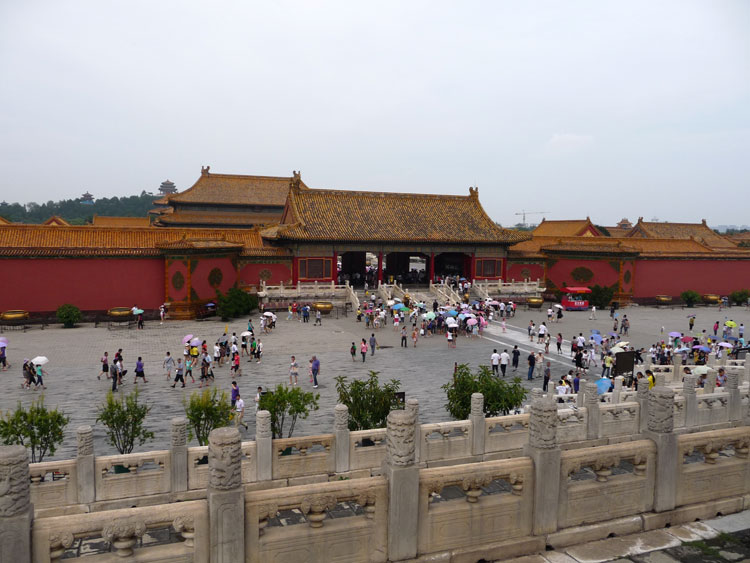
We then enter the Inner Court which houses 3 new Palaces with similar architecture: the Palace of Heavenly Purity (Qianging Gong), the Palace of Union and Peace (Jiaotai Dian) and the Palace of Earthly Tranquility (Kunning Gong).
The Gate of Earthly Tranquility (Kunning Men) will lead us to the Imperial Garden (Yuhua Yuan), which contains many ancient trees and various bronze statues.
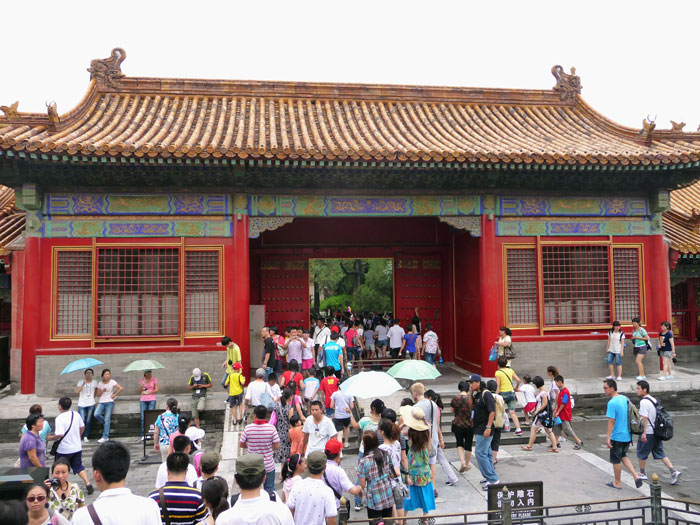
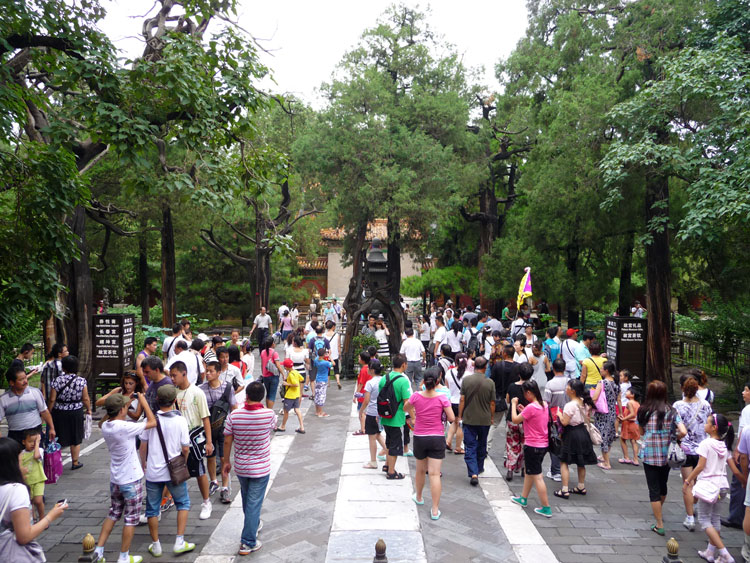
One element captures our attention: it is an artificial hill offering a panoramic view beyond the ramparts.
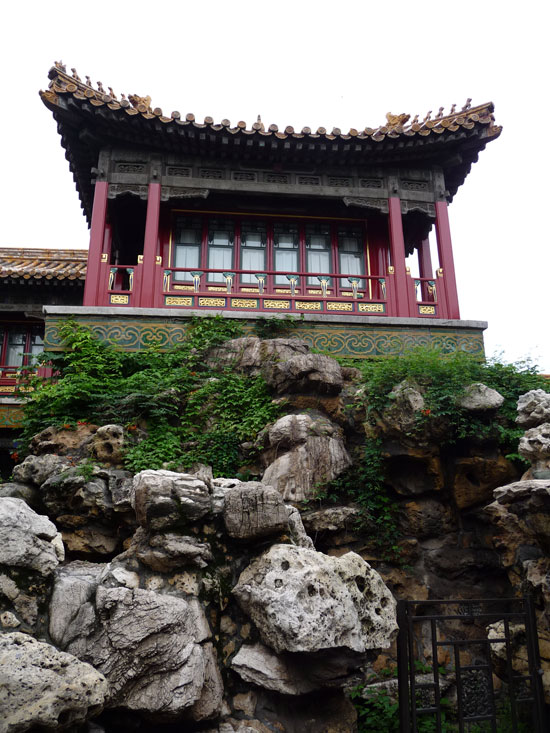

We reach the North extremity of the Forbidden City, bounded by the Gate of Divine Prowess (Shenwu Men). But the visit does not stop there, as the lateral wings still contain many rooms and private quarters, now transformed into museums.

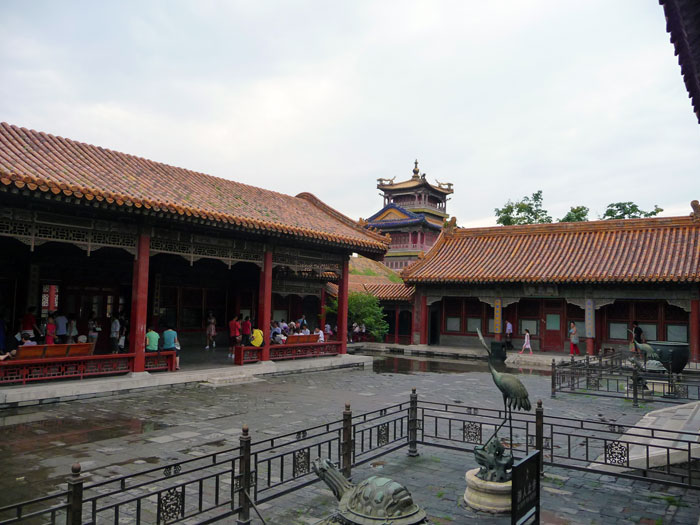
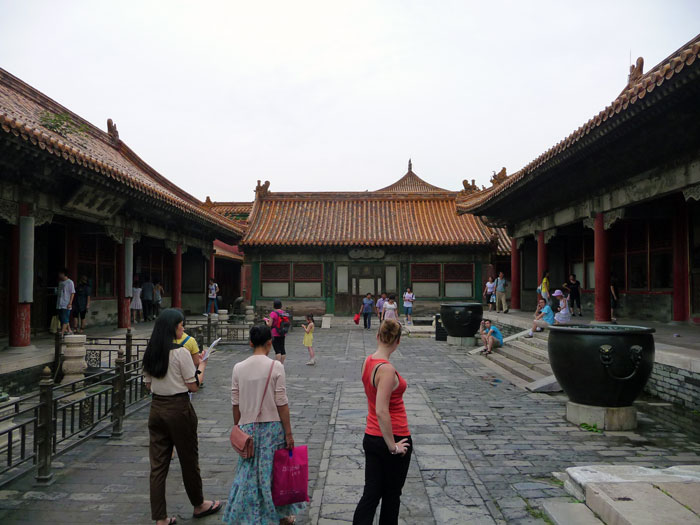
There are various exhibitions dedicated to jewelry, accessories of the period or furniture, which contribute to making the place authentic.
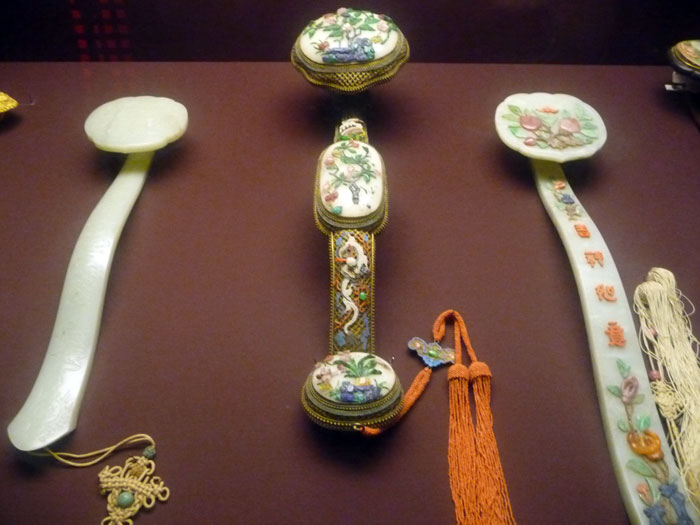
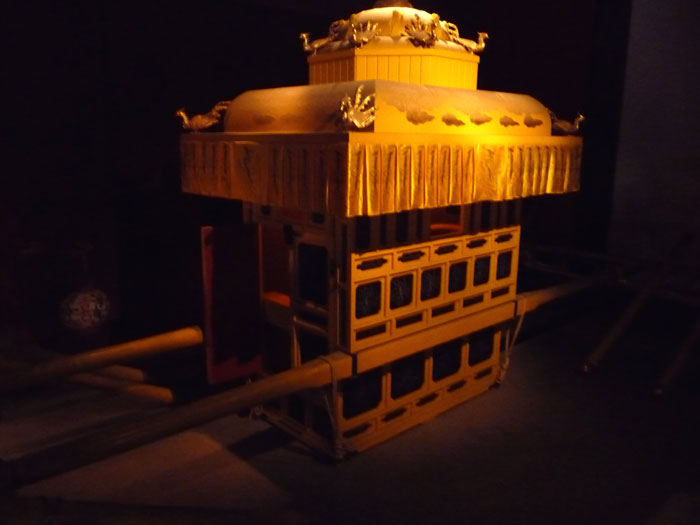
In the end, the visit lasted more than 2 hours, though we have likely far from seen everything. Some guides estimate that a complete tour requires a half-day, but for our part we were satisfied. We will finish with a visit to the Gate of Heavenly Peace (Tianan Men) through which we had entered, which offers a panoramic view over the square of the same name.

Tiananmen Square
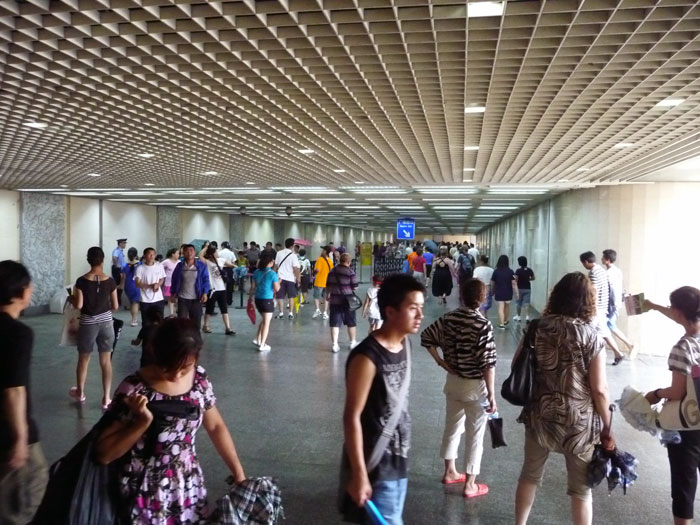
Infamous for the spring 1989 demonstrations that resulted in the massacre of thousands of civilians, Tiananmen Square is the 3rd largest square in the world and covers over 40 hectares. To access this heavily protected location, you must use underground tunnels and pass through various security gates designed to check the contents of bags.
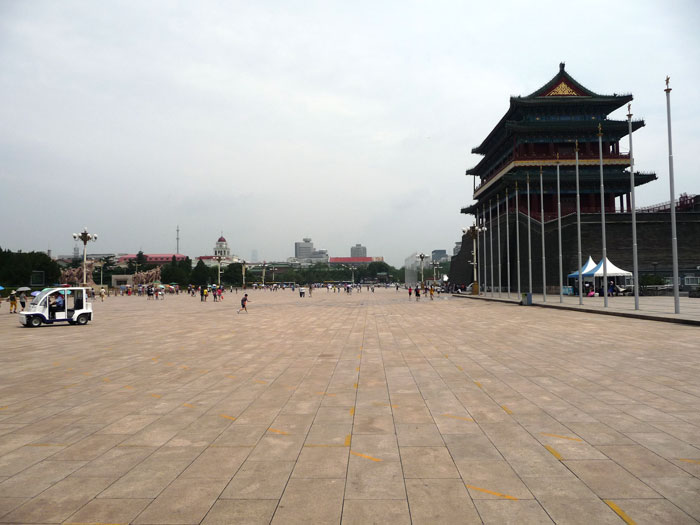
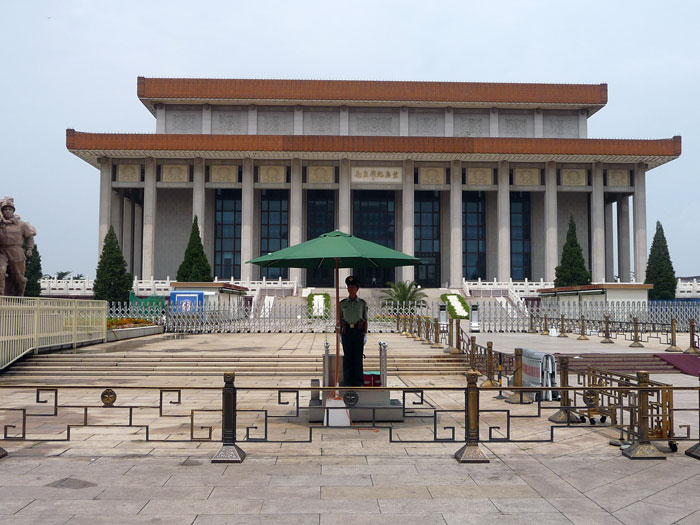
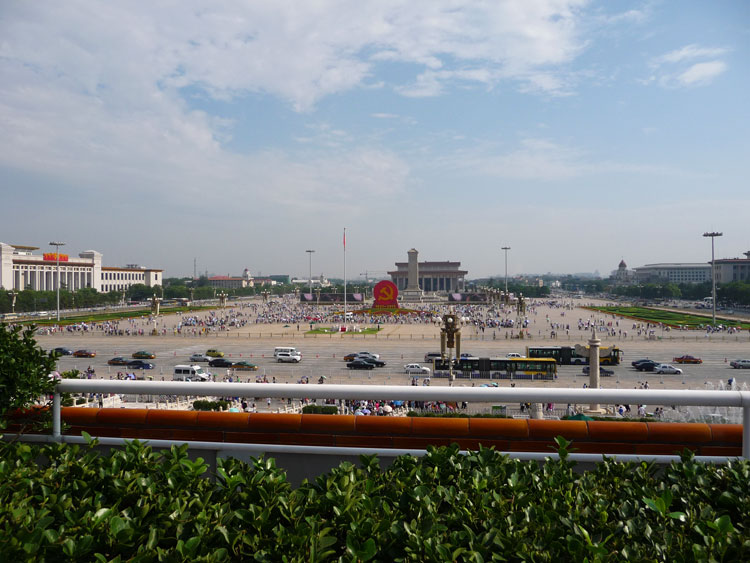
The square is framed on the West by the Parliament and on the East by the National Museum of Chine, and houses notably the famous Mausoleum of Mao Zedong as well as the Monument to the People's Heroes.
Also notable is the presence of the communist symbol, standing at the North of the square and which was not there during our previous visit. The Chinese of course rush to take photos nearby, a way of expressing their attachment to the motherland.
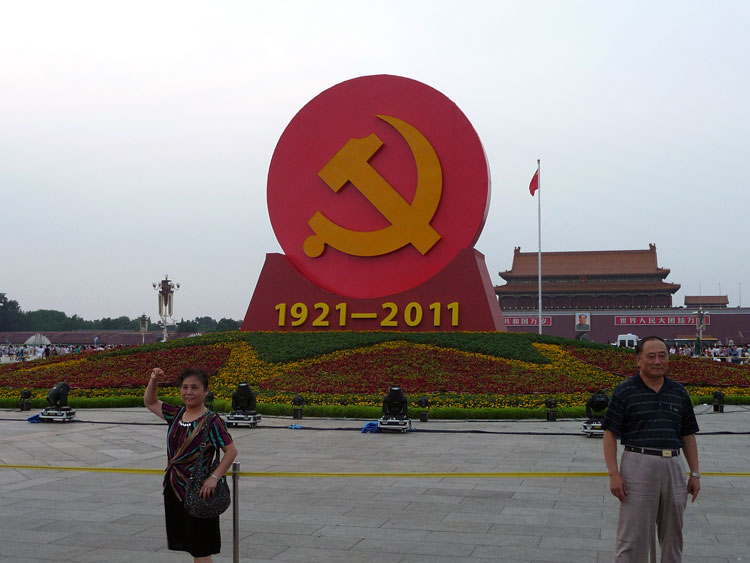
At dusk, we have the opportunity to witness the flag lowering ceremony in this highly symbolic place, a ceremony that attracts numerous Chinese spectators each day.
To view the photos related to this article, feel free to visit the gallery of Beijing.
Frequently asked questions
The entrance ticket for the Forbidden City cost 60 yuan at the time of writing this article (2012), to which you can add 40 yuan for an audio guide. As prices may have changed, we recommend checking current rates on the National Palace Museum website before your visit.
Plan at least 2 hours for a partial visit of the main axes. For a complete visit including lateral museums and private quarters, set aside a full half-day. It is difficult to see everything in a single visit as the site is vast (72 hectares).
The Forbidden City is accessible by metro via Tiananmen East or Tiananmen West stations (Line 1). The main entrance is through the Meridian Gate (Wu Men), after crossing Tiananmen Square and passing through the Gate of Heavenly Peace.
Access to Tiananmen Square is subject to strict security checks. You must use underground tunnels and pass through security portals where bags are inspected. The square is open to the public but under continuous surveillance.
Tiananmen Square is infamous for the spring 1989 demonstrations and the massacre of many civilians. It is also one of the largest squares in the world with its 40 hectares. It houses the Mausoleum of Mao Zedong and the Monument to the People's Heroes, and remains a powerful symbol of contemporary Chine.