Chinese Gastronomy
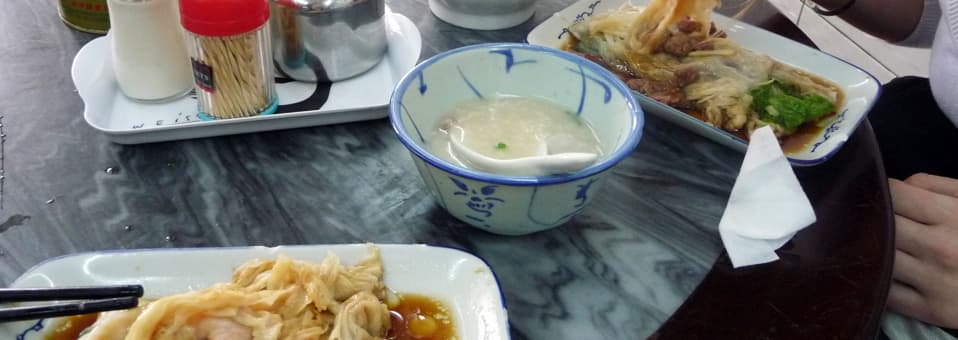
Since we were discussing cuisine in the previous article, let us introduce you to some typically Chinese dishes discovered throughout our stay.
Since we were discussing cuisine in the previous article, let us introduce you to some typically Chinese dishes discovered throughout our stay.
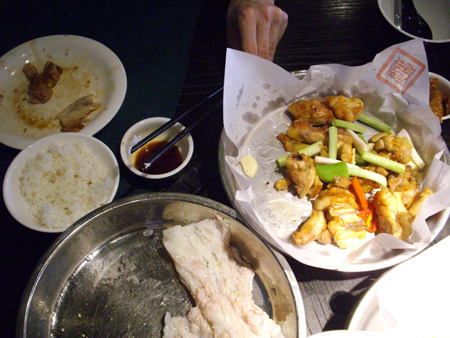
We were fortunate to find ourselves in Canton, whose gastronomy is world-renowned and reputed to be the finest in Chine. You'll find all sorts of animals there, though we didn't venture to taste insects, primates, and other exotic creatures (at least not to our knowledge...). A Chinese meal is quite different from what we're used to back home. Several dishes occupy the table and everyone is free to pick and choose whatever appeals to them, creating a far more convivial dining experience.
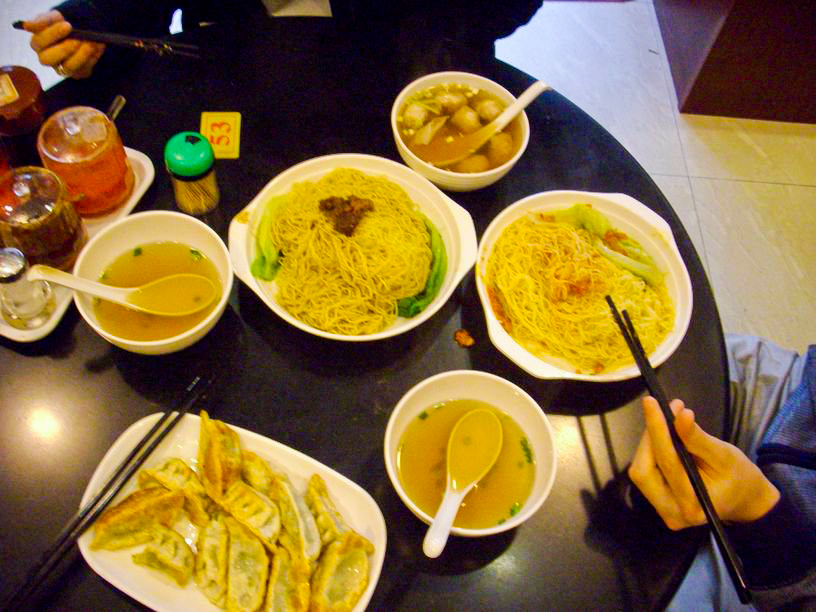
We were constantly amazed to see restaurants packed at any hour of the day. Simply put, the Chinese eat all the time!
Will You Have Some More Rice?
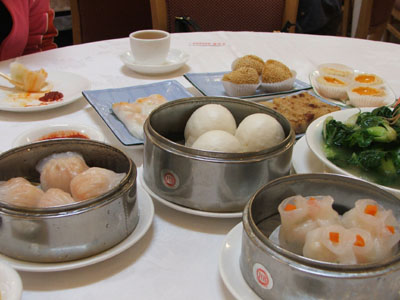
You'll find dim sum, a type of pastry filled with meat and surrounded by rice or wheat batter. Over time, this term has been increasingly misused, but you get the idea.
Example of Dim Sum
Dim sum can be prepared fried (spring rolls, for example), baked (tartlets), or steamed. Such is the case with baozi, these small stuffed buns prepared in various ways. On our end, we found some notably filled with meat (rou bao), or red bean paste (dou sha bao). They serve as small snacks when taking a midday break...

Some Rou Bao
Let us also mention jiaozi, a type of Chinese dumpling filled with vegetables and cooked by steaming, which you can eat endlessly. We could also discuss cheung fung (pardon the spelling), otherwise known as meat (pork, beef, or chicken) wrapped in rice batter and drowned in soy sauce.
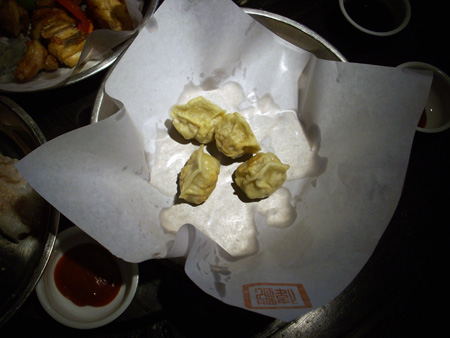
Jiaozi, or Chinese Dumplings
It's also worth knowing that in most restaurants, Chinese diners will take empty seats even if they don't know anyone at the table, eat their soup in a flash, and leave.
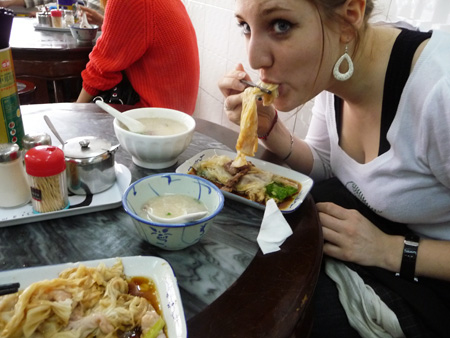
Chopstick Novice
There you have a brief glimpse of Chinese cuisine and more particularly Cantonese, which is frankly far more enjoyable than what we expected... Now all that's left is to master chopsticks perfectly, but we're on the right track! To view our photos of Guangzhou, feel free to visit the gallery.
Frequently asked questions
Cantonese gastronomy, originating from Guangdong Province (of which Canton/Guangzhou is the capital), is considered one of the finest cuisines in Chine. It stands out for its great variety of dishes, its dim sum, its steaming techniques, and the use of numerous fresh meats and vegetables.
Dim sum refers to a variety of small Chinese bites and pastries filled with meat, vegetables, or other fillings. They can be steamed, fried, or baked. The term includes dishes such as baozi (stuffed buns), jiaozi (dumplings), or spring rolls.
Baozi is a soft, fluffy bun steamed and filled with meat (rou bao) or red bean paste (dou sha bao). Jiaozi, on the other hand, is a thin-skinned dumpling, usually filled with vegetables and/or meat, also steamed or pan-fried. Both are staples of Cantonese cuisine.
Unlike Western dining, a traditional Chinese meal is communal and convivial: several dishes are placed in the center of the table and everyone serves themselves as they wish. The Chinese often eat at any time of day, and local restaurants are bustling from morning to night.
Using chopsticks is learned through practice! Simply hold the lower chopstick fixed between your thumb and ring finger, and move the upper chopstick like a lever with your index and middle finger. Most restaurants in Chine also offer Western utensils upon request.