
Monläm: The Festival of the Great Prayer
Monläm: The Festival of the Great Prayer
Welcome to Monläm, one of Asia's most captivating Buddhist festivals.
Imagine thousands of monks in maroon robes reciting prayers in unison, colossal sacred paintings unfurled across monastery walls, and palpable spiritual fervor filling every street of Lhasa. Welcome to Monläm, one of Asia's most captivating Buddhist festivals.
What is Monläm?
Monläm, or Monlam Chenmo in Tibetan, literally means "Great Prayer." It stands as one of the most significant religious events in the Tibetan Buddhist calendar. Each year, it draws hundreds of thousands of pilgrims and devotees from across the Tibetan plateau and beyond.
This festival was founded in the 15th century by Tsongkhapa, a great Buddhist master and founder of the Gelug school. Its original purpose was to celebrate the miracles performed by Buddha Shakyamuni during the first lunar month. For more than six centuries, this tradition has endured and remains central to Tibetan spirituality.
For Tibetan Buddhists, Monläm signifies far more than a simple celebration. It represents a period of intense spiritual merit. The belief holds that prayers recited during this period possess tenfold power, explaining the exceptional fervor of participants.
When does the festival take place?
Monläm follows the Tibetan lunar calendar. It is held annually during the first Tibetan lunar month, which generally corresponds to February through March according to the Western calendar. Exact dates vary from year to year.
The festival traditionally spans several days. Celebrations reach their peak around the 15th day of the first lunar month, coinciding with the full moon. That evening, monasteries illuminate brilliantly and the atmosphere becomes particularly magical.
Approximate period: February to March
Duration: approximately 15 days of ceremonies
Climax: the 15th day of the first lunar month (full moon)
Variable calendar: check each year for precise dates
Where is Monläm celebrated?
Lhasa, the festival's epicenter
Tibet's capital city is the beating heart of Monläm. Celebrations center primarily around the Jokhang Temple, the most sacred site in Tibetan Buddhism. The surrounding Barkhor Square transforms into an immense space for prayer and processions.
Sera Monastery and Drepung Monastery, two of the largest monasteries in the Gelug tradition, also host significant ceremonies. Thousands of monks gather there for collective prayer sessions that last several hours.
Beyond Tibet: other regions to explore
Monläm is also celebrated in other Chinese regions with significant Tibetan populations. While access to Tibet is regulated, these alternatives offer equally authentic experiences:
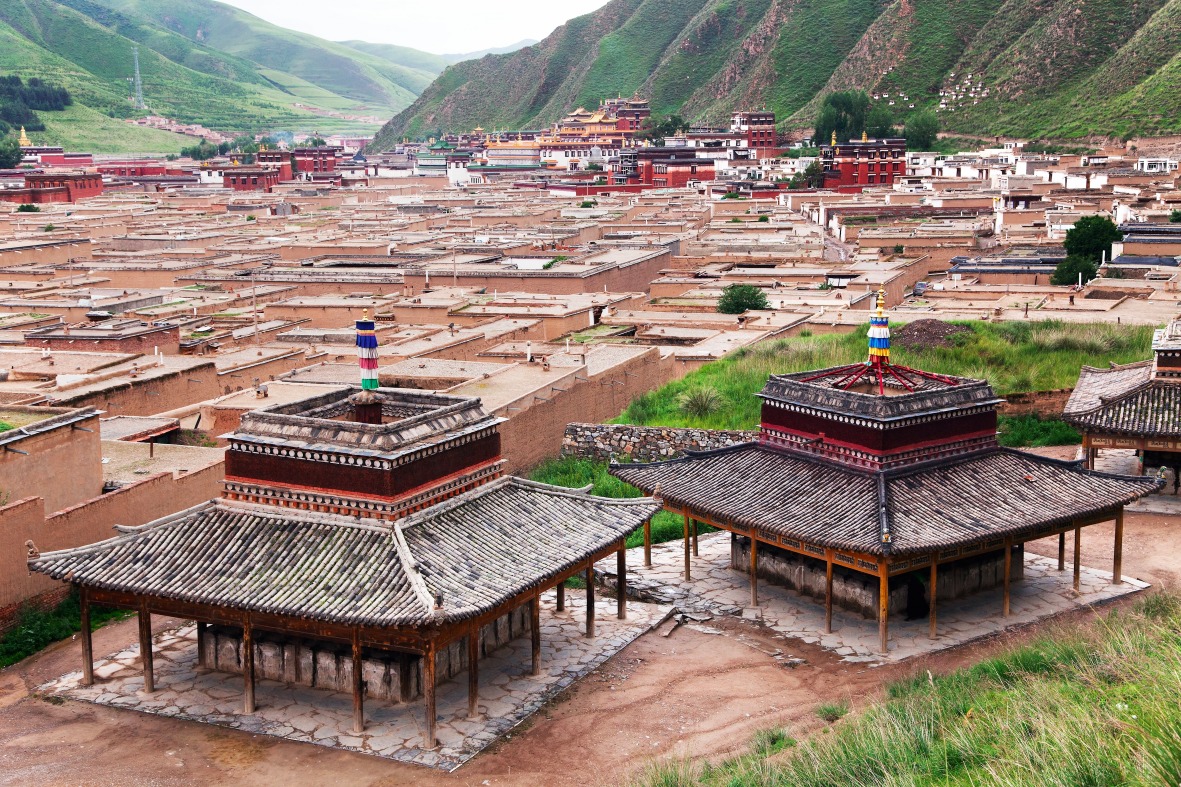
Qinghai: Kumbum Monastery (Ta'er Si) near Xining is one of the largest celebration sites outside Tibet
Sichuan: monasteries in Garzê and the Kandze region host beautiful festivities
Yunnan: the Shangri-La region (Zhongdian) also offers accessible celebrations without special permits
India: Dharamsala, seat of the Tibetan government-in-exile, also organizes Monläm ceremonies
The progression of ceremonies
Rituals not to miss
Monläm abounds with spectacular ceremonies. Each ritual carries profound spiritual significance. Here's what you may witness:
Collective prayers: thousands of monks chant sacred texts together for hours. The sound of voices and instruments creates an enchanting atmosphere.
Exhibition of giant thangkas: these large sacred paintings depicting Buddha are unfurled across monastery walls. Some measure dozens of meters across.
Butter sculpture offerings: artisans create elaborate sculptures from yak butter, colorful and intricately detailed. These works are then presented as offerings.
Pilgrim processions: devotees from across Tibet circumambulate sacred sites while performing prostrations. Some travel hundreds of kilometers this way.
Philosophical debates: in monastery courtyards, monks engage in intellectual contests over Buddhist texts. It's a lively, animated spectacle.
The festival's unique atmosphere
Beyond formal rituals, Monläm is an immense popular celebration. Lhasa's streets come alive with food vendors, musicians, and families in traditional dress. The vibrant colors of Tibetan costumes contrast beautifully with the maroon robes of monks.
The night of the 15th day is particularly enchanting. Illuminated butter sculptures and traditional lanterns create an unforgettable visual spectacle. It's the ideal moment to photograph and feel the magic of Tibet.
How to attend Monläm?
Essential administrative procedures
Attending Monläm in Lhasa requires serious administrative preparation. Tibet is an autonomous region subject to strict tourism regulations. Foreign visitors must imperative obtain:
A standard Chinese visa (type L for tourism)
A Tibet Travel Permit (entry permit for Tibet), mandatory for all foreigners
Sometimes additional permits depending on visited areas (Alien Travel Permit, Military Area Permit)
To arrange your stay through an authorized travel agency: this is a legal requirement for foreigners in Tibet
Note that access to Tibet may be temporarily closed to foreign tourists, particularly around certain sensitive dates. It is therefore crucial to inquire several months in advance and remain flexible in your planning.
Preparing your journey
If you wish to experience Monläm without administrative constraints, opt for celebrations in Qinghai or Sichuan provinces. Access there is far simpler and the experience equally authentic.
In any case, reserve well in advance. The festival attracts enormous crowds and accommodation fills quickly, especially in Lhasa and Xining during this period.
Practical advice for travelers
Things to know before departing
Altitude: Lhasa sits at 3,650 meters elevation. Plan 2-3 days for acclimatization upon arrival to avoid altitude sickness.
Season: February-March is a cold period in Tibet. Bring warm clothing, even during daytime.
Respect: wear modest attire during religious ceremonies. Always ask permission before photographing monks or devotees.
Currency: Chinese yuan (RMB) is the currency used. ATMs are available in Lhasa.
Connectivity: internet access is limited in China. Install a VPN before departure if necessary.
Local agency: work with a Tibet-specialized agency to manage your permits and itinerary. It's mandatory and highly practical.
Health: consult a doctor before departure for preventive medications against altitude sickness (acetazolamide).
Appropriate behavior
Monläm is fundamentally a religious celebration. Respect the places and people praying. Circumambulate temples and prayer wheels clockwise. Do not touch sacred objects unless invited to do so.
Attend ceremonies with discretion and humility. Your respectful presence will always be warmly received. Tibetans are generally very open and delighted to share their culture with curious and compassionate travelers.
Monläm and contemporary Tibetan culture
After decades of restrictions, Monläm experienced a partial renaissance from the 1980s onward. The festival remains a powerful symbol of Tibetan identity and cultural resilience. Each year, its celebration reaffirms the vitality of a thousand-year-old tradition.
For travelers, attending Monläm is far more than tourist curiosity. It's an invitation to understand Tibet's soul, to feel the depth of collective faith, and to witness living heritage of exceptional richness.
Frequently asked questions
Monläm, or Monlam Chenmo in Tibetan, is one of the greatest Buddhist festivals in the Tibetan calendar. Founded in the 15th century by master Tsongkhapa, it celebrates the miracles of Buddha Shakyamuni. Thousands of monks and pilgrims gather to pray, meditate, and participate in religious ceremonies over several days.
Monläm occurs each year during the first month of the Tibetan lunar calendar, generally between February and March according to the Western calendar. Exact dates vary yearly based on the lunar calendar. The climax occurs on the 15th day, corresponding to the full moon.
The main celebration takes place in Lhasa, particularly around Jokhang Temple. Important festivities are also organized in Qinghai (Kumbum Monastery), Sichuan, and Yunnan. These alternatives are more easily accessible to foreign tourists than Tibet itself.
Yes, but access to Tibet's autonomous region is subject to strict regulations. In addition to a Chinese visa, foreigners must obtain a Tibet Travel Permit and must arrange their stay through an authorized travel agency. It is advisable to organize several months in advance, as access can be temporarily suspended.
During Monläm, you can witness collective prayer recitations bringing together thousands of monks, religious processions, the display of large thangkas (sacred paintings) on monasteries, yak butter sculptures offered as devotion, and philosophical debates between monks in monastery courtyards.
Yes, it is a legal requirement for foreigners visiting Tibet. You must work with an authorized travel agency that will help you obtain permits, organize your itinerary, and accompany you on site. Consult specialists in travel to China and Tibet well before the festival.
Give it a go!
Our local experts arrange this activity for you.