Complete guide to China
China covers nearly 9.6 million km², seventeen times the size of France. From our Beijing office, we design itineraries that account for this scale: a coherent trip typically combines two or three regions, rarely more. The imperial north (Beijing, Xi'an, Pingyao) concentrates major historical sites, the Great Wall at Jinshanling or Mutianyu, the terracotta army, and still-inhabited hutongs. The karst south around Yangshuo and Guilin offers landscapes of limestone peaks and bamboo raft-navigable rivers.
The west shifts completely. Yunnan, bordering Myanmar and Laos, unfolds terraced rice paddies in Yuanyang, Hani and Naxi villages, and the ancient town of Lijiang at 2,400 meters. Further on, Sichuan provides access to Tibetan monasteries in Litang or the lakes of Jiuzhaigou, while the Silk Road crosses Dunhuang, Turpan, and the deserts of Xinjiang. To the east, Shanghai and Suzhou epitomize contemporary China: 350 km/h trains, Unesco-listed gardens, Shanghai gastronomy.
Your choice depends on your duration and season: two weeks suffice for a classic north-south route (Beijing, Xi'an, Guilin, Shanghai), three weeks open up Yunnan or Tibet. We guide each traveler based on their interests and current weather conditions.
The regions of China
Each region has its own personality: climate, landscapes, pace of life and ways of traveling. Our local team helps you choose the combination that suits you.
Beijing and the North
Beijing concentrates the Forbidden City, the Temple of Heaven, and the hutongs of the Gulou district quarters. Two hours away by road, the Great Wall can be hiked between Jinshanling and Simatai, on restored but little-frequented sections. Winters are dry and cold (down to -10°C in January), summers hot and sometimes stormy. Pingyao, in Shanxi, preserves its Ming ramparts and interior courtyards transformed into guesthouses. We recommend four to five days in the area to combine major sites and walking on the Wall away from tour buses.
Xi'an and the Silk Road
Xi'an, the ancient Tang capital, is home to the buried army of Qin Shi Huang and a lively Muslim quarter that stays busy late into the night, with its lamb skewers and biangbiang noodles. Heading west, the Silk Road crosses the Gansu corridor: Labrang Monastery, the singing dunes of Mingsha in Dunhuang, and the Mogao caves, a Unesco World Heritage site. Further on, Uighur Xinjiang opens onto Turpan and Kashgar. The climate is dry continental with scorching summers over 35°C and harsh winters. A complete loop takes ten to twelve days, combining overnight trains and domestic flights.
Yunnan and Southwest
Yunnan is home to twenty-five recognized ethnic minorities. Lijiang and its old Naxi town, Dali on the shores of Erhai Lake, Shangri-La at 3,200 meters at the gateway to Tibet, and further south the terraced rice fields of Yuanyang, photographed at sunrise when the basins reflect the sky. The dry season from October to April offers the best balance of light and comfort, with cool nights at altitude. Our team organizes stays with local families in Hani or Yi villages, accessible by private vehicle from Kunming. Plan for a minimum of one week for a coherent loop.
Guilin and Southern Karst
Around Yangshuo and Guilin, the Li River winds between limestone peaks covered in vegetation. The bamboo raft descent between Yangdi and Xingping (four hours) crosses the landscapes depicted on the 20 yuan banknote. The climate is humid subtropical: spring and autumn are preferable, summer is muggy with daily thunderstorms. Beyond well-trodden paths, the terraced rice fields of Longji at Ping'an can be explored on foot between Zhuang and Yao villages. Three to four days are sufficient for the region, ideally combined with a flight to Chengdu or Kunming.
Shanghai and Lower Yangtze
Shanghai is home to twenty-six million inhabitants, with the colonial Bund facing the skyscrapers of Pudong, and neighborhoods like the former French concession where plane trees and Art deco villas still remain. An hour away by high-speed train, Suzhou lines up its UNESCO classical gardens (the Master of the Nets Garden, the Humble Administrator's Garden) and Hangzhou borders West Lake, long celebrated by Song dynasty poets. The climate is temperate and humid, with gray winters and stifling summers in July-August. Three to four days allow you to connect Shanghai, Suzhou and Hangzhou exclusively by high-speed train.
Sichuan and Tibetan Borderlands
Chengdu serves as the gateway: giant panda research base, teahouses in People's Park, numbing Sichuan cuisine. Heading west, the road climbs steeply onto the Tibetan plateau, with Tagong and Litang monasteries above 4,000 meters, nomadic grasslands in summer. To the north, Jiuzhaigou's turquoise lakes and Huanglong's limestone terraces offer alpine landscapes. Best season: May-June and September-October, avoiding summer monsoons. Allow ten days for a loop, with gradual altitude acclimatization.
Explore by theme
Unique experiences tailored to every traveler.
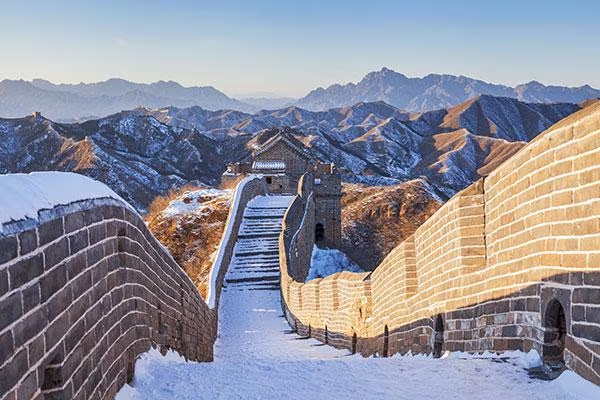
Culture & Heritage
Temples, musées, sites historiques
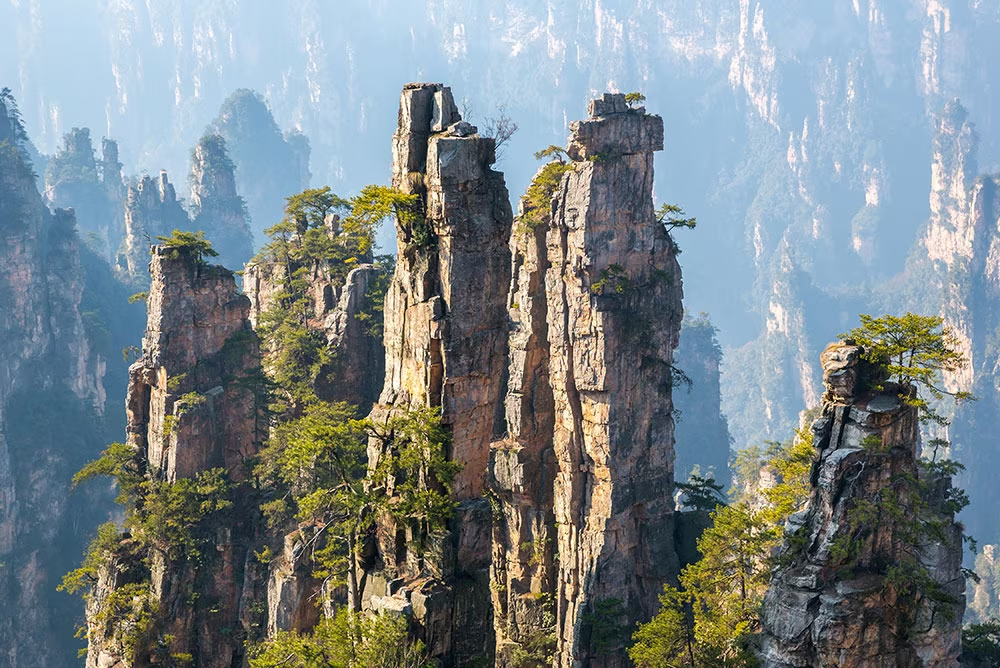
Nature & Landscapes
Parcs nationaux, montagnes, forêts
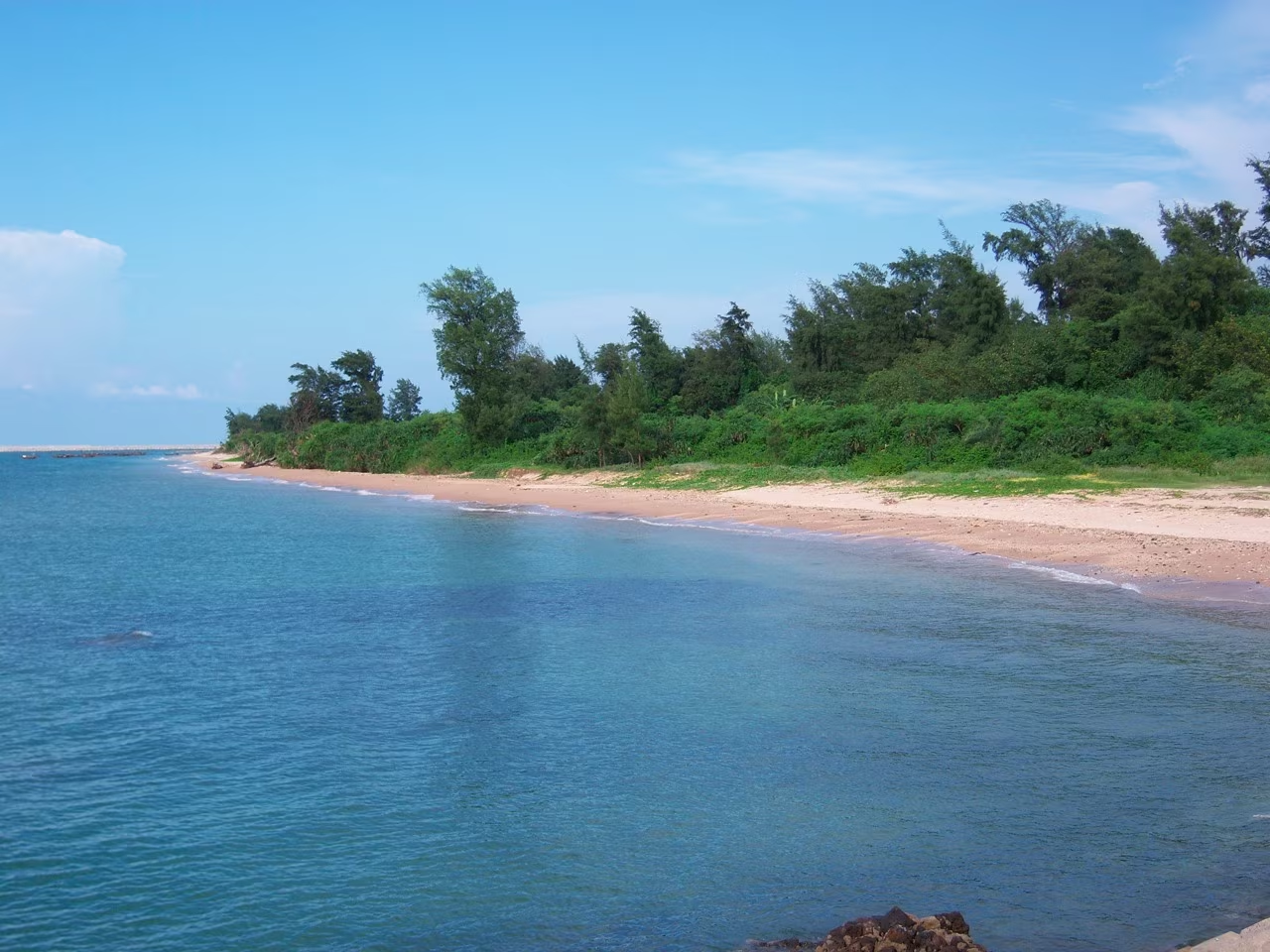
Sea & Beaches
Littoral, îles, sports nautiques

Wildlife & Biodiversity
Observation animale, sanctuaires, réserves

Gastronomy
Cuisine locale, marchés, cours de cuisine
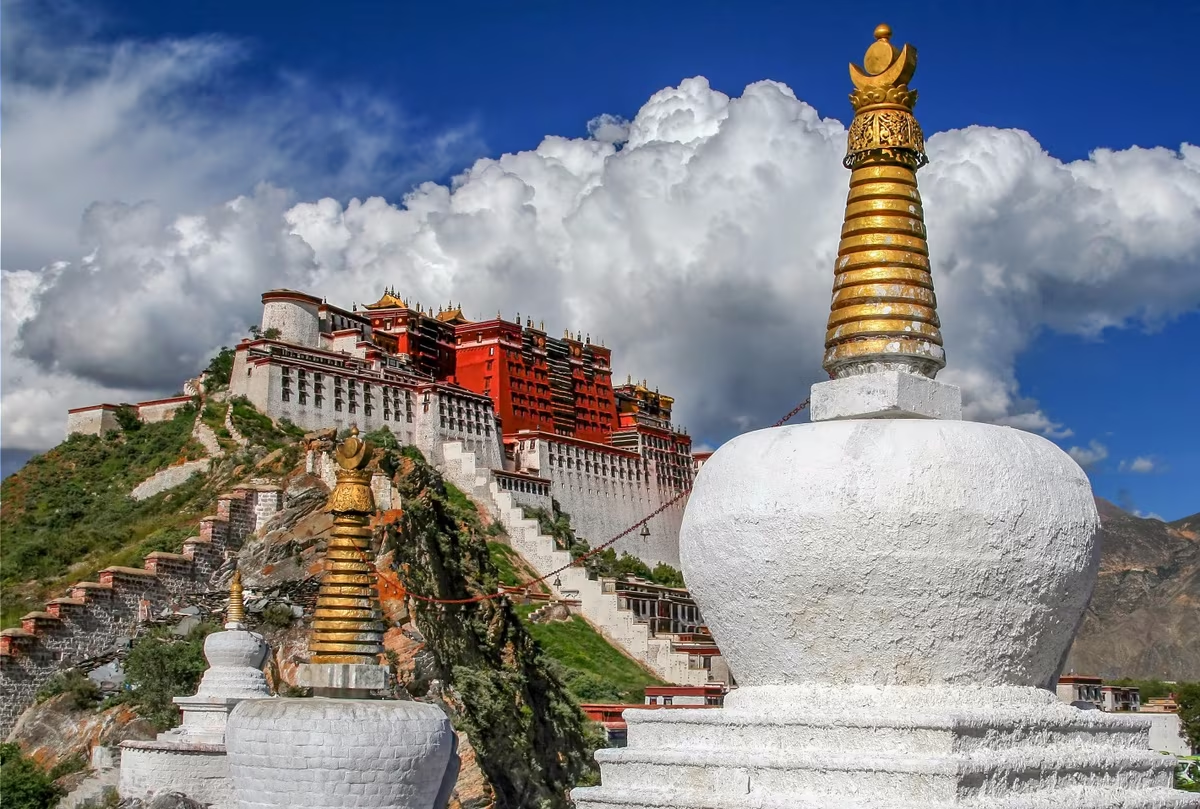
Spirituality
Temples, méditation, retraites spirituelles
We use cookies to improve your experience and measure our site's audience. You can choose what you accept. Learn more.