Du Fu's Thatched Cottage
Du Fu's Thatched Cottage
Museum park in Chengdu dedicated to Tang poet Du Fu, who composed nearly 250 poems here during his exile. Reconstructed cottage, exhibition halls and classical gardens.
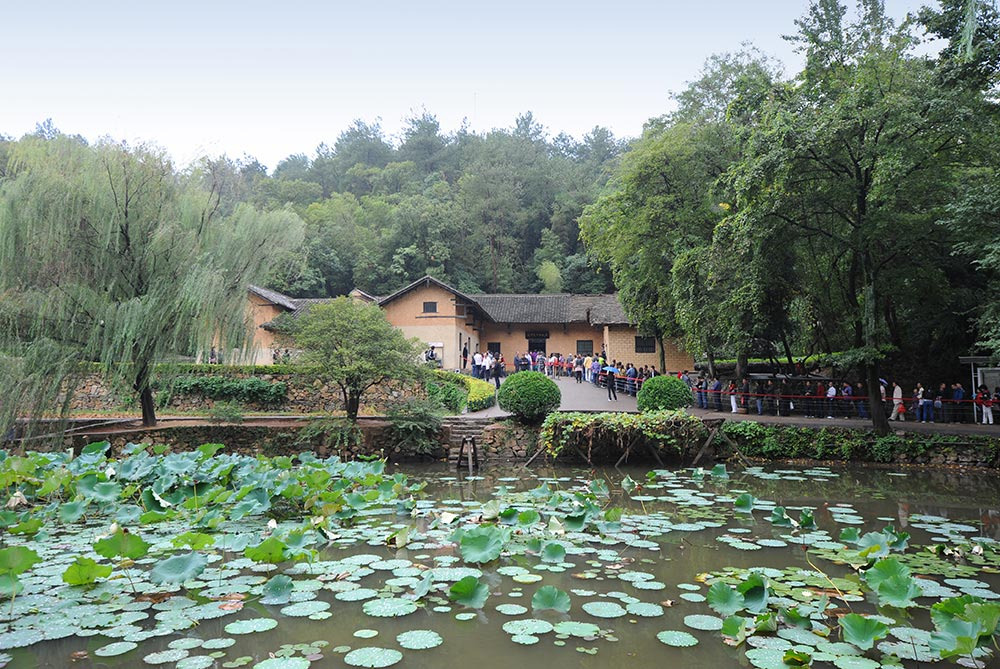
The thatched cottage of poet Du Fu (Du Fu Cao Tang) is a museum park located in the western suburbs of Chengdu, in Sichuan. The site occupies the location where poet Du Fu, nicknamed the "Saint of Poets," lived in exile in the 8th century and composed a major part of his work. Today, the ensemble combines exhibition pavilions, traditional gardens and a reconstruction of the original cottage.
Why visit Du Fu's cottage
Du Fu (712-770) is one of the most studied figures in classical Chinese poetry. The Chengdu cottage is not merely a memorial: it is the precise location where he wrote approximately 240 poems during his years of exile. The site thus allows you to connect a body of work read in all Chinese schools to a concrete setting — a garden, a river, a bamboo cottage — that illuminates the poems themselves.
For a traveler interested in Chinese literary culture, the place complements visits to the major Buddhist and Taoist sites of Sichuan well. Plan for 1.5 to 2.5 hours on site depending on your interest in the exhibitions and calligraphy.
History of the place
Du Fu lived under the Tang dynasty, from 712 to 770. After several failed imperial examinations, he eventually obtained a position as an official at the Tang court in Chang'an (present-day Xi'an). His career was interrupted by the An Lushan Rebellion (755), which forced him to flee the capital.
He went into exile to Chengdu in 760, where he became secretary to the governor of Sichuan. He settled there for nearly five years in a small cottage beside the Huanhua stream, and composed nearly 250 poems — often considered the finest works of his career.
The original cottage was destroyed by wars following the poet's departure. Rebuilt by admirers, it has been restored and enlarged several times under the Song, Ming and Qing dynasties. The current park retains the layout of the original residence, with a cottage reconstructed identically according to descriptions left by Du Fu himself in his texts.
What to see on the site
The reconstructed cottage
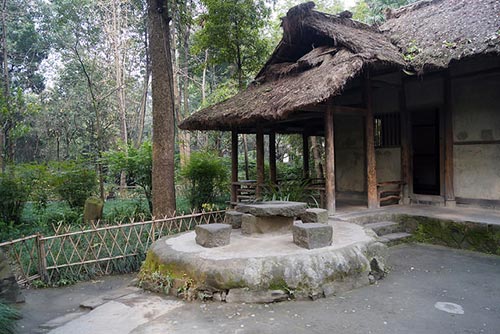
At the heart of the park, the bamboo and thatch cottage reproduces the modest dwelling where the poet lived. The interior is austere: a bed, a table, a few everyday objects. It is more of an educational recreation than an archaeological relic, but it gives tangible measure of the simplicity in which some of the most famous poems in the Chinese language were written.
The exhibition halls
Several pavilions house ancient editions of Du Fu's works, calligraphies, and portraits of the poet from different periods. Two pieces draw particular attention:
- a bronze statue of Du Fu, elongated and stylized;
- a more realistic clay statue, displayed in the main hall, which seeks to capture the features of the aging poet.
The gardens
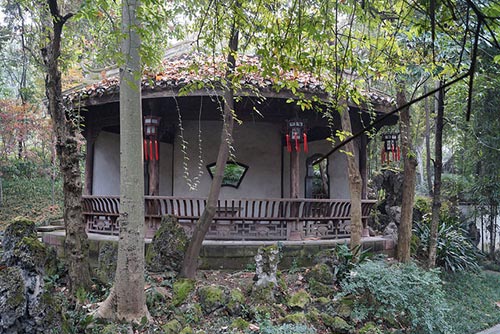
The park spans approximately twenty hectares organized around courtyards, stone bridges, bamboo groves, streams and small temples. The walk follows the logic of classical gardens: alternation of enclosed spaces and open vistas, symbolic plantings (plum trees, bamboos, pines), and stone steles engraved with verses by Du Fu arranged along the path.
Practical information
Access
The site is located west of central Chengdu, accessible by metro (line 4, Caotang Beilu station) or by bus, with several lines serving the Du Fu Cao Tang stop (notably lines 19, 35, 58, 82, 151, 170, 309 and 319 — check the current route on site, as the network changes regularly). A taxi ride from the city center takes 15 to 25 minutes depending on traffic.
Hours and admission
The park is open daily from early morning until late afternoon (with slightly longer hours from May to October). The ticket office closes about twenty minutes before the site closes. Admission is at a moderate price, comparable to other major parks and museums in Chengdu. Check on site or with your hotel for current hours and fees.
Visit tips
- Visit in the morning to avoid school groups.
- Plan protection from summer heat: some pavilions offer little shade.
- Explanatory signs are in Chinese and English; an audio guide is available at the entrance.
Nearby attractions
The cottage fits well into a cultural day of sightseeing in Chengdu. Nearby, you often visit the Taoist temple Qingyang Gong and the Huanhuaxi cultural park. To further explore Chinese historical sites, you can consult other guides:
- the bell and drum towers;
- the Beishan temple;
- the Beijing Botanical Garden for another example of Chinese landscape design.
Frequently asked questions
Frequently asked questions
Plan approximately 1.5 to 2.5 hours depending on your interest in the exhibitions and the pace of your walk through the gardens.
No. The cottage where Du Fu lived from 760 to 765 was destroyed after his departure. The building visible today is a reconstruction, faithful to the descriptions left by the poet, on a site itself restored and enlarged under the Song, Ming and Qing dynasties.
Not necessarily. The park can be visited simply as a classical garden. However, reading a few of Du Fu's poems in advance — particularly those written in Chengdu, such as "Song of a Thatched Cottage Destroyed by Autumn Wind" — greatly enriches the visit.
By metro (line 4, Caotang Beilu station), by bus to the Du Fu Cao Tang stop, or by taxi (15 to 25 minutes depending on traffic).
Du Fu (712-770) is a poet of the Tang dynasty, nicknamed the "Saint of Poets." An official at the court in Chang'an, he was forced into exile by the An Lushan Rebellion and found refuge in Chengdu, where he composed nearly 250 poems.
Extend your visit
Du Fu's cottage is a natural stop during a stay in Chengdu, complementing the giant panda site and rural Sichuan. To plan an itinerary that includes this region, consult our Chine trips.

Photos
Interested in this visit?
We can include it in your personalised itinerary.