Fayuan Temple
Fayuan Temple
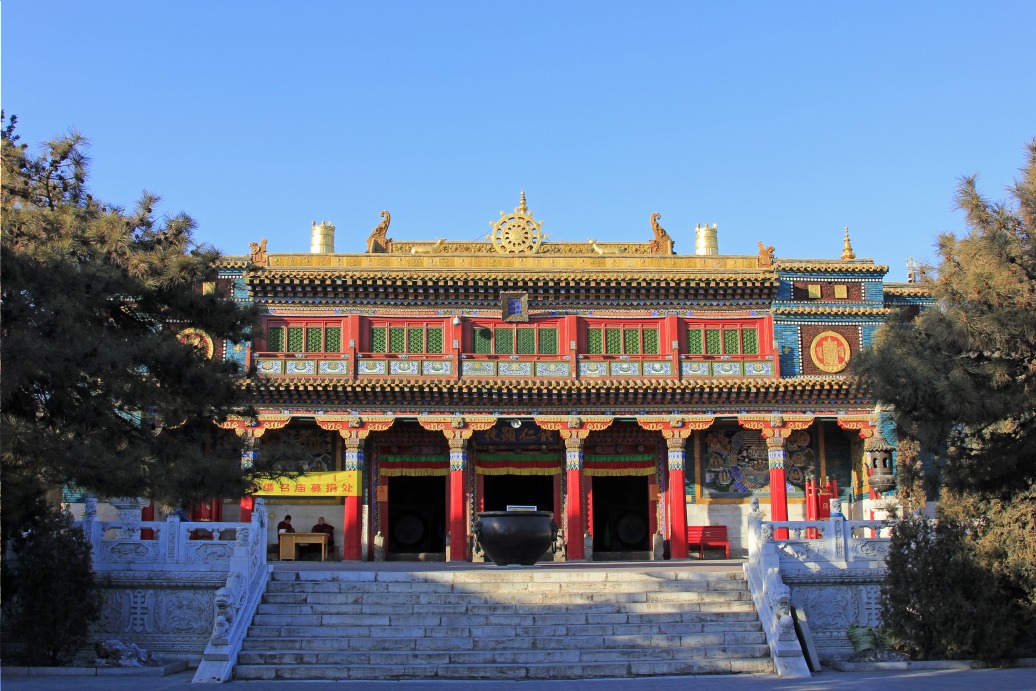
Founded in 645 in southwestern Beijing, Fayuan Temple unfolds six courtyards of statues and imperial steles, and houses China's Buddhist Academy.
Fayuan Temple, whose name means "Origin of the Dharma," stands south of Jiaozi Hutong in Xicheng District, in southwestern Beijing. Founded in the 7th century, this Buddhist sanctuary ranks among the oldest in the Chinese capital and today houses China's Buddhist Academy.
Why visit Fayuan Temple
Away from the crowds that throng Beijing's major sites, Fayuan Temple offers three complementary attractions. Historically, it spans 1,300 years from the Tang Dynasty, with successive restorations under the Ming and Qing dynasties. Religiously, it continues to function as a Buddhist educational institution welcoming monks and students. Artistically, its six courtyards preserve statues, imperial steles, and centuries-old trees that punctuate a peaceful walk through the hutongs of southwestern Beijing.
History of the temple
The temple came into being in 645 under the reign of Emperor Li Shimin of the Tang Dynasty, originally named Minzhongsi. The Empress Wu Zetian later renamed it Minzhong, meaning "Mourning the Death of the Loyal," in tribute to soldiers fallen in battle.
The architecture visible today dates to the Ming Dynasty: the complex was rebuilt during the Zhengtong period (1436-1449) and then took the name Chongfusi. It was not until the reign of Emperor Yongzheng under the Qing Dynasty (1636-1912) that the site was restored and received its current name of Fayuan Temple.
In 2000, the publication of a Taiwanese novel titled The Sanctuary of the Martyrs, which recounts China's reformist movement of 1898, rekindled public and Buddhist devotee interest in the place.
What to see on site
The complex covers approximately 8,000 m² and is organized into six courtyards aligned on a north-south axis, following an axially symmetrical plan. More than thirteen buildings oriented southward punctuate the visit. The temple today houses China's Buddhist Academy, the Buddhist Library, and the Museum of China, where several relics from the Ming and Qing dynasties are preserved.
First courtyard: Hall of the Celestial King
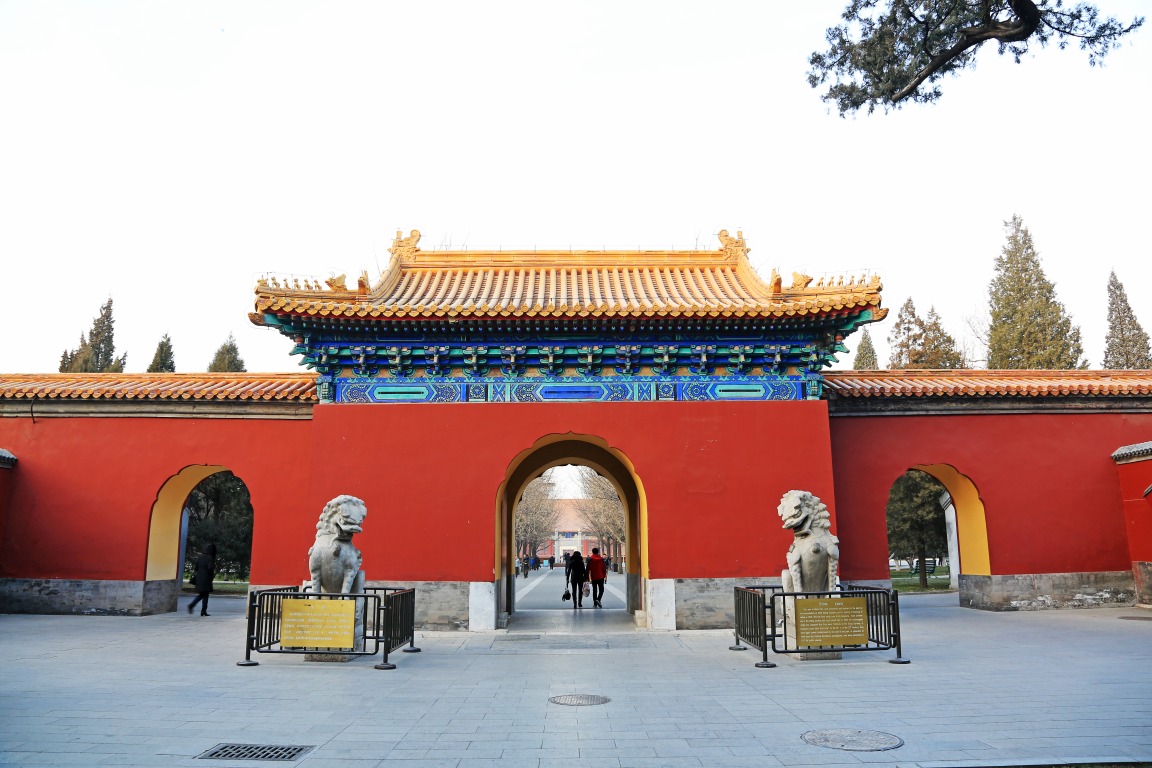
Beyond the main gate, flanked by two statues of mythical creatures, you arrive in the first courtyard. It opens onto the Hall of the Celestial King, flanked by the Bell Tower and the Drum Tower. Inside stands a statue of Buddha Maitreya, 1.75 m tall and dating from the Ming Dynasty, with a smiling face and bare torso ("Maitreya" means in Sanskrit "friendly, benevolent"). You will also see four bronze statues, 1.2 m tall, representing the Four Celestial Kings, and a seated statue of the guardian Wei Tuo.
Second courtyard: Hall of the Great Buddha
Considered the richest section, the second courtyard houses the hall dedicated to the Great Buddha Vairocana—Maha Vairocana, a Sanskrit term meaning "Great Sun" or "Great Light." Six stone steles here recount the construction of the site and bear a manuscript from Emperor Qianlong, who reigned from 1735 to 1796. Inside, Buddha Vairocana is surrounded by the Bodhisattva Manjushri (Wisdom) and the Bodhisattva Samantabhadra (Universal Virtue). In the background stand eighteen wooden statues representing the Arhats, the historical disciples of Buddha.
Third courtyard: steles and sutras
The third courtyard rests on a building supported by twelve columns. It preserves several stone steles and sutras from different dynasties, direct testimony to the temple's richness during the period when it still bore the name Minzhong.
Fourth courtyard: Pilu Hall
Pilu Hall occupies the center of the fourth courtyard. At its summit stands a statue of Buddha Pilu, whose placement orients all the surrounding sculptures.
Fifth courtyard: Hall of Mercy
Here stands the statue of Guanyin, the Bodhisattva of Mercy. The hall also preserves a stele calligraphed by Emperor Kangxi, several sutras, and Buddhist relics offered by neighboring countries.
Sixth courtyard: Sutra Pavilion
The Sutra Pavilion closes the vista. This section is not open to the public; it houses a statue of Buddha as well as numerous relics and sutras from the Ming and Qing dynasties.
Ancient trees
The temple preserves several remarkable trees. Near the Bell and Drum Towers stand two giant pines planted during the Song Dynasty. Before the Sutra Pavilion, two ginkgos (also called "trees of forty crowns" or "silver apricots") and apple trees date back to the Qianlong period (1711-1799). The clove trees bloom in spring.
Practical information
- Recommended visit: allow 1 to 1.5 hours to walk through the six courtyards.
- Entrance fee: modest. Proper attire advised, as the site remains an active place of worship.
- Hours: opens in the morning, closes mid-afternoon. Verify hours on-site before your visit; they may vary by season.
- Crowds: light on weekdays, more pronounced during Buddhist festivals.
- Photography: permitted in the courtyards, generally forbidden inside halls housing the statues.
How to get there
Metro
Take Line 4 or Line 7 and exit at Caishikou Station. Exit D, then follow Caishikou Street and West Nanheng Street. The temple is approximately 900 m from the station, about a ten-minute walk.
Bus
Lines 53, 133, and Special Line 13 serve the Jiaozi Hutong Nankou stop. Lines 83, 38, and Special Line 14n stop at Nanhengjie Lukou Bei.
Nearby
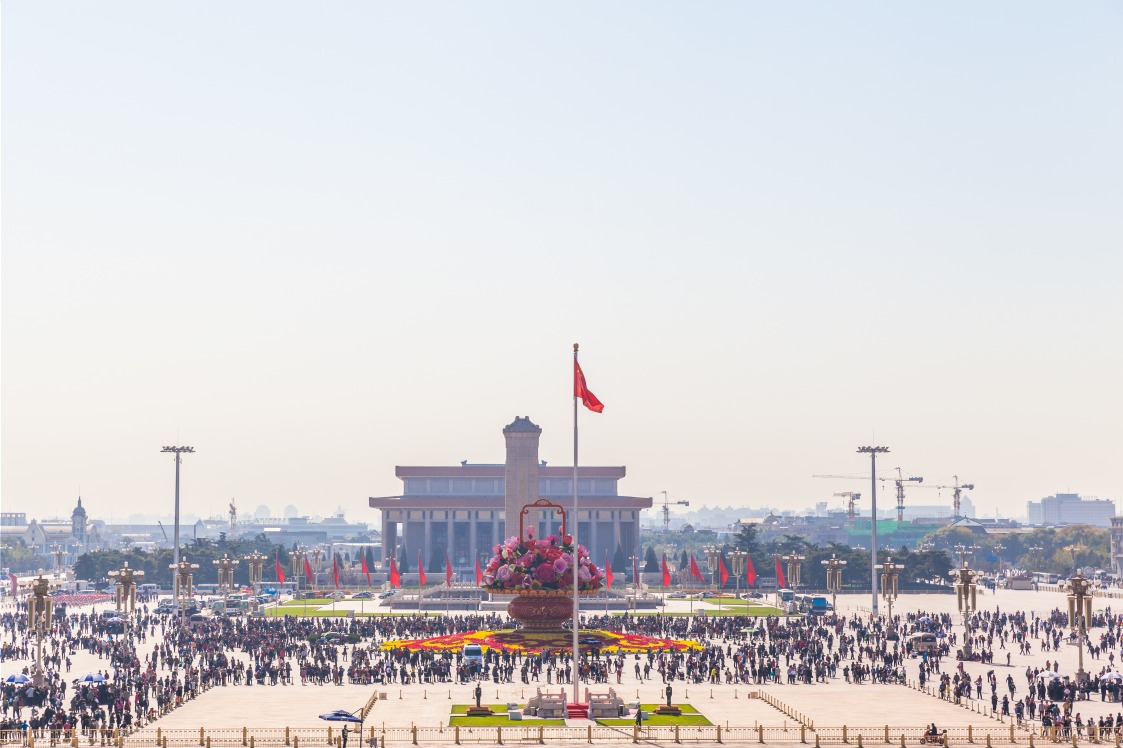
Fayuan Temple lends itself well to a half-day combining several Beijing sites. You can extend your visit to Tiananmen Square, Zhongshan Park, or Beihai Park, all accessible by metro from Caishikou. To deepen your understanding of Buddhist architecture, Longxing Temple in Hebei Province makes an interesting complement during a longer stay.
Frequently asked questions
Frequently asked questions
Yes. The site operates as an active Buddhist institution and houses China's Buddhist Academy, where monks study. Visitors are welcomed in most of the courtyards, with the exception of the Sutra Pavilion.
One to one and a half hours are sufficient to walk through the six courtyards, observe the main statues, and stroll under the ancient trees.
Spring, when the clove trees bloom, and autumn, when the ginkgos turn gold, offer the most striking atmospheres. Avoid Buddhist festival days if you seek tranquility.
Yes, the temple is open to all visitors. It is requested that you dress appropriately and conduct yourself respectfully, as the place remains a space of religious practice.
Yes. The temple is well served by metro and is located near several major sites in central Beijing, including Tiananmen Square and the imperial parks.
Plan your journey
Fayuan Temple fits naturally into a cultural itinerary in Beijing and more broadly into a trip through Chine. To build a customized program blending Buddhist heritage, imperial sites, and landscapes, consult our suggestions for travel in Chine.
Nearby
Interested in this visit?
We can include it in your personalised itinerary.