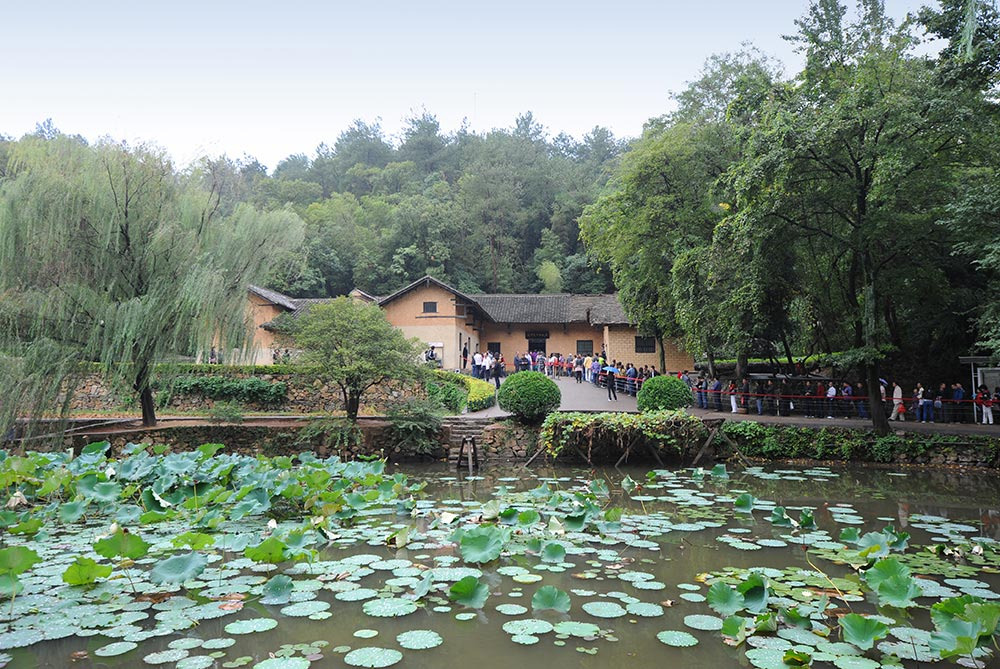
Hanshan Temple (寒山寺)
Hanshan Temple (寒山寺)
Founded in the 6th century and immortalized by a Tang poem, Hanshan Temple is one of Suzhou's most emblematic sites. Between canal, pagoda and the sound of a bell, it blends Buddhist spirituality with Chinese literary heritage.
Hanshan Temple stands in Suzhou, in the Fengqiao district, west of the old city. Founded in the 6th century, its worldwide fame stems from a Tang poem: Night Moored Near Fengqiao Bridge by Zhang Ji, which immortalizes the sound of its bell in the dead of night. An active Buddhist place of worship, it attracts both pilgrims and travelers seeking that particular atmosphere of canal, pagoda and incense.
Quick practical information
- Admission: paid entry (standard ticket for the main site)
- Dress code: appropriate attire required; shoulders and knees covered recommended
- Suggested duration: 1 to 1.5 hours
- Access: bus from downtown Suzhou to Hanshan Temple stop; taxi or bicycle possible from the old city
- Note: the temple is particularly busy during Chinese New Year, when the bell rings at midnight
What to see
The complex is organized around several successive courtyards. The main hall houses a large golden Buddha statue. The Puming Pagoda, rebuilt in the 20th century, dominates the entire complex and offers views over the surrounding canals. A calligraphed stele reproduces Zhang Ji's poem—a centerpiece for literary visitors. The bell, an object of devotion and curiosity, stands in a dedicated pavilion.
History and context
The temple was founded under the Liang dynasty (6th century) and takes its name from the monk-poet Hanshan, a figure in Chan Buddhism. Destroyed and rebuilt several times throughout the dynasties, the current building dates mainly from the Qing period. Zhang Ji's poem (8th century) gives it a reputation that extends far beyond China's borders, particularly in Japan where it is studied in schools.
Visit highlights
The bell and its pavilion
The original bell has disappeared; the current bell, a gift from Japan, perpetuates the tradition. Striking the bell is a ritual cherished by visitors. The deep, long sound resonates differently depending on the time of day.
Zhang Ji's poem
The engraved stele of the poem Fengqiao Ye Bo is displayed in a covered gallery. Several calligraphic versions by successive masters are presented side by side—of particular interest for lovers of Chinese calligraphy.
Fengqiao Bridge and the canal
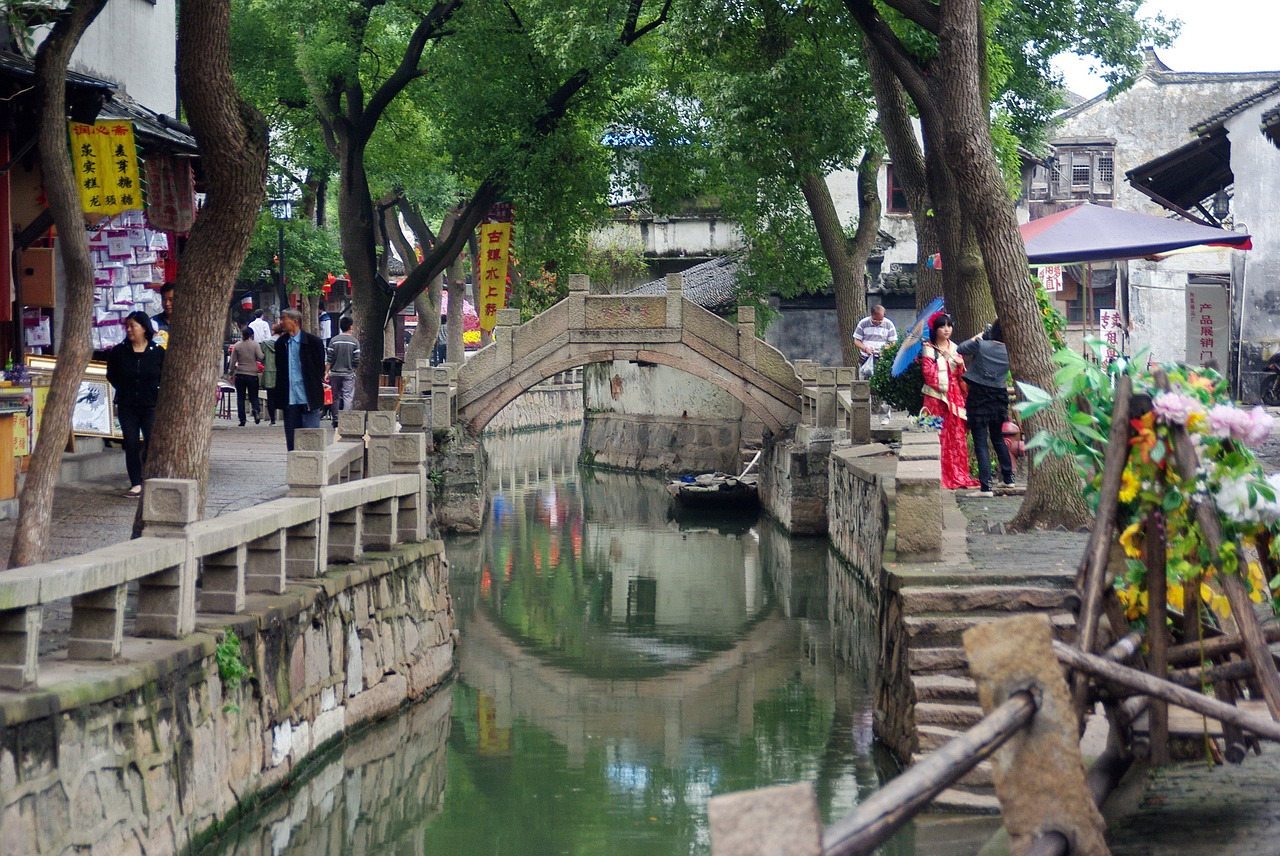
Just steps from the temple, Fengqiao Bridge spans the Grand Canal. The view from the bridge—pagoda in the background, boats on the water—matches exactly the scenery described by Zhang Ji. It is one of Suzhou's most photographed compositions.
Etiquette and visiting rules
- The temple is an active place of worship: maintain calm and respectful behavior.
- Do not touch statues and do not climb on altars.
- Incense can be purchased on site; respect designated areas for burning it.
- Avoid loud conversations in prayer halls.
Photography tips
Morning light, before the flow of visitors, is ideal for photographing the interior courtyards and pagoda. Fengqiao Bridge photographs best in late afternoon, when raking light colors the canal stones. Photography is permitted in most areas; check prohibition signs in certain halls.
Location and access
Hanshan Temple is located in Gusu district, west of Suzhou's historic center, in immediate proximity to the Grand Canal. From Suzhou railway station, allow approximately 30 to 40 minutes by bus. The site is accessible on foot from Fengqiao Bridge, which adjoins the entrance. Accessibility for people with mobility challenges is partial: the main courtyards are level, but some stairs leading to the pagoda have no handrails.
Nearby attractions
- Garden of the Humble Administrator — Suzhou's largest classical garden, a UNESCO World Heritage site.
- Lion Garden — celebrated for its Taihu rocks and stone labyrinths.
- Shantang Street — an old commercial thoroughfare flanking a canal, ideal for an evening stroll.
- Ruiguang Pagoda — one of Suzhou's oldest pagodas, in the Panmen district.
- Panmen Gate — the only preserved water and land gate of Suzhou's former city wall.
Frequently asked questions
Spring (March-April) and autumn (October-November) offer pleasant weather and moderate crowds. Avoid Chinese New Year if you seek tranquility: the site is then very busy, though the nighttime bell atmosphere is unique.
No specific dress code is strictly enforced at entry, but appropriate attire is expected in this active place of worship. Covered shoulders and knees are recommended out of respect for practitioners.
Yes, Fengqiao Bridge is literally at the temple entrance. Plan to linger there: it is from this bridge that Zhang Ji's poem takes on its full meaning, especially in late afternoon.
It is generally permitted in the courtyards and around the pagoda. Some prayer halls display prohibition signs; respect these signs and avoid using flash near statues.
One to one and a half hours is sufficient to explore the entire complex, read the stelae and enjoy Fengqiao Bridge. Allow more time if you wish to attend a ceremony or explore the calligraphy galleries.
Yes. Several bus lines connect the city center to the Hanshan Temple stop. Taxi or rental bicycle are also convenient from the old city, west of which the temple is located.
Nearby
Interested in this visit?
We can include it in your personalised itinerary.