Haoyue Garden
Haoyue Garden
On the car-free island of Gulangyu off Xiamen, Haoyue Garden pays tribute to Koxinga, a Ming general who drove the Dutch from Taiwan in 1662.
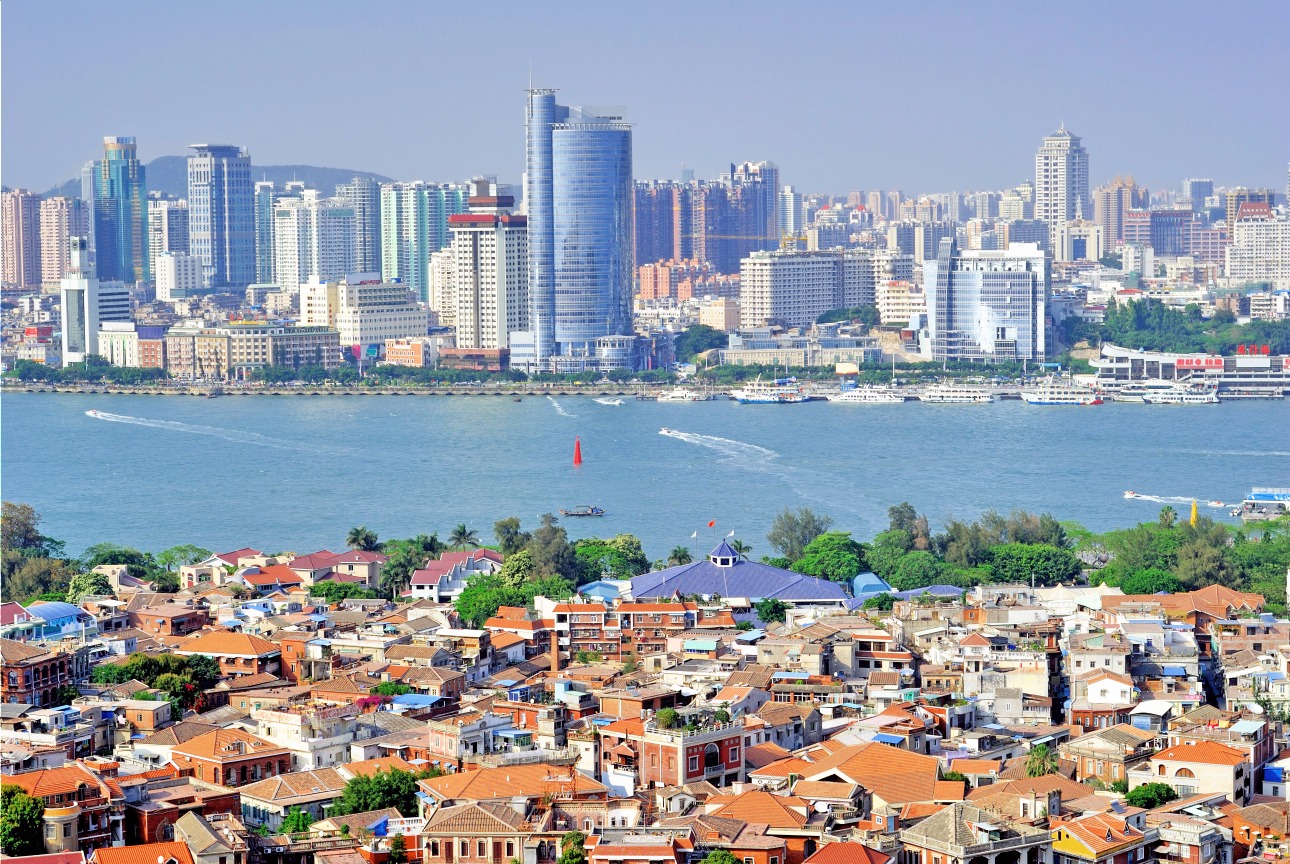
The Haoyue Garden occupies the southeastern tip of Gulangyu, a small car-free island off the coast of Xiamen, at the edge of the Lu River. It is China's only garden dedicated to Zheng Chenggong, better known as Koxinga, a Ming dynasty general who became a national hero. Developed in 1980, it combines a monumental granite statue, a history museum, and a coastal path along the Pacific Ocean.
Why visit Haoyue Garden
The site holds a twofold appeal. Historically, it is the principal memorial dedicated to Koxinga, a major figure in Ming resistance against the Qing and in the reconquest of Taiwan from the Dutch. Scenically, it sits on a rocky promontory facing the sea, with a beach, white marble bridge, and observation platform. A visit fits naturally into an exploration of Gulangyu, an island recognised by UNESCO for its colonial architecture.
The history of Zheng Chenggong
Born in 1624, Zheng Chenggong was the son of a merchant-pirate in the Taiwan Strait. Educated by Confucian scholars, he served the Prince Tang under the last Ming and received the rare privilege of bearing the imperial family name — hence the nickname Guoxingye ("lord of the imperial name"), which Dutch sailors rendered as Koxinga.
In the 1660s, he drove back Qing armies in southeastern China and drove the Dutch from Taiwan in 1662, establishing a Ming stronghold on the island. Both mainland China and Taiwan today claim him as a national hero. In several Taiwanese temples, he is the subject of worship and is venerated as a guardian deity.
The garden was developed in 1980. Its name, Haoyue ("bright moon"), draws inspiration from a poem written in the general's memory.
What to see on site
The park is divided into seven zones connected by paths and stairs carved into the rock.
The Koxinga statue
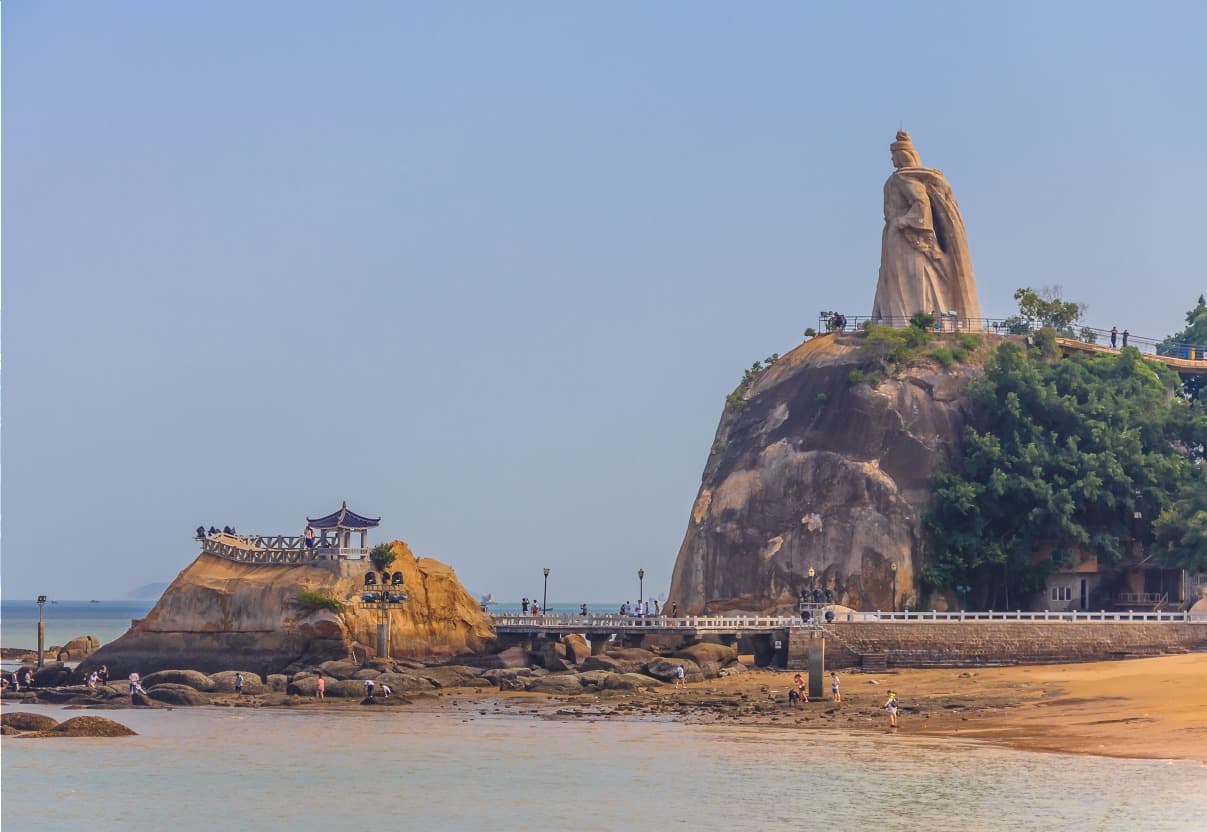
The centerpiece of the site, the granite statue rises to approximately 15.7 m atop a rock face overlooking the sea. It depicts Zheng Chenggong in Ming military dress, his gaze turned toward Taiwan. Its silhouette is visible from several points in Xiamen.
The museum and bronze sculptures
At the foot of the hill, a small museum traces the general's campaigns through maps, weapons, and period artifacts. A collection of bronze sculptures illustrates battle scenes, complemented by a Stele Corridor inscribed with calligraphic writings.
The Stele Corridor, the Fuding well, and the emperor's palace
These three spaces form the historical heart of the garden: a corridor of carved stones, an ancient well called Fuding, and a reconstruction evoking the Ming imperial palace. The ensemble can be explored in half an hour.
Haowuyuan Beach and the Guan Hai River
Below, Haowuyuan Beach offers a strip of light sand and direct access to the sea. A long white marble bridge runs along the shoreline and leads to an observation platform set on a lighthouse. The Guan Hai River marks the eastern boundary of the park.
When to go
Xiamen enjoys a subtropical climate. The most pleasant period extends from October to December, with mild temperatures and little rain. Summer (June–September) is hot, humid, and prone to typhoons. Spring remains pleasant but is often misty.
The highlight of the year is the Mid-Autumn Festival (8th lunar month, generally September), when families gather in the garden to admire the full moon — a tradition that echoes the site's name.
How to get there
Access is a two-step process:
- Ferry from Xiamen: boarding at dedicated terminals (different for Chinese residents and foreign visitors/tourists), crossing of around ten minutes to Gulangyu.
- On Gulangyu: the island is strictly car-free; private vehicles are prohibited. Reach Haoyue Garden on foot from the ferry terminal (20 to 30 minutes) or by bicycle.
Practical information
- Duration of visit: allow 1 to 2 hours to explore the seven zones.
- Admission: paid entry at a modest cost (also consider a combined ticket for Gulangyu if visiting multiple sites).
- Hours: daytime opening with extended hours. Check before you go.
- What to bring: comfortable shoes (stairs, rocky terrain), water, sun protection.
Nearby
Gulangyu lends itself to a full day of exploration: historic colonial villas, piano museum, Gangzaihou Beach, Sunlight Rock. Back in Xiamen, the Zhongshan Lu quarter and Nanputuo Temple are worth a stop. To extend your itinerary in China, you may compare this site with other historic places such as the Great Wall at Juyongguan or the Big Wild Goose Pagoda in Xi'an.
FAQ
Frequently asked questions
A Ming dynasty general born in 1624, son of a merchant-pirate, who drove back the Qing in southeastern China and expelled the Dutch from Taiwan in 1662. He is regarded as a national hero in China and Taiwan, and is venerated as a deity in certain Taiwanese temples.
One to two hours are sufficient to explore the seven zones of the garden, the museum, and the beach. Allow a half-day if combining with other Gulangyu sites.
Take the ferry from Xiamen to Gulangyu island, then reach the garden on foot or by bicycle. The island is car-free; vehicles are not permitted.
October to December for weather. For a cultural experience, aim for the Mid-Autumn Festival (September on the lunar calendar), the ideal time to observe the full moon from the park.
Haoyue means "bright moon." The name is drawn from a poem composed in memory of Zheng Chenggong, linked to the tradition of moon-gazing.
Include Haoyue Garden in your trip
Haoyue Garden is visited as part of a stay in Xiamen and on Gulangyu island, a recommended stop to combine maritime heritage, historical memory, and colonial architecture of southeastern China. To build a bespoke itinerary, consult our China travel packages.
Interested in this visit?
We can include it in your personalised itinerary.