Lama Temple
Lama Temple
Yonghegong, Beijing's largest Tibetan Buddhist temple: Qing history, sandalwood Maitreya Buddha and visitor tips in Dongcheng district.
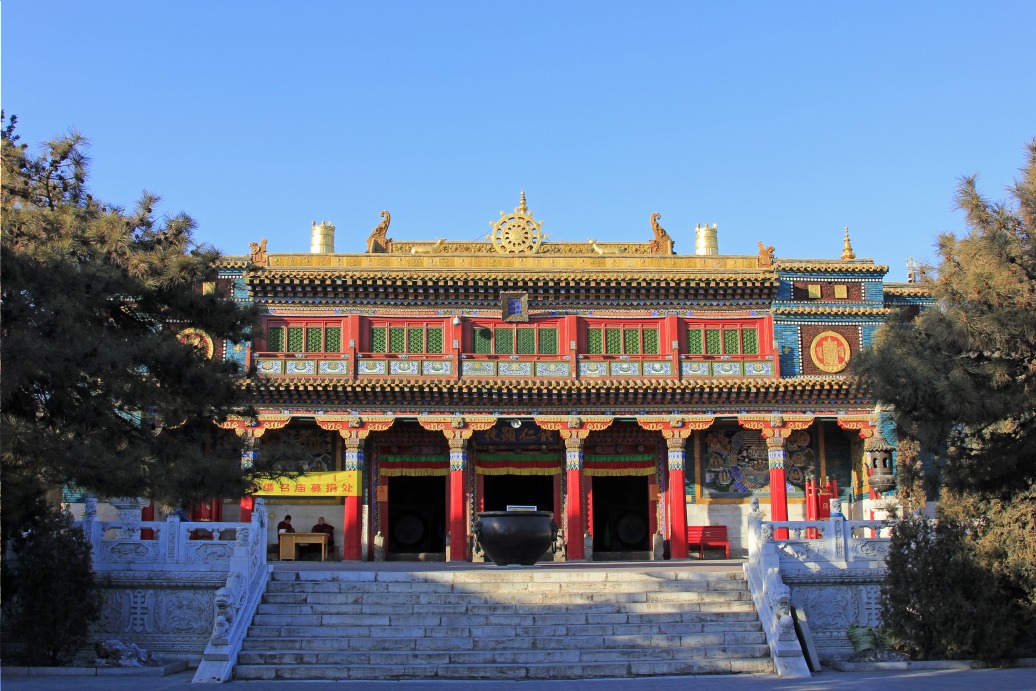
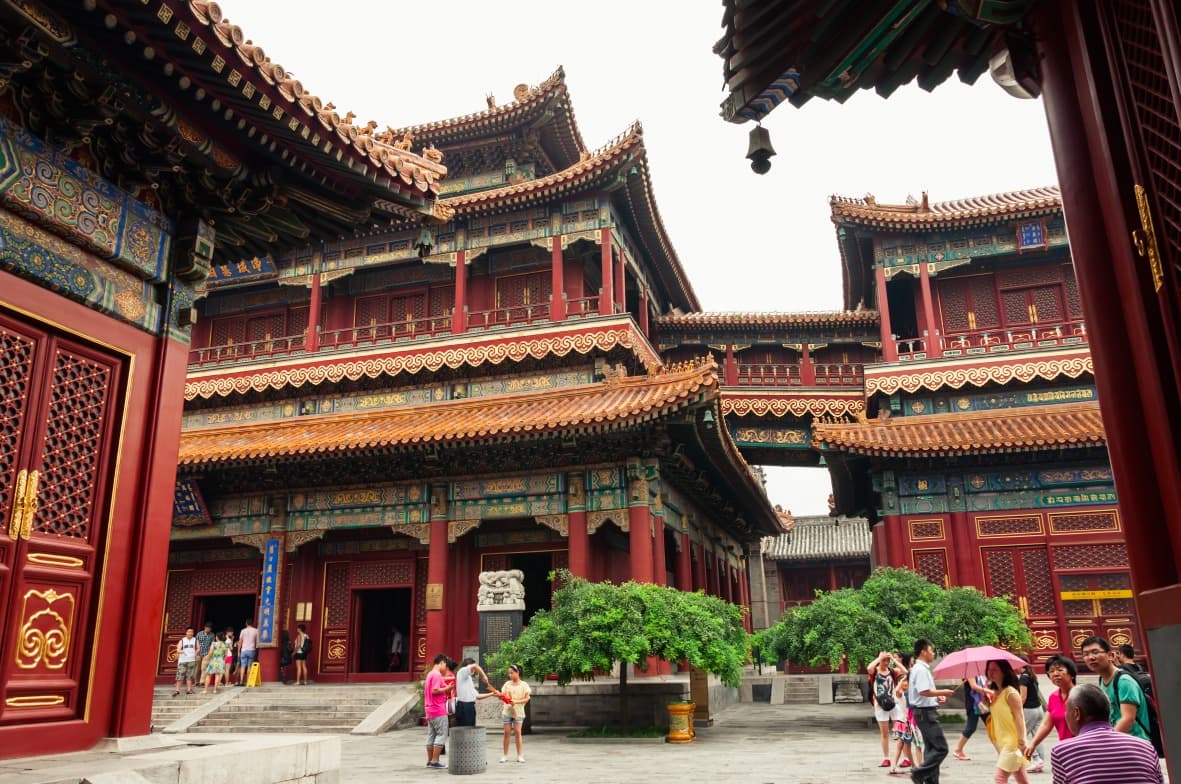
The Lama Temple, or Yonghegong (雍和宫), is Beijing's largest Tibetan Buddhist temple. Located in Dongcheng district, northeast of the historic centre, it spans nearly 66,400 m² with 1,134 halls arranged around seven successive courtyards. Imperial yellow-tiled roofs, murals, wooden sculptures and ritual bronzes testify to the close ties forged between the Qing dynasty and Tibetan Buddhism in the 18th century.
Why Visit the Lama Temple
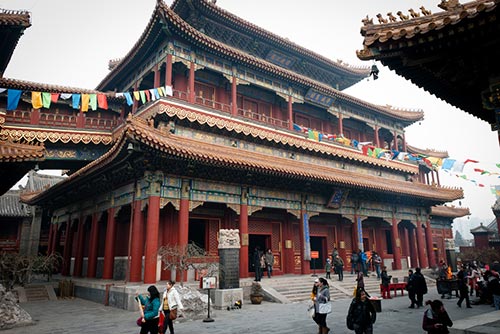
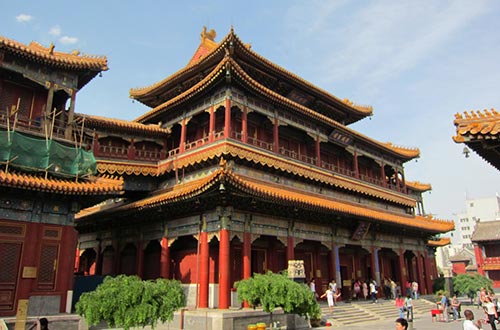
Three reasons make this visit worthwhile during a Beijing stay. First, it is one of the rare places in the capital where you can tangibly perceive the Qing empire's multiethnic dimension: Manchu, Mongol, Han and Tibetan influences coexist here. Second, the sanctuary remains an active place of worship, frequented by believers and monks, which contrasts with other Beijing sites that are more museum-like. Finally, Yonghegong houses remarkable artworks, including a colossal Maitreya statue carved from a single trunk of white sandalwood.
History: From Imperial Residence to Great Tibetan Temple
Construction of the complex began in 1694, under the Qing dynasty. The complex initially served as a residence for Prince Yin Zhen, the future Emperor Yongzheng. Upon his death in 1735, his coffin was temporarily placed in one of the temple's halls, elevating the site's status: the tiles were replaced with imperial yellow tiles reserved for the emperor.
In 1744, Emperor Qianlong officially converted the palace into a lamasery of the Gelugpa school (the "yellow hats" of Tibetan Buddhism). The site became a key administrative and religious centre for relations between the Beijing court, Mongolia and Tibet.
During the Cultural Revolution, the temple escaped destruction thanks to intervention by Zhou Enlai, then Prime Minister. Closed to worship for several years, it reopened to the public in 1981, in an avowed effort to recall the historical ties between the Chinese empire and Tibet.
What to See On-Site
The route follows a south-north axis, crossing six main buildings that you can visit without exhausting yourself in the annexe halls:
- Gate of Harmony and Peace (Yonghemen): monumental entrance flanked by the Four Heavenly Kings.
- Hall of Harmony and Peace: three Buddhas representing the past, present and future.
- Hall of Eternal Blessings: former private chamber of Yongzheng, now a place of worship.
- Hall of Dharma Wheel (Falun Dian): home to the Mountain of the 500 Arhats, sculpted in wood and inlaid with figurines in precious metals.
- Pavilion of Ten Thousand Happinesses (Wanfu Ge): contains the Maitreya Buddha in white sandalwood, 17 metres high, carved from a single tree trunk gifted by the 7th Dalai Lama.
- Pavilion of Accomplishment: at the rear of the complex, more intimate.
Display cases present liturgical objects and relics associated with the 14 Dalai Lamas, as well as thangkas and mandalas. The omnipresent scent of incense and the presence of worshippers in prayer give the place a vibrant atmosphere.
Practical Information
Allow 1 to 2 hours to tour the main halls at a comfortable pace. Entry fees remain modest by Beijing standards, and an audioguide is generally available at the entrance.
- Opening hours: morning opening until late afternoon, with earlier closing in winter. Last entry approximately one hour before closing.
- Dress code: as this is an active temple, opt for clothing that covers shoulders and knees.
- Photography: allowed in courtyards, generally prohibited inside halls of worship.
- Incense: distributed free at the entrance; no need to buy outside.
When to Visit
The temple is open year-round. Spring (April–May) and autumn (September–October) offer the most pleasant conditions, with clear skies over the yellow roofs. Summer can be hot and humid, winter dry and cold but less crowded. Avoid if possible the Chinese New Year and the 1st day of each lunar month: pilgrim numbers can saturate the site from opening. Weekday mornings remain the quietest slots.
How to Get There
The simplest way is by metro: lines 2 and 5, Yonghegong station, exit C. The temple is a few minutes' walk away. Many bus routes also serve Yonghegong station, but the metro is clearer for passing travellers. By taxi or ride-hailing, tell the driver « 雍和宫 » (Yonghegong).
Nearby Attractions
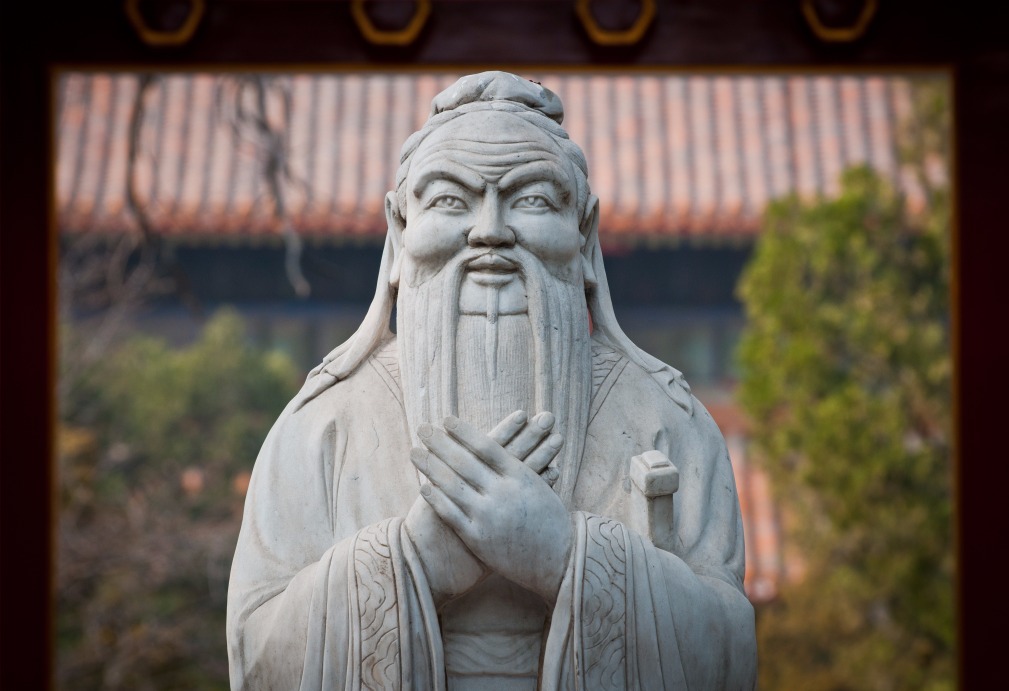
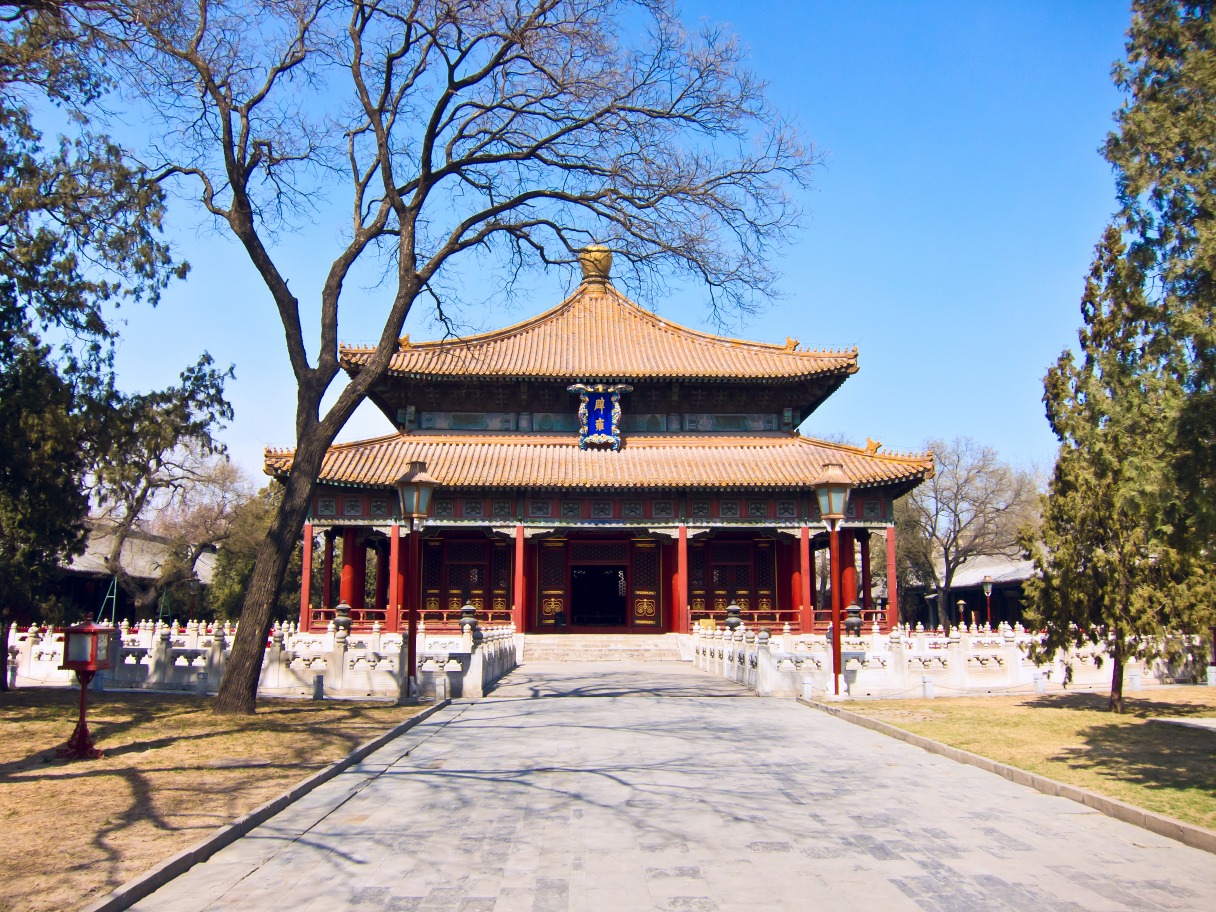
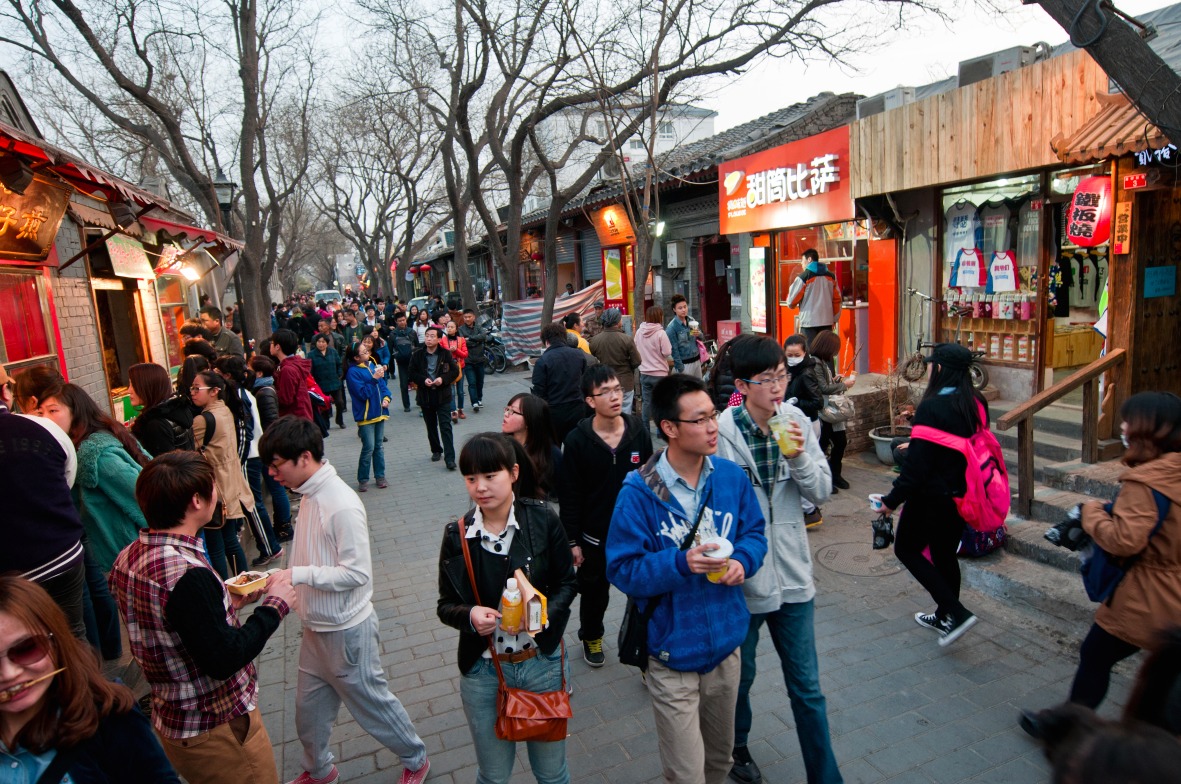
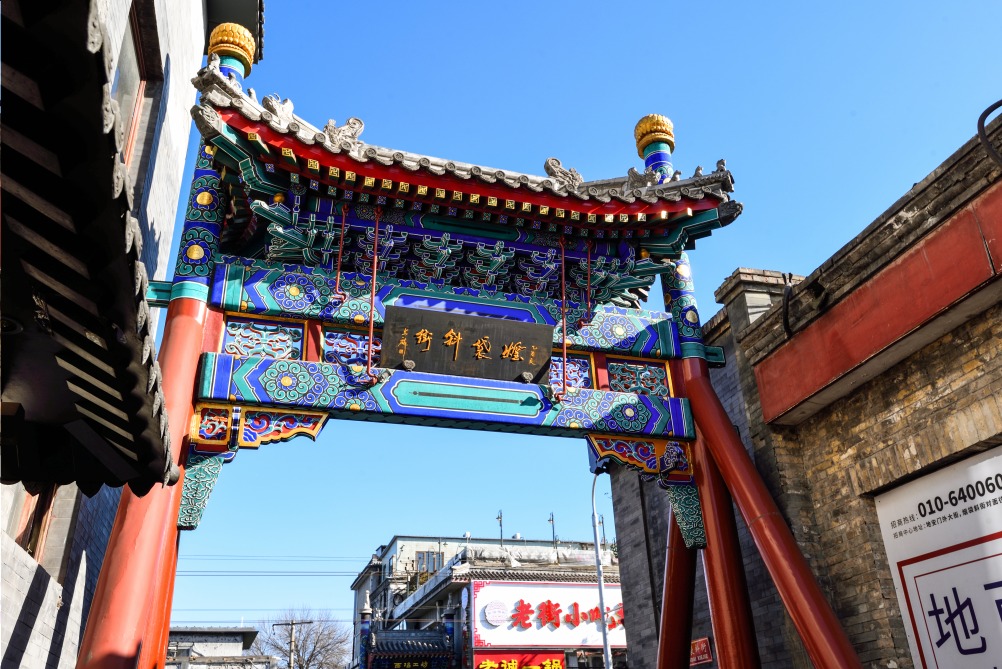
Dongcheng district lends itself to a half-day of walking. Just opposite the temple, the Confucius Temple and the former Imperial College (Guozijian) offer a Confucian counterpoint to Tibetan Buddhism. To the south, Ditan Park (Earth Altar) is appreciated for its shaded pathways. The hutongs nearby, around Wudaoying, house cafés, bookshops and craft boutiques. To further explore the region, see also the Great Wall at Juyongguan, accessible as a day trip from Beijing.
FAQ
Frequently asked questions
Plan Your Trip
The Lama Temple naturally integrates into a Beijing stay focused on imperial and religious heritage. To build a bespoke itinerary including the capital and other regions, consult our trips to Chine.
Photos
Nearby
Interested in this visit?
We can include it in your personalised itinerary.