Mindrolling Monastery (Minzhulin Si)
Founded in 1676 in Yarlung Valley, Mindrolling is one of the six great monasteries of the Nyingma school of Tibetan Buddhism. Its massive white stupa, sacred frescoes, and active monastic community make it a major pilgrimage site and architectural testament to the Nyingma tradition in Shannan Prefecture.
Mindrolling Monastery stands in Yarlung Valley at Zedang (Tsétang), in Shannan Prefecture, Tibet. Founded in the 17th century, it ranks among the six great monasteries of the Nyingma school of Tibetan Buddhism. Its massive white stupa, visible from afar, and its interior frescoes make it both an active pilgrimage site and an architectural testament to the Nyingma tradition.
Practical Information at a Glance
- Access: Zedang is reachable from Lhasa by road (approximately 3 hours) or by air via Shannan-Lhünzê Airport.
- Permit Required: The Tibet Autonomous Region (TAR) Permit is mandatory for all foreign visitors; an additional zone permit may be required.
- Recommended Duration: Allow 1.5 to 2 hours to explore the complex at a leisurely pace.
- Dress Code: Shoulders and knees should be covered; respectful behavior is expected in prayer halls.
What to See
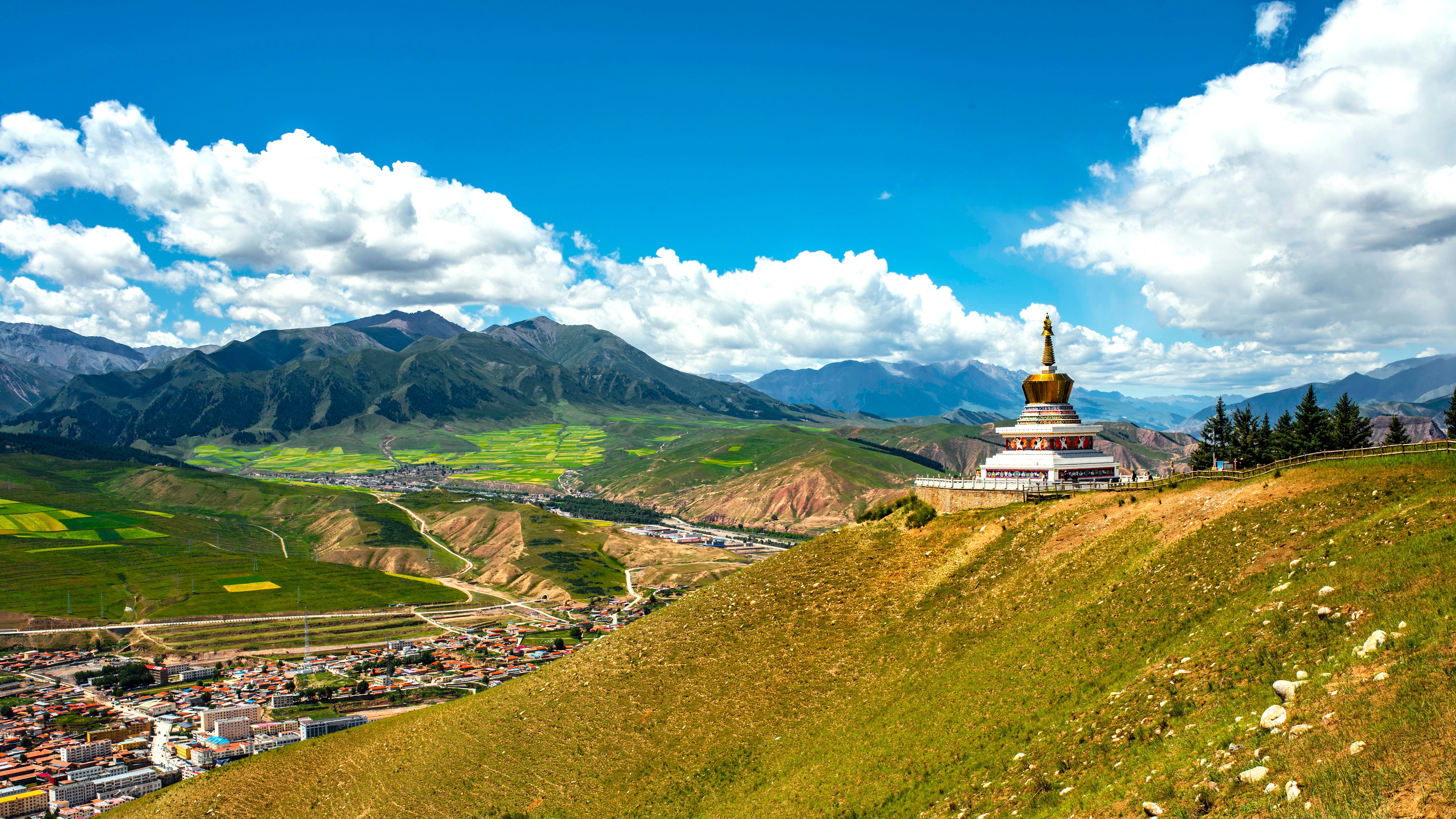
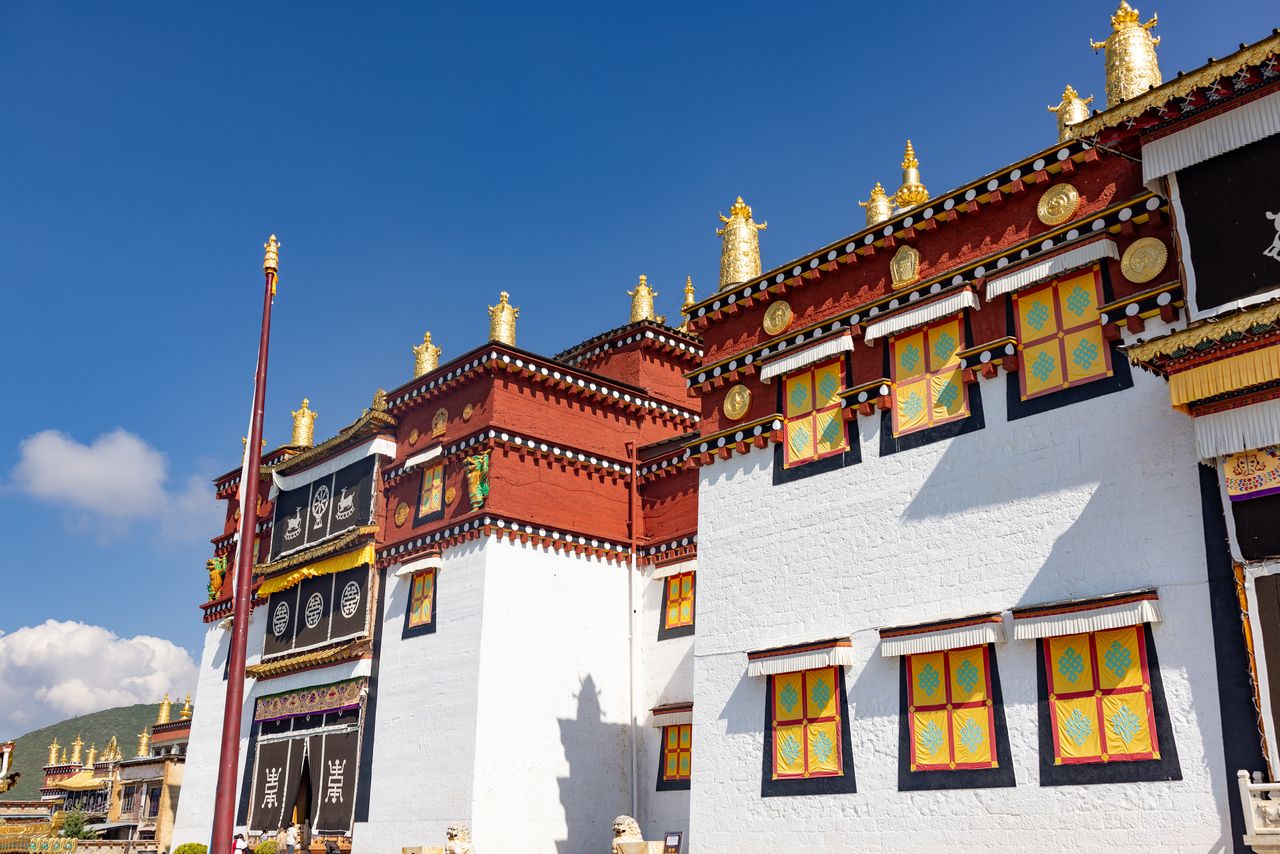
The white central stupa (chörten) dominates the complex: multiple tiers of galleries house statues, thangkas, and murals depicting the Nyingma pantheon. The main buildings include assembly halls where monks still practice daily rituals. The site is surrounded by gardens and distinctive ochre-colored enclosure walls characteristic of Tibetan architecture.
History and Context
Mindrolling was founded in 1676 by Terdak Lingpa (Gyurme Dorje), a renowned Nyingma master and revealer of spiritual treasures (tertön). The monastery became a major teaching center for the transmission of Nyingma texts and sacred arts. Severely damaged during the Dzungar invasion in the 18th century and partially destroyed during the Cultural Revolution, it has been restored since the 1980s.
Highlights of the Visit
The Great White Stupa
The most imposing structure on the site, this multi-tiered chörten contains relics and sacred texts. Pilgrims circumambulate (kora) it clockwise, counting their prayers on their mala beads.
Prayer Halls and Their Frescoes
Interior walls are covered with paintings depicting deities, mandalas, and scenes from Nyingma history. The quality of pigments and fine detail testify to the craftsmanship of Tibetan artisans.
Monastic Life
Outside peak tourist hours, it is possible to observe monks in prayer or debate in the inner courtyards—an authentic glimpse into living tradition.
Etiquette and Visiting Rules
- Remove your shoes before entering prayer halls.
- Circumambulate stupas and prayer wheels clockwise.
- Ask permission before photographing monks or ceremonies.
- Speak softly in worship spaces; silence or mute your phone.
- Do not touch statues or offerings on altars.
Photography Tips
Morning light is ideal for photographing the white stupa, whose façade captures the golden tones of early hours beautifully. Interior frescoes are dimly lit: a tripod or high ISO sensitivity is useful. Always check restrictions posted at the entrance to each hall—some areas prohibit photography.
Location and Access
The monastery lies near Zedang, capital of Shannan Prefecture, in Yarlung Valley—the historical cradle of Tibetan civilization. From Lhasa, the road follows the Yarlung Tsangpo river. A private vehicle with driver is the most practical solution for foreign visitors, as public transport is limited and permits must be arranged through an authorized agency.
In the Vicinity
- Tombs of the Kings of Yarlung — Tibetan royal necropolis near Zedang, with burial mounds dating to the first millennium.
- Yumbulagang Palace — considered Tibet's oldest building, perched on a hilltop overlooking the valley.
- Samye Monastery — Tibet's first Buddhist monastery, founded in the 8th century, accessible from Zedang.
Frequently asked questions
Yes. All foreign visitors to Tibet must hold the TAR Permit (Tibet Autonomous Region Permit), obtained through an authorized travel agency. An additional zone permit may be required depending on your itinerary in Shannan Prefecture.
Spring (April-May) and autumn (September-October) offer pleasant weather and clear skies. Summer (June-August) is peak tourist season but also the rainy season. Winter is cold and some access routes may be difficult.
Yes, and it's even recommended. Yumbulagang Palace, the royal tombs, and Samye Monastery can be easily visited from Zedang in one or two days with a private vehicle.
Photography is permitted in some areas but prohibited in certain prayer halls. Respect posted signs and always ask monks for permission before photographing them.
One and a half to two hours are sufficient to walk through the complex, perform the kora around the stupa, and view the main halls. Allow more time if you wish to attend a ceremony.
Interested in this visit?
We can include it in your personalised itinerary.