Maoxian Qiang Culture Museum
Maoxian Qiang Culture Museum
In Maoxian, nestled in Sichuan's mountains, this museum traces the heritage of the Qiang people: embroideries recognized as intangible cultural property, stone fortified towers, and shamanic rituals of a millennial mountain civilization.
In Maoxian, within the northwestern mountains of Sichuan, this museum dedicated to the Qiang people assembles essential knowledge of one of China's oldest ethnic groups. Embroidered costumes, stone towers, shamanic rituals: the museum offers direct insight into a mountain civilization that has endured earthquakes, wars, and assimilation pressures. Maoxian is the administrative heart of the Qiang region; the museum is its organized memory.
What you'll see
The collections span the major pillars of Qiang culture:
- Textiles and embroideries: traditional garments featuring characteristic geometric patterns, passed down from mother to daughter.
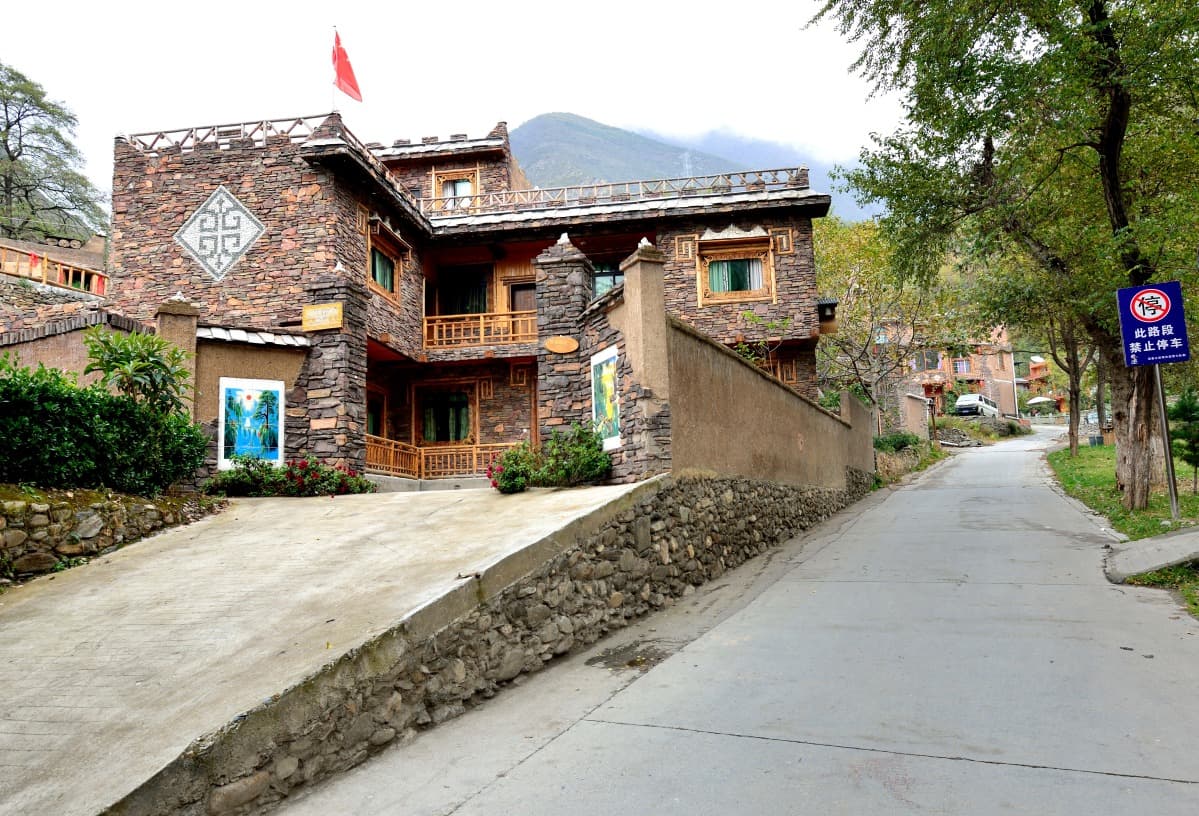
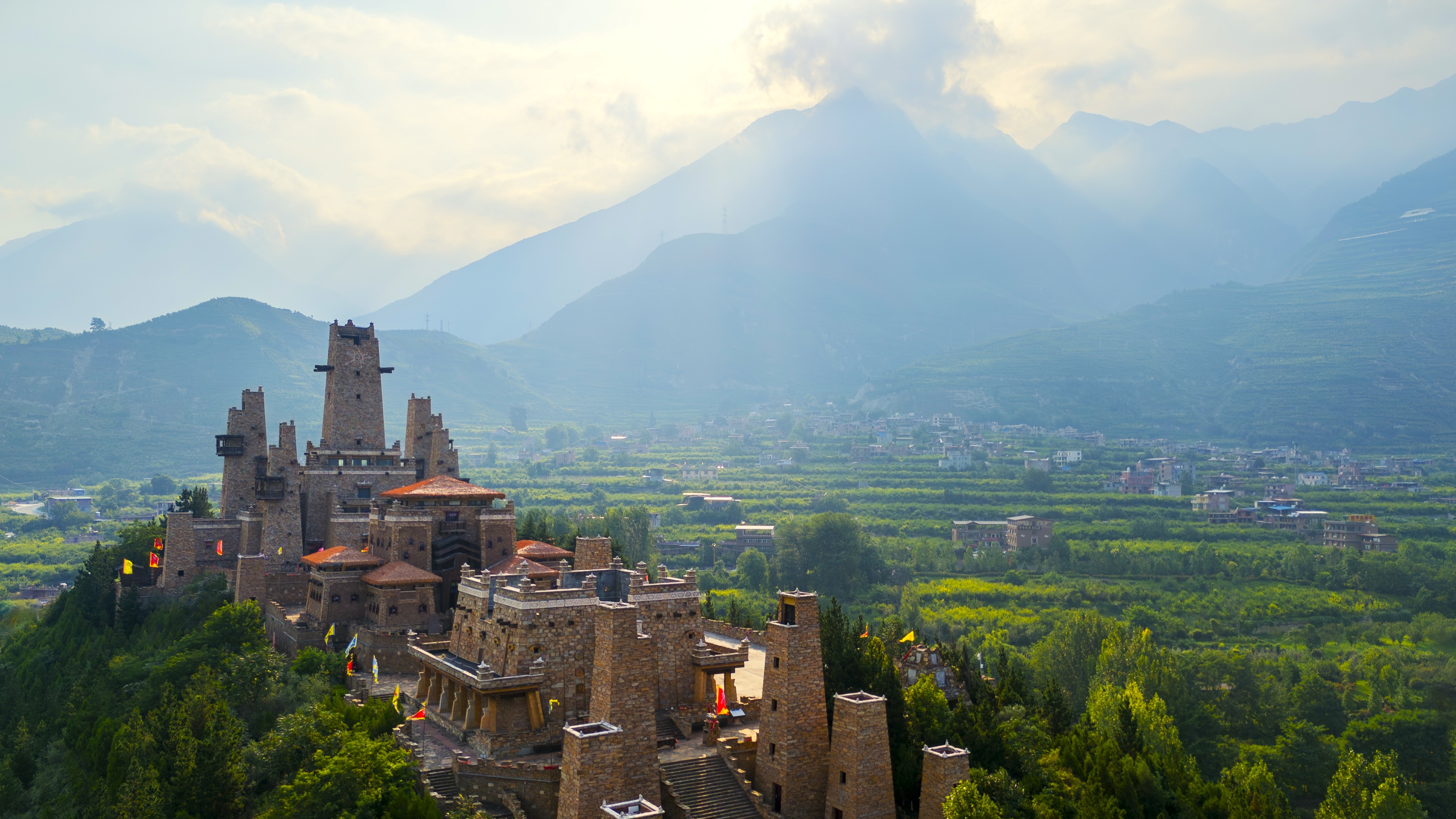
- Stone architecture: scale models and photographs of fortified towers (diaolou) that punctuate the surrounding valleys.
- Ritual objects: instruments and ornaments linked to the shibi, the Qiang shaman, keeper of the bond between the living and ancestors.
- Tools and daily life: terrace farming, herding, lacquer and woodcraft.
History and context
The Qiang are among the earliest ethnic groups mentioned in Chinese historical sources, appearing in oracle bone inscriptions from the Shang dynasty. Gradually pushed toward the highlands of Sichuan and Gansu, they developed a distinct mountain culture. The 2008 Wenchuan earthquake, which devastated Maoxian and surrounding areas, accelerated efforts to document and preserve Qiang intangible cultural heritage, now listed by UNESCO as endangered heritage.
Highlights of the visit
Qiang embroideries
Recognized as national intangible cultural heritage, Qiang embroideries stand out for their floral and geometric patterns on dark backgrounds. The displayed pieces illustrate regional variations across valleys.
The shibi section
The Qiang shaman occupies a central place in local cosmology. Feathered costumes, ritual drums, and transcribed oral texts reveal an animistic belief system still living in certain villages.
Diaolou as scale models
These dry-stone towers, sometimes tens of meters tall, served simultaneously as granaries, refuges, and territorial markers. The models allow understanding their mortarless construction technique.
Photography tips
Natural light is often limited indoors. Prioritize textile displays early in the morning if windows face east. Embroideries work well for close-up photography. Check with staff whether photography is permitted in each room—certain ritual collections may be restricted.
Location and access
Maoxian sits in the Tibetan and Qiang Autonomous Prefecture of Aba (Ngawa), approximately 150 km northwest of Chengdu by national highway. Access is primarily by long-distance bus from Chengdu's Northern Bus Station (Zhaojuesi). The route winds through spectacular gorges; expect several hours depending on conditions. The museum is located in Maoxian's town center, within walking distance of local hotels.
Nearby attractions
- Taoping Qiang Village — a listed fortified village with stone towers and lanes, just kilometers from Maoxian.
- Jiuzhaigou — natural park with multicolored lakes, further north in the same Aba prefecture.
- Huanglong — UNESCO-listed limestone terrace site, accessible from the same route.
- Wenchuan Memorial — commemorative site of the 2008 earthquake, downstream in the same valley.
Frequently asked questions
Spring (April-May) and autumn (September-October) offer the best road conditions and stable weather. Summer is rainy and mountain roads can be closed by landslides.
No, this is a civil museum with no specific dress code. However, neat attire remains appropriate out of respect for the ritual objects on display.
Yes, Taoping Qiang Village is close to Maoxian and makes a natural complement: the museum provides cultural context while the village offers the living architectural experience.
Museums of this type in rural Sichuan typically feature captions in Chinese and sometimes English. Translation services in other languages are unlikely; consider using a translation app.
It is generally tolerated in general exhibition areas, but certain sections dedicated to ritual objects may prohibit it. Check signage or ask staff on-site.
Photos
Interested in this visit?
We can include it in your personalised itinerary.