Huanglong
Huanglong
Huanglong, in northern Sichuan, is home to thousands of travertine pools in turquoise and golden hues, sitting above 3,000 meters in elevation. A UNESCO-listed natural site best paired with Jiuzhaigou.
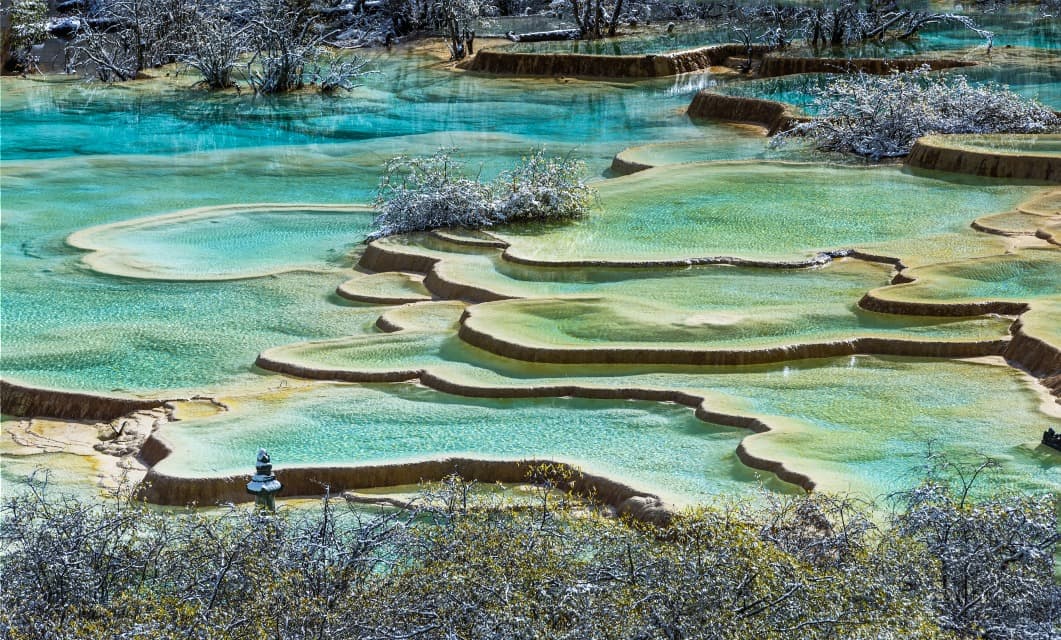
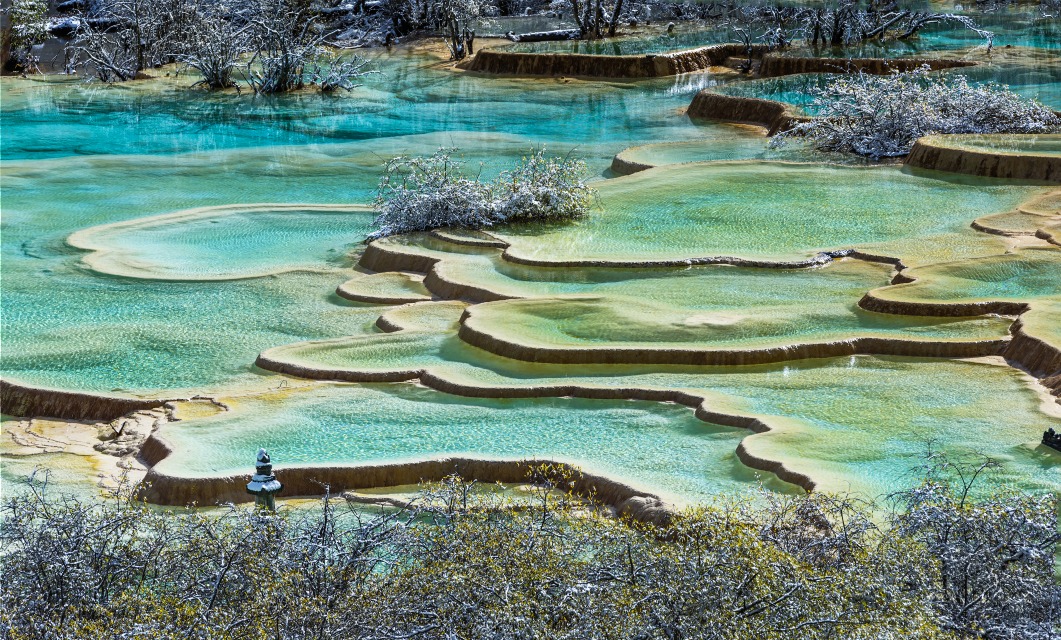
Huanglong is a glacial valley in northern Sichuan, inscribed on the UNESCO World Heritage List since 1992. At more than 3,000 meters elevation, it shelters thousands of limestone pools in shades of turquoise, yellow, and green, formed by travertine deposits. The site is also a biodiversity corridor home to giant pandas and red pandas.
Quick Practical Information
- Entrance: paid (park admission ticket required)
- Elevation: between 3,100 m and 3,600 m approximately — allow time for acclimatization
- Recommended duration: a full day to complete the main trail's round trip
- Access: from Chengdu by road (approximately 300 km) or via Jiuzhai Huanglong airport, located nearby
- Cable car: available to reach the upper part of the site, recommended to minimize exertion at high elevation
- Attire: hiking shoes, warm clothing even in summer — temperatures drop quickly
- Accessibility: limited due to elevation changes and wooden walkways
What to See
The main trail follows the valley for several kilometers, leading to the terraced travertine pools, including the famous Five-Colored Lake (Wucai Chi) at the summit. Mineral deposits create shifting hues depending on light and season. Coniferous and birch forests frame the pools, and Taoist temples punctuate the route.
History and Context
The name Huanglong means "Yellow Dragon," referring to the golden limestone deposits that line the pool beds. The site has been venerated for centuries by local Tibetan and Qiang peoples. A Taoist temple dedicated to Huanglong Zhenren (the Immortal of the Yellow Dragon) stands at the valley's entrance. A traditional festival is held here each year.
Highlights of Your Visit
The Five-Colored Lake (Wucai Chi)
Located at the top of the valley, this cluster of pools is the most photographed feature on the site. Minerals dissolved in the water—calcium and magnesium—create reflections ranging from deep blue to emerald green depending on angle and season.
The Travertine Terraces
Thousands of pools cascade across several kilometers. Travertine, deposited by calcite-rich waters, forms natural dams that hold water in successive levels, visually reminiscent of terraced rice paddies.
The Huanglong Temple
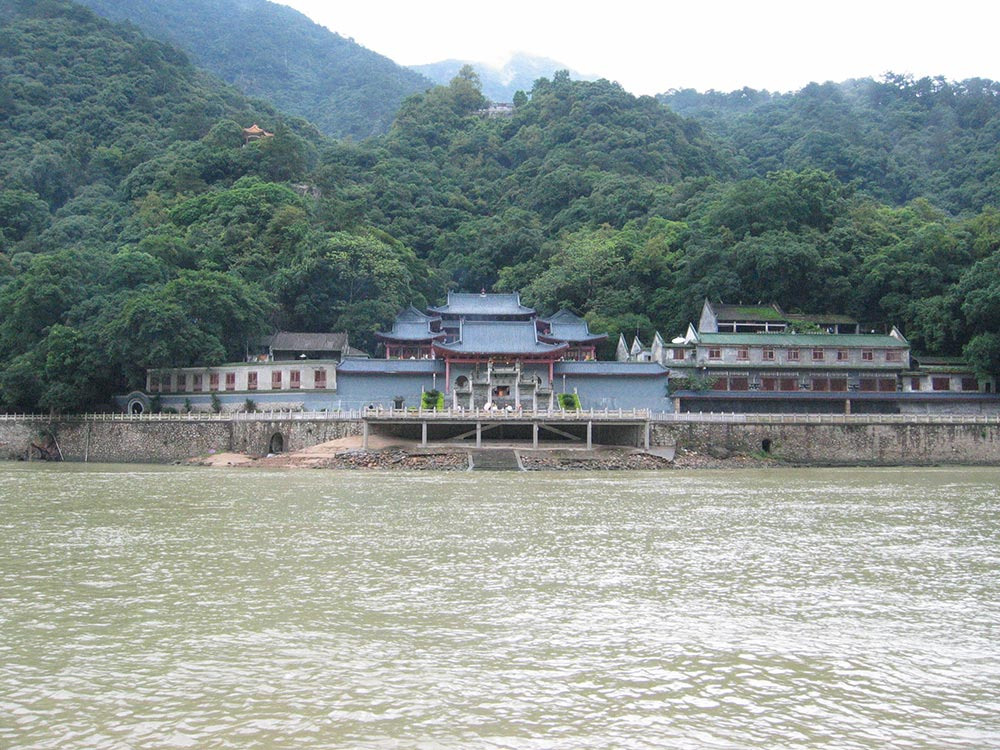
At the park entrance, this active Taoist temple welcomes pilgrims and visitors. Its understated architecture contrasts with the mineral-rich landscape surrounding it.
Flora and Fauna
Huanglong forms part of the buffer zone for several nature reserves in Sichuan. Giant pandas, red pandas, golden snub-nosed monkeys, and white-naped cranes have been recorded here, though direct sightings remain rare.
Photography Tips
Mid-morning light, when the sun is high enough to illuminate the pool beds, best reveals the water's colors. In autumn (October), the golden foliage of birches contrasts beautifully with the pools' blue tones—the most photogenic time of year. Avoid the frequent summer fog. Shots from the wooden walkways offer striking overhead angles on the terraces.
Location and Access
Huanglong is located in Songpan County, northern Sichuan. Jiuzhai Huanglong airport serves the region, with connections from Chengdu, Chongqing, and other cities in China. By road, the journey from Chengdu is lengthy but passes through remarkable mountain landscapes. The site is often combined with Jiuzhaigou, situated about 100 km to the north.
Nearby
- Jiuzhaigou — another UNESCO valley in Sichuan, renowned for its multicolored lakes and waterfalls.
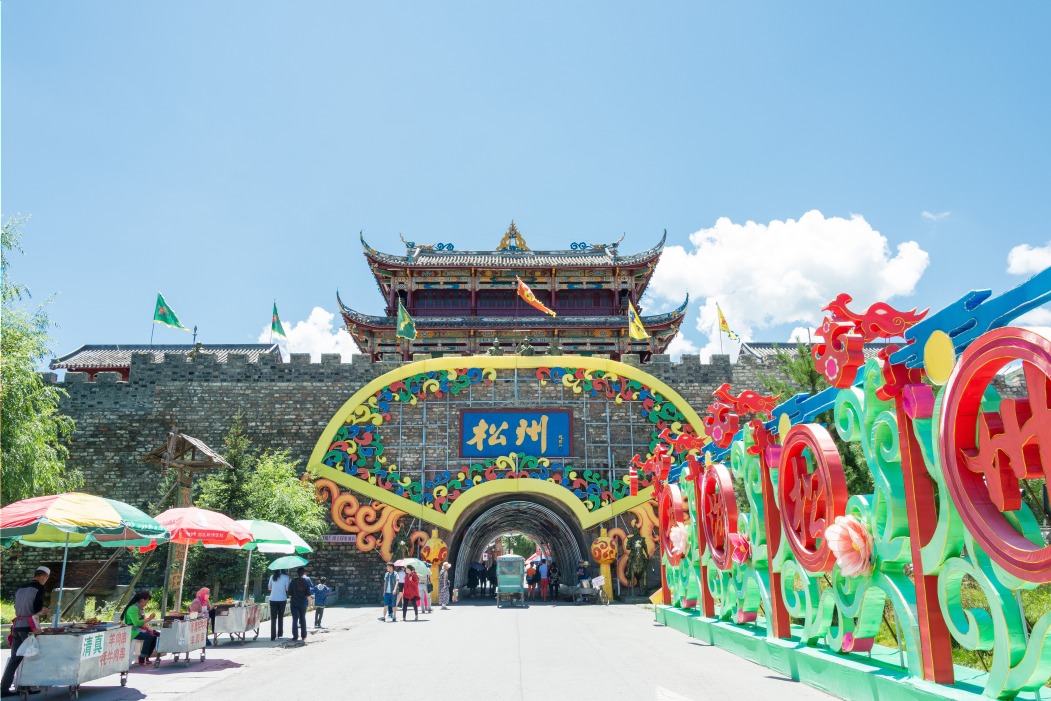
- Songpan Old Town — historic settlement with Ming-era walls, a departure point for horseback treks through Tibetan grasslands.
- Munigou — less-visited valley with travertine formations and waterfalls, close to Songpan.
Frequently asked questions
Autumn (September–October) is ideal: the pools are well filled and golden foliage enriches the landscapes. Spring (April–May) offers fresh vegetation. In winter, the site may close partially due to snow and ice.
Yes. The site reaches above 3,500 m. Mild symptoms (headaches, shortness of breath) are common. Plan an acclimatization night in Jiuzhaigou or Songpan before your visit, and take the cable car up if you're sensitive to altitude.
Yes, this is the classic northern Sichuan itinerary. The two sites are approximately 100 km apart. Budget at least two additional days for Jiuzhaigou, plus one day for Huanglong.
Yes, photography is permitted throughout the trail. There are no specific restricted zones for personal cameras. Drones, however, are subject to China's regulations governing protected natural areas.
The round-trip trail from the entrance to the Five-Colored Lake takes between four and six hours of hiking. Using the cable car for the ascent saves approximately two hours of effort.
You must stay on marked trails and wooden walkways. Do not touch the pool water or throw anything into it—travertine deposits are extremely fragile. Respect silence in areas near the temple.
Photos
Interested in this visit?
We can include it in your personalised itinerary.