Namo Gorge (Namo Gorge / 纳摩大峡谷)
Namo Gorge (Namo Gorge / 纳摩大峡谷)
Namo Gorge opens at the edge of Langmusi, nestled between red cliffs and Tibetan pines. A trail follows a glacial stream up to sacred caves visited by monks from nearby monasteries.
Namo Gorge opens at the edge of the Langmusi settlement, straddling the Gansu-Sichuan border. This narrow canyon carved into red rock shelters a glacial river, pine-clad cliffs and several sacred caves connected to Tibetan Buddhism. It's one of the most accessible walks from the village, cherished equally by Tibetan pilgrims and hikers.
Quick facts
- Access: gorge entrance on foot from central Langmusi, Sichuan side (Sertri Monastery quarter).
- Recommended duration: 2 to 3 hours for a leisurely round-trip exploration.
- What to wear: hiking boots recommended — the trail runs alongside the river and can be slippery.
- Altitude: Langmusi sits at approximately 3,500 m; allow time for acclimatization before hiking.
What you'll see
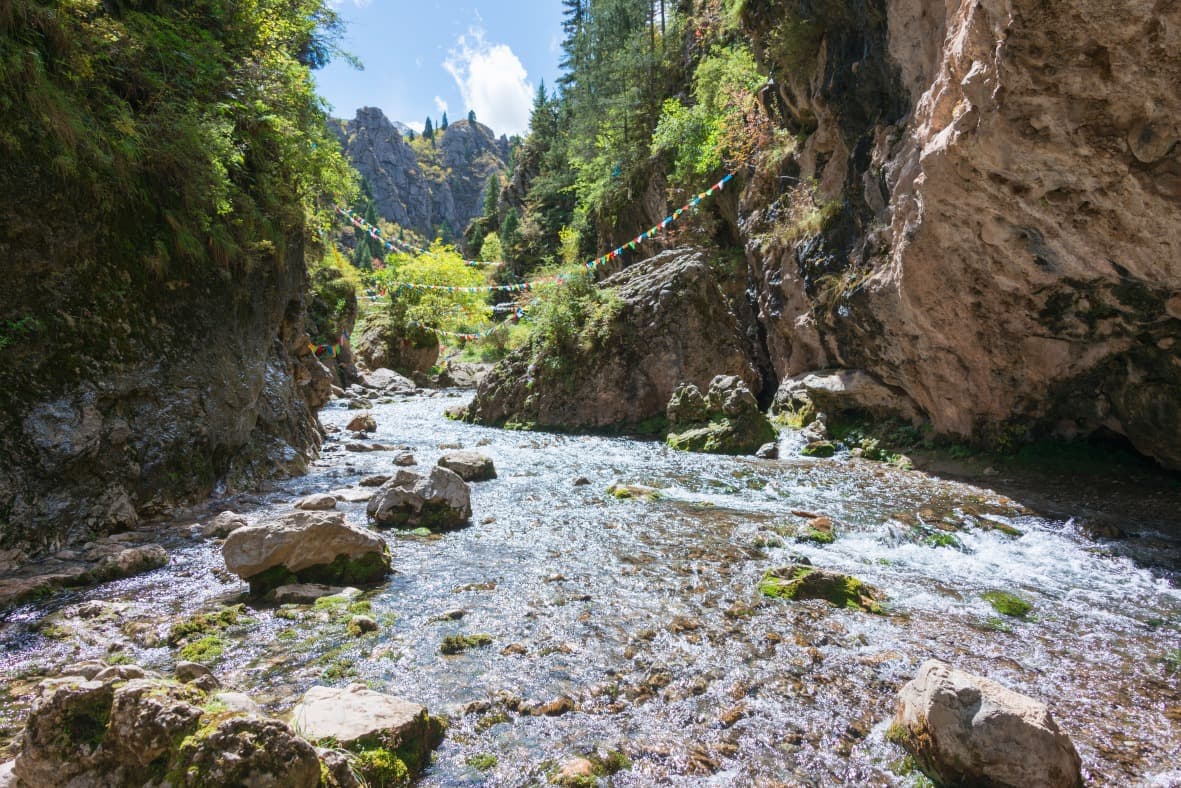
The trail follows the watercourse between rock walls that narrow progressively. Tibetan prayer flags are strung above the stream. As you venture deeper, vegetation thickens: spruce, rhododendrons and moss carpet the slopes. Shallow caves, adorned with statues and offerings, punctuate the path.
History and context
Langmusi is a major centre of Tibetan Buddhism in the Gelug school. Namo Gorge is regarded as sacred space by local monastic communities. The caves dotting it serve as retreats and meditation sites for monks from the nearby Kirti (Sichuan side) and Sertri (Gansu side) monasteries.
Highlights of the visit
The stream and prayer flags
From the gorge entrance, the sound of water and garlands of coloured flags create a distinctive atmosphere. The contrast between red rock and conifer green is striking, especially in spring and summer.
The sacred caves
Several natural alcoves shelter modest Buddhist altars. You'll often encounter monks or pilgrims at prayer. These spaces deserve respect and discretion.
The source upstream
At the gorge's far end, a spring typically marks the turning point for most visitors. The water here is remarkably clear and vegetation particularly dense.
Etiquette and visiting rules
- Do not touch offerings or statues in the caves.
- Circumambulate altars and prayer wheels clockwise.
- Speak quietly near meditation areas.
- Ask permission before photographing monks or pilgrims.
Photography tips
Morning light filtering between the walls offers the best conditions. Prayer flags above the stream make an effective foreground. In autumn, golden foliage contrasts with red rock. Avoid flash in caves.
Location and access
Langmusi is reachable by bus from Zoigê (Ruoergai) on the Sichuan side or from Hezuo on the Gansu side. The gorge entrance lies minutes on foot from Sertri Monastery. Terrain is uneven; accessibility for those with mobility issues is very limited. Local guides offer their services in the village to accompany the hike.
Nearby
- Sertri Monastery — major Gelug monastery on the Gansu side, minutes on foot from the gorge.
- Kirti Monastery (Langmusi) — its counterpart on the Sichuan side, with a richly decorated assembly hall.
- Zoigê Grasslands (Ruoergai) — vast wetland area and Tibetan pastures, roughly two hours' drive away.
Interested in this visit?
We can include it in your personalised itinerary.